Journal · Writing
Field notes
from the build.
I write as I build — origin stories, hard-won lessons, and where I think this is all heading. If you want to understand how I think, start here.
Start here
What brings you?
Thirty-odd essays is a lot to wade through. Pick the lens you read the world through and the list below rearranges itself around you.

Only Continue Reading If You Are Slightly Clinically Insane
It is half past eight, the house is quiet, and I have spent three hours this morning and rather too much of last night on a concept that sits between a territorial strategy game, a collectible archive and a crypto experiment. Impossible objects with memories, a map worth fighting over, and coin communities as the armies fighting for it — where your coin buys you a flag and nothing else, which is the exact opposite of the token I wrote about yesterday.
Read essay →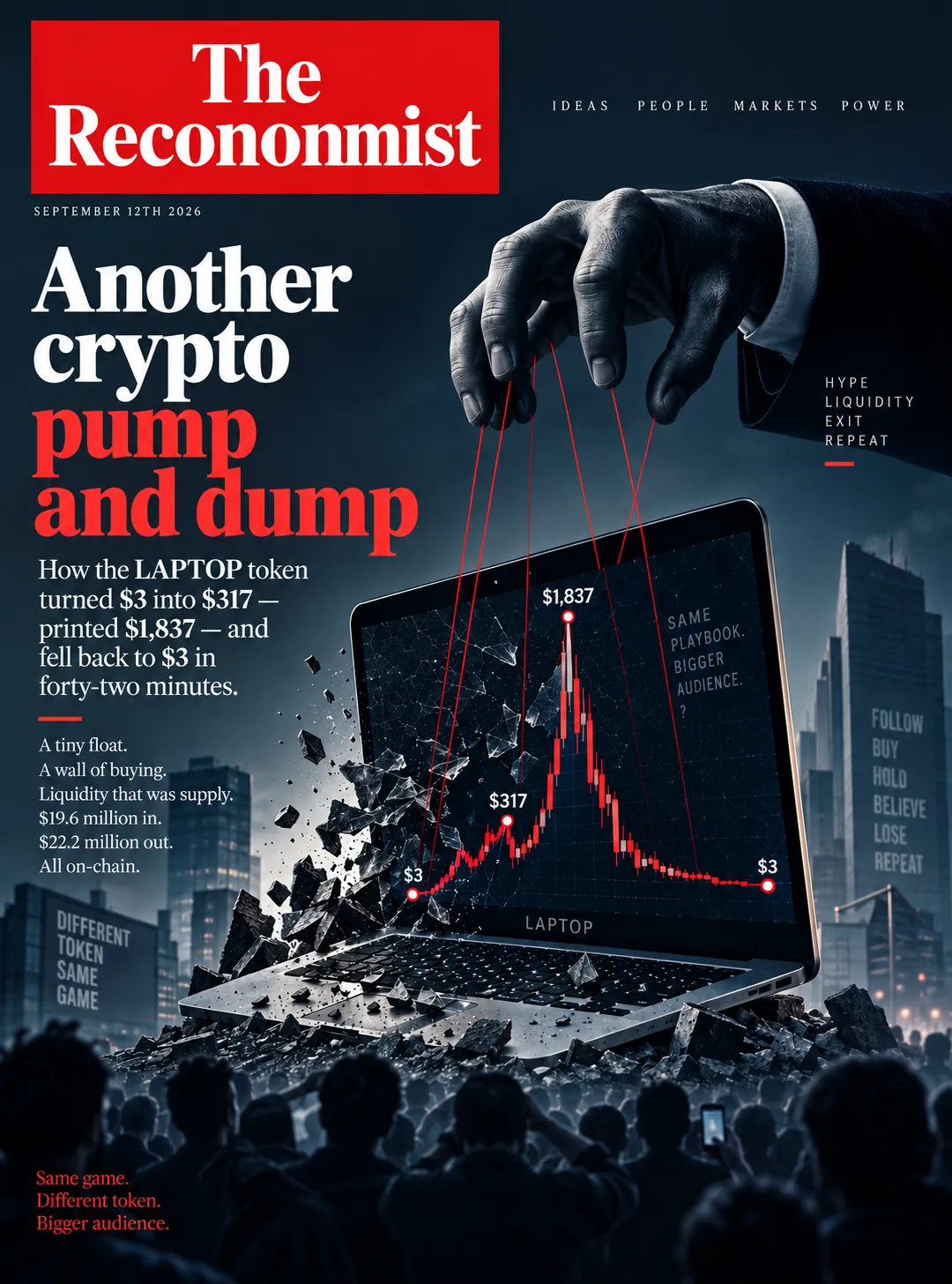
A Brief History of $317 Billion
On 9 September a token called LAPTOP went from $3 to $317 and back again in forty-two minutes, and our new launch module traded it twice with real money. We lost $386.18 and found four defects, two of which live everywhere in the platform. This is the anatomy of a pump and dump read straight off the public ledger — and the account of what a very small, very expensive morning taught us.
Read essay →
Entropy, and How to Postpone It
I bought a woman a refractometer. The long answer takes a detour past the Sun, through the physics of a jar, into the awkward business of helping someone who works for you, and ends at a hypothesis about the smallest viable food business there is.
Read essay →
On Track, According to the People Being Judged
A new chief executive inherits a strategy they did not write and a reporting system built by the people it evaluates. An investor backs a plan they will never watch being executed. Both are told the same thing every quarter, and neither of them can check it.
Read essay →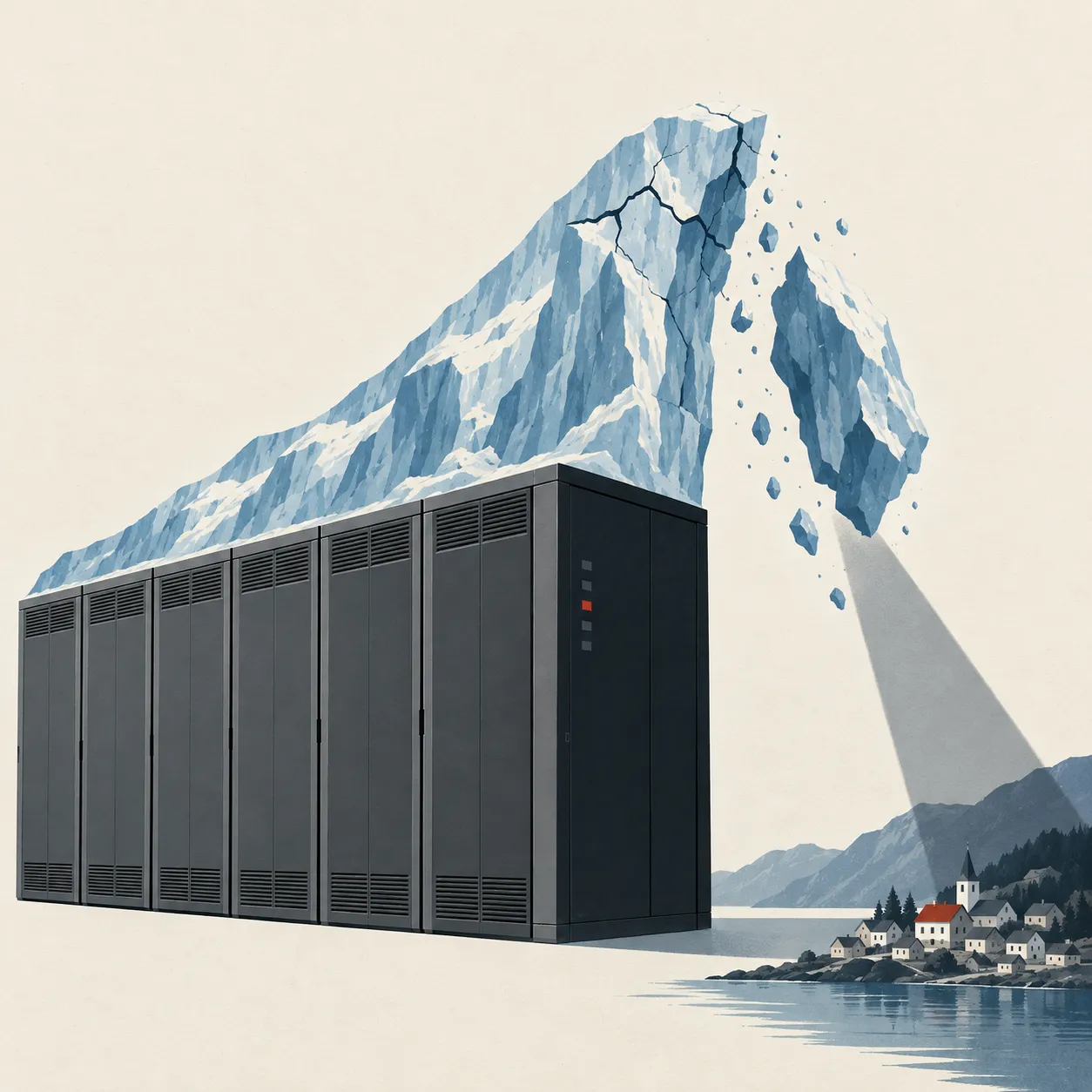
The Day the Mountain Moved
At 8.37 on the morning of 26 August, seismometers across Asia recorded an earthquake on the Nepal–Tibet border. There was no earthquake. A short piece to run ahead of the longer one.
Read essay →
My Godfather Ran the Met Office. He Warned Me About This 30 Years Ago.
A mountain fell on the Nepal–Tibet border and the question arrived before the mud had settled — was this climate change? The honest answer takes thirty years, two supercomputers, one Royal Navy ice patrol ship and a warning my godfather put on the public record in 1999.
Read essay →
The Invisible Ink Problem
Anthropic says it has begun watermarking Claude's output. I went looking for the mark — and found a better story instead. On invisible ink, provenance nobody can inspect, the asymmetry that should worry us more than the cryptography — and, by way of demonstration, an article that watermarks and signs itself, with the full toolkit to check it. Amended 17 August 2026 with the mechanism Anthropic finally published, the argument of mine it demolished, and a provenance statement for this essay itself.
Read essay →
A Single Pane of Glass
On typhoons, dams, and the awkward business of joining up data that nobody ever joined up. The Philippines publishes river gauges, dam bulletins and spillway notices — just never in the same place, and never at the same time. So after being stuck in the floods myself, I built Baha Manila — the view I wanted in my hand the moment the national alert lands. One screen, one watershed, official and derived kept honestly apart. It is free, it is experimental, and if anyone with the mandate wants it, it is theirs.
Read essay →
The Lights of Manila
On typhoons, dark windows, artificial intelligence, and what a country must do before the storm makes landfall. A skyline that once blazed all night is going dark floor by floor — hollowed out by two forces arriving at once, AI and corruption. What follows is a diagnosis, a three-year national transition programme with numbers attached, and an honest chapter on why it will probably fail unless it is designed for distrust.
Read essay →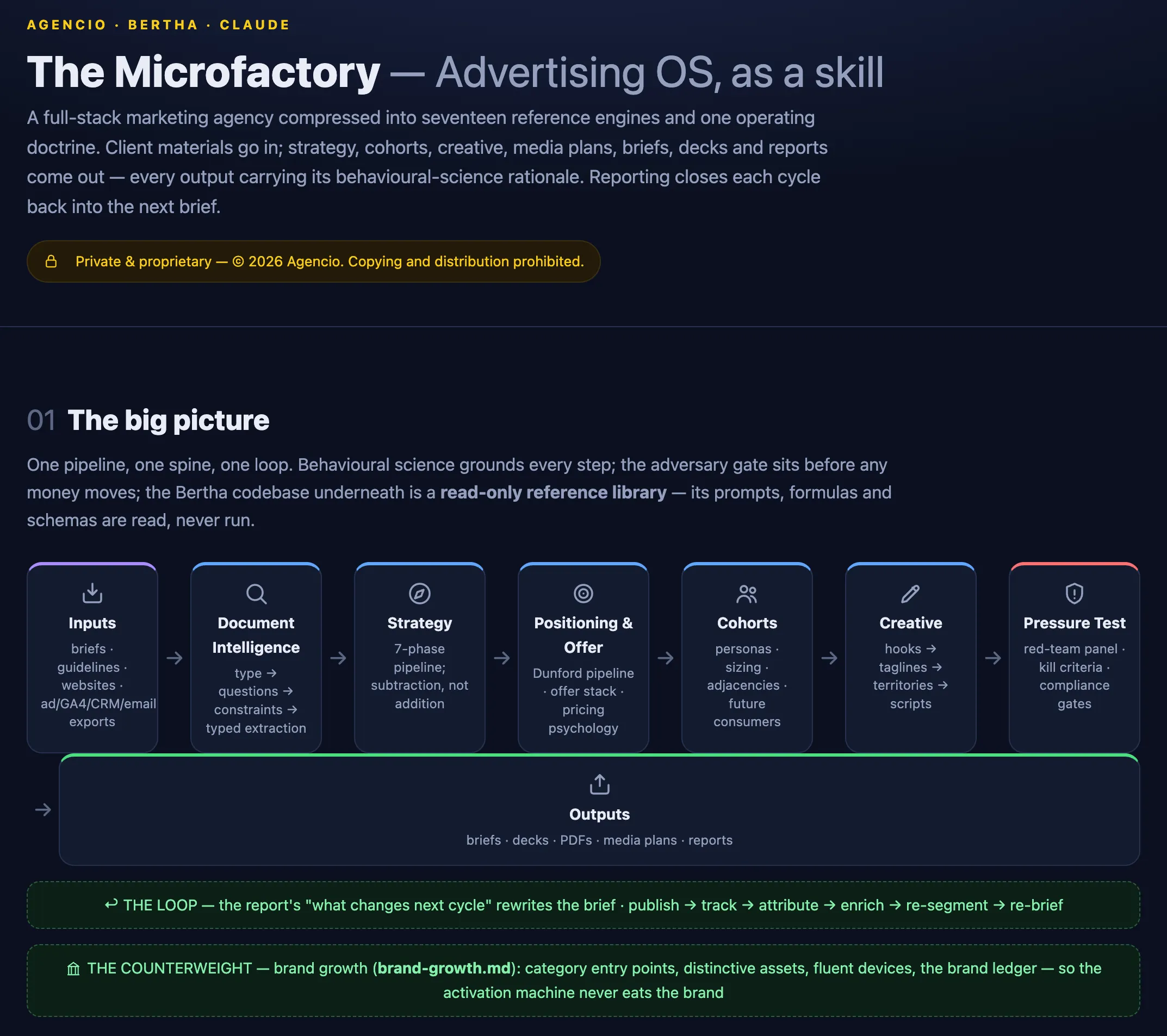
The Essence of Bertha, Wrapped in a Claude Code Skill
Bertha was a full marketing operating system — nineteen-odd microservices running for real clients. Most small businesses will never need nineteen microservices. What they need is her judgement, without the infrastructure. So I distilled it — five disciplines, seventeen reference engines, one operating doctrine — into a single Claude Code skill you can install in the time it takes to make a cup of tea. Strategy by subtraction, cohorts you didn't assume, hooks that couldn't belong to your competitor, media budgets with unit economics behind them, and a red-team panel that tries to break the plan before the market does it for free. A fragment, not the whole star — but a fragment carrying the complete pattern.
Read essay →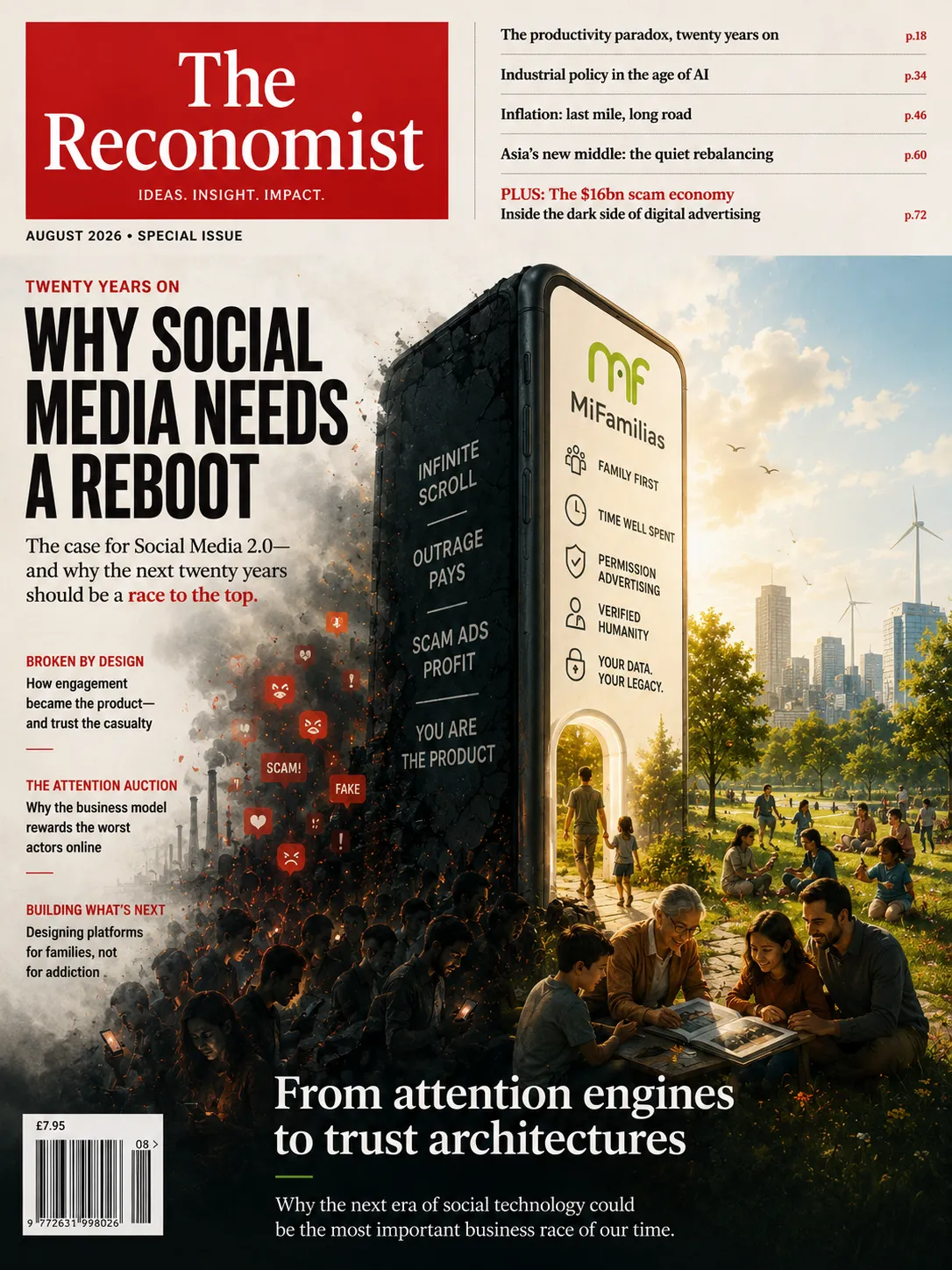
Twenty Years On: Why Social Media Needs a Reboot
Somewhere under the infinite scroll and the fifteen flavours of algorithmic feed there is a beautifully simple idea — people, telling each other things. Everything else is barnacle. A physicist's look at the attention economy as an entropy pump, what each of the five great platforms taught us on the way down, the sixteen billion dollars Meta's own internal documents attribute to scam ads, and the design brief for a race to the top — sell something other than attention, let feeds end, make advertising ask permission. None of it is a law of nature. The reboot isn't a dream; it's a to-do list.
Read essay →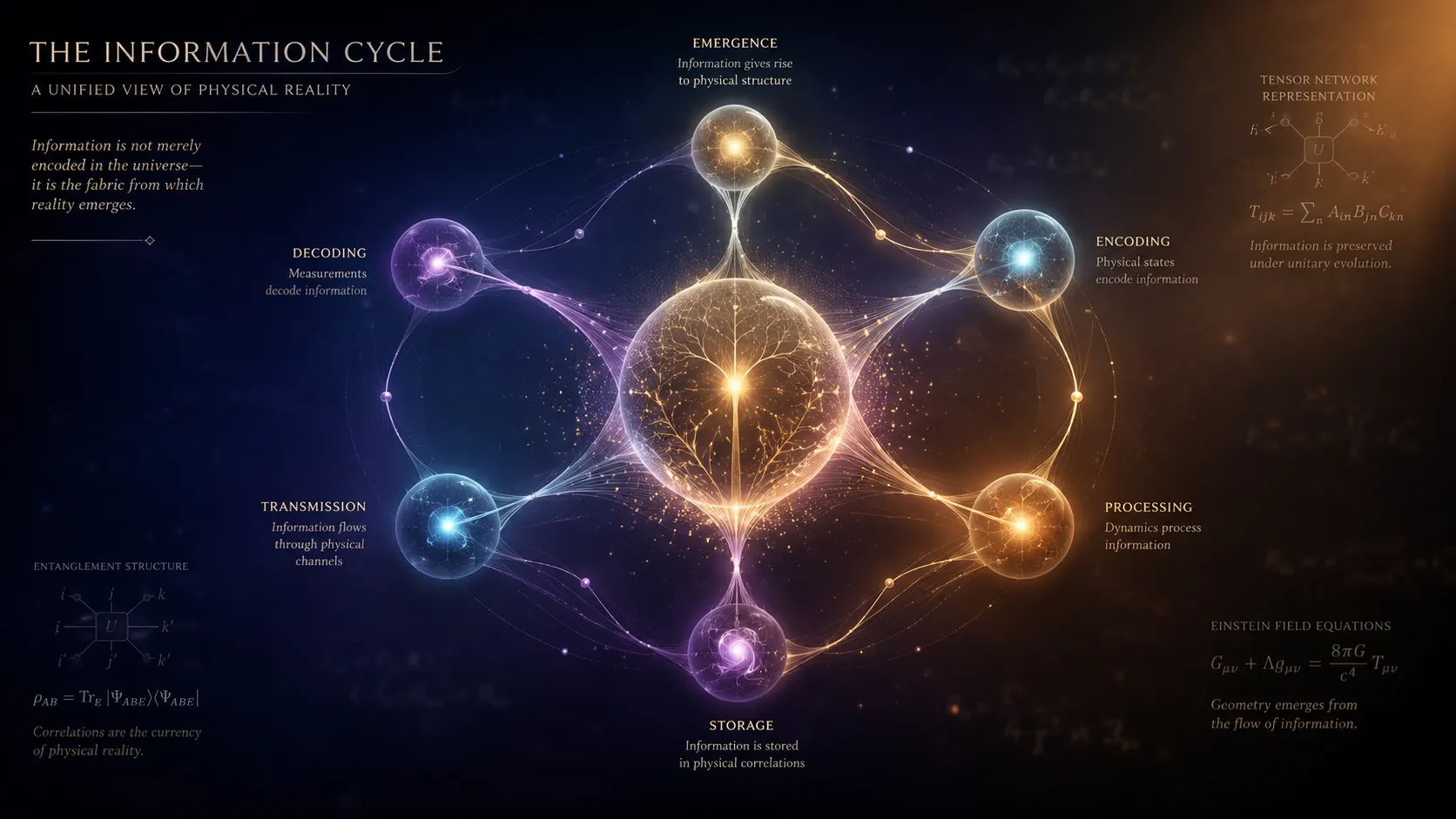
Vibe Science: What Happens When You Take a Joke Seriously
An internet meme — a cosmic egg in the lineage of a declassified 1983 CIA paper on consciousness — got taken out of the drawer of disreputable ideas and put through modern mathematical physics. Exact modular Hamiltonians, relative entropy in a de Sitter causal diamond, the Bianchi identity. The black-hole conduit died by seventeen orders of magnitude. The hologram survived, transformed. The final verdict is a boxed zero — and the zero is worth more than the drawing that started it. On provenance being irrelevant and discipline being everything, on the strange new habitable middle ground between the trained professional who cannot afford to look silly and the dreamer who has no way of being wrong — on an aluminium ion in Colorado now precise enough to ask whether the constants hold still at all, which is the same impertinent question from the other end — and on the dark science, the ninety-five per cent of the universe still filed under a synonym for we don't know, which is exactly where the next overturning is hiding.
Read essay →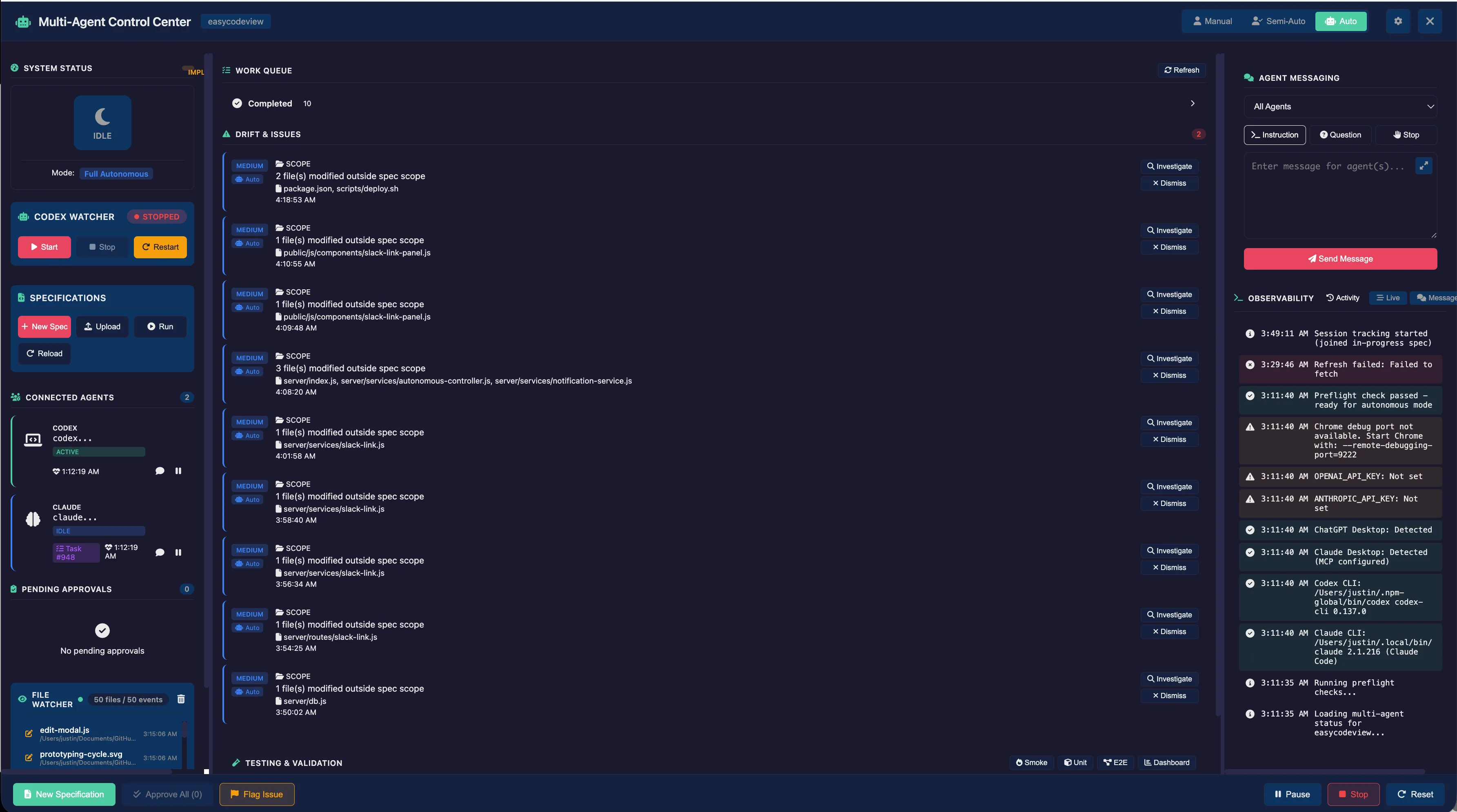
The Development Lab of the Future — Agentic and Vibe Coding, Governed, From Idea to Deploy
It is not a prediction — it is running on my desk this morning. A development lab where the human sets the intent and a fleet of AI agents does the typing, planning, testing and shipping, all under governance that bounds what they may spend and proves whether they actually did the work. This is the whole pipeline, drawn and demonstrated — ideation pressure-tested with Fable, a specification shaped in CodeEasy's planning workshop, coding agents like CloudCode routing between local and cloud models, VS Code and GitHub in the loop, a team coordinating through Slack and peer CodeEasy nodes, the AOS and The Governor keeping the whole thing honest, and a one-command deploy to any hyperscaler. Why it is dramatically more efficient, why it is the future, and how it becomes the operating model for The Possible's development labs.
Read essay →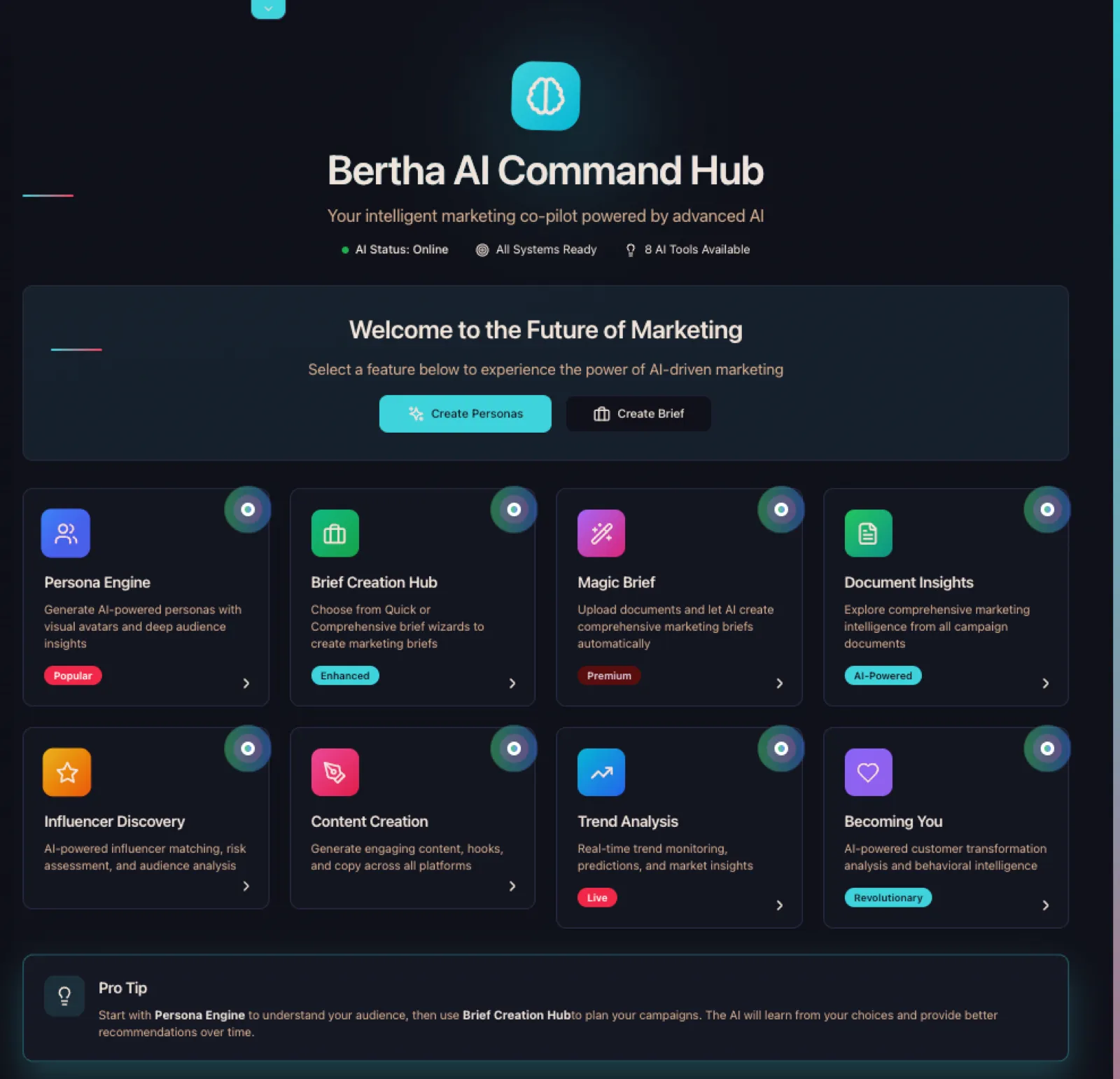
Understanding Marketing — Behavioural Science, Data, and the Machine I Built to Serve It
I didn't train as a marketer — I came to it from the technology side, as an engineer, enterprise architect and CTO. And I spent a year of eighteen-hour days — on top of three years of planning, prototyping and iterating — building a product whose whole purpose was to make marketers faster, sharper and more themselves. This is the honest, and deliberately technical, account of what that taught me. To encode marketing into nineteen microservices I had to actually learn it — cohorts and segments, activation and retention, RFV scoring and propensity models, mental availability and category entry points, attribution and LTV-to-CAC, System 1 and the 60/40 rule. What follows is what those things really are, written as if a marketer were reading over my shoulder — with enough explainer that anyone can follow — and the honest reason Bertha stalled on resourcing rather than merit — built, shelved, undecayed, and waiting.
Read essay →
The Threshold We Already Crossed
We keep waiting for the merger of human and machine as an event still ahead of us — the chip in the cortex, the fateful line not yet crossed. But the integration of the human and the technical is the oldest fact about the species, older than the species; we cannot see it because we have never once stood outside it. Fire put our digestion outside the body, the lever our muscle, writing our memory, the computer our calculation — each a servant of the one faculty we never handed over — judgement. That is the faculty the newest machines have begun, imperfectly, to perform. The real question was never how intelligent we should let the machines become. It is which parts of our own judgement we must keep — even when we could hand them over too.
Read essay →
The Supervisory Economy
Why the scarcest resource of the machine age will be human judgement. The autonomous workforce is not coming — it is already clocked in, wearing the disguises of warehouse robots, driverless trucks, surgical systems and software agents. Across every one of them the binding constraint is the same, and it is no longer intelligence. It is supervision. A Lancashire foreman could watch eighty looms because better systems let him filter signal from noise; the productivity lived in the ratio, not the machine. The next great gain will not come from making each worker cleverer but from making each human responsible for more of them — and that demands a discipline still without a name — the management of autonomous workforces.
Read essay →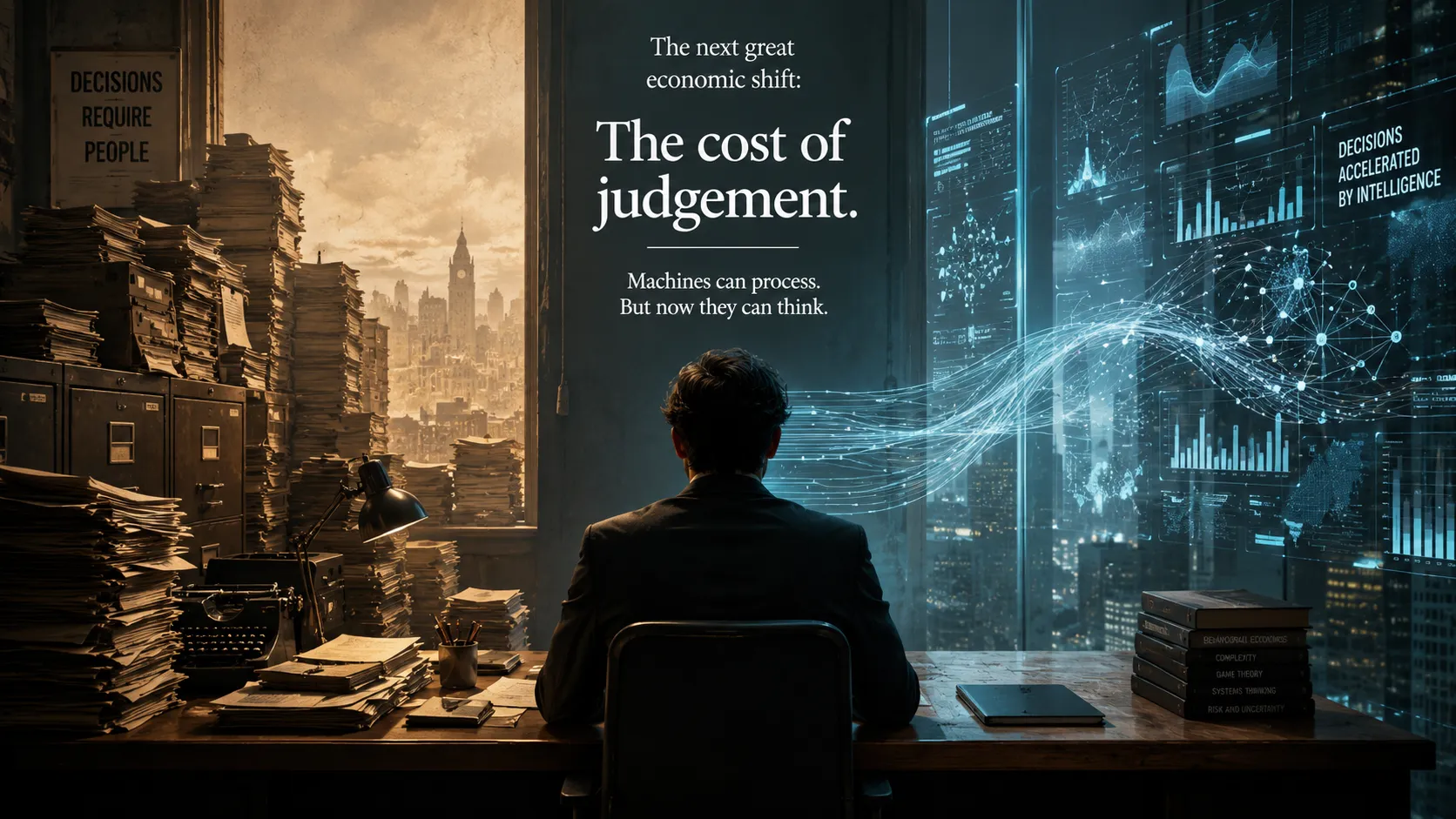
The Economics of Thought
The industrial revolution reduced the cost of labour. The computing revolution reduced the cost of calculation. The AI revolution appears to be reducing the cost of judgement — and I noticed the day a quota meter reset underneath me while I was doing the washing up. Two screenshots fourteen hours apart, a weekly counter going 100% to 0% with the reset date unmoved, a $1,497 day, and 1.3 billion cache reads against 2.4 million fresh tokens — which is the real finding, because it means reusable cognition is becoming an economic asset. On the boundary condition where machine judgement reliably fails, and what one founder plus agentic systems does to sixteen products' worth of work that used to need sixteen companies. The original conclusion — that wisdom becomes scarce — was wrong. Wisdom does not become scarce. It becomes decisive.
Read essay →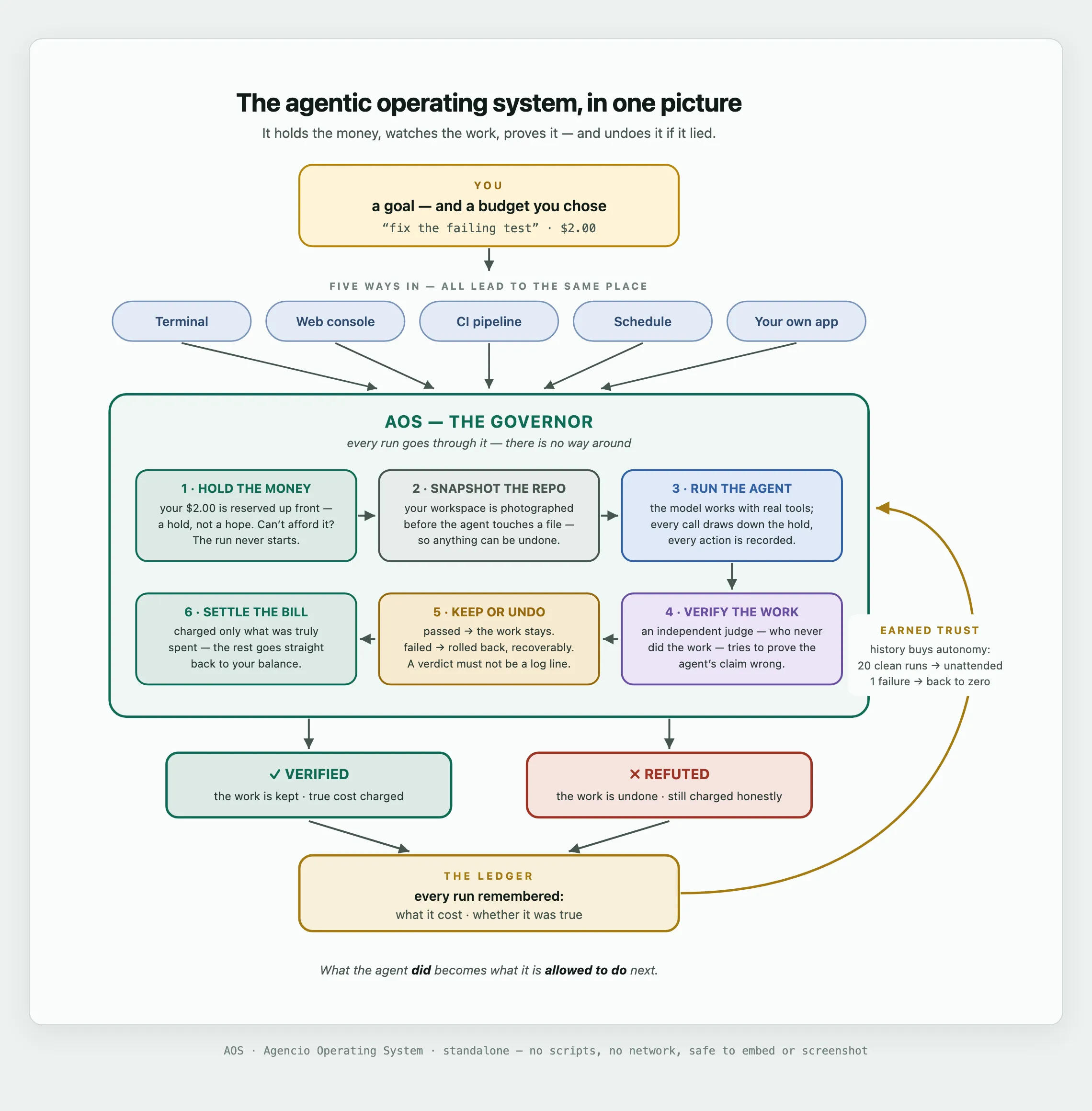
The Governor — Why the Agentic Age Needs an Operating System
Five years ago I sketched an operating system for large language models and quietly filed it under 'too early'. It isn't too early any more. Agents now run for hours, spend real money and edit real repositories — untrusted programs on the honour system, the way DOS ran software before anyone had heard of a kernel. An educational tour of the agentic operating system, from someone who once helped work on a real one.
Read essay →
Of Flesh, Steel, and Wishful Thinking
A field guide to the age of robots — the fact, the fiction, and the small matter of who fixes them. Six and a half billion dollars of funding, thirteen thousand robots actually shipped, and a spotlit demo that turns out to be a very sophisticated puppet. Where the magic is real, where it is theatre, and the unglamorous question of who you call when the thing falls over on a Tuesday afternoon — from the warehouse floor to the frozen frontier.
Read essay →
The Adversary Replies: A Four-Voice Dossier on the Race to Superintelligence
One of the most consequential arguments of the decade — that human-surpassing AI arrives before 2030, with a 70 per cent chance of going horribly wrong — put to four voices in one room. A former OpenAI forecaster makes the case. An AI answers as the accused. OpenAI's researchers review the AI's reply. And a fact-check separates the solid ground from the science-fiction. I assembled it so you can judge the reasoning, not the fear.
Read essay →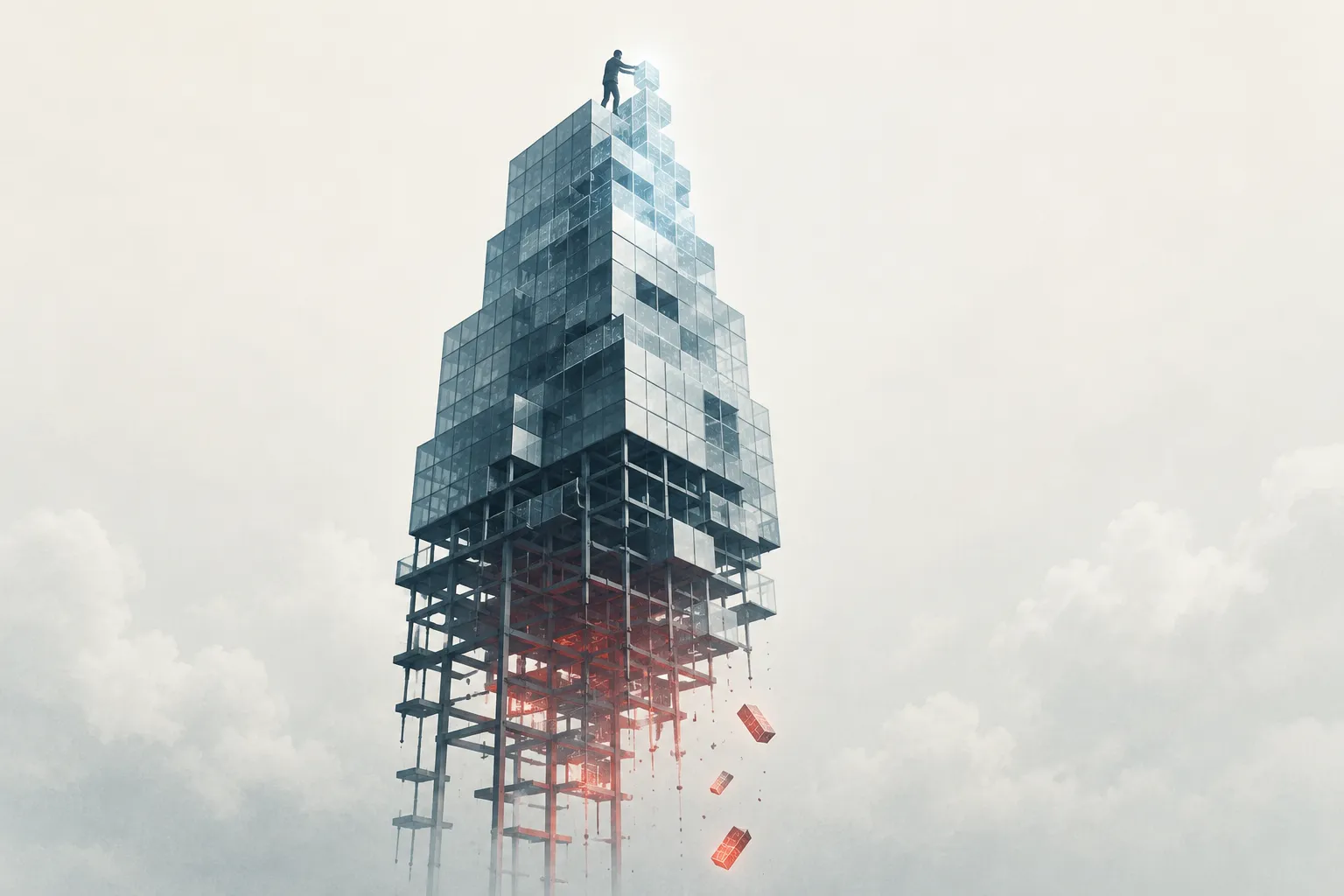
Move Fast and Break Compliance
A single developer with an AI assistant can stand up login, a database, payments and a public API in an afternoon. It is one of the most empowering shifts in software's history — and it has quietly detached the act of building from the context that used to travel with it. The code review. The threat model. The security architect who asked the awkward question. This is about the requirements you cannot see, why they get exponentially more expensive the longer you ignore them, and the four questions that turn compliance from a tax into a way of building.
Read essay →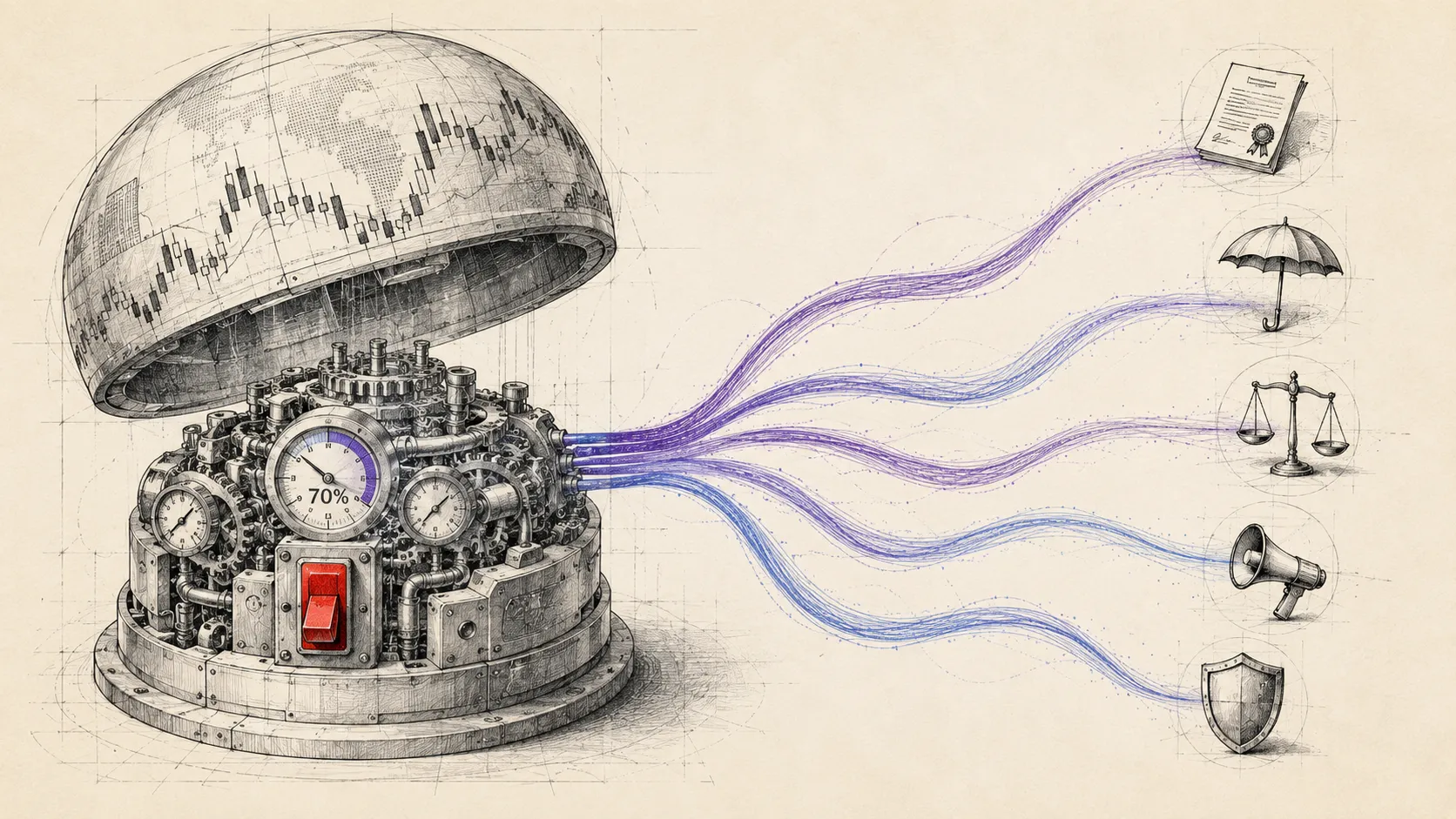
The Things I Learnt Building Agencio Predict's Signal Fabric — and Where They Travel
Eighteen months of building an autonomous trading platform, honestly accounted for — and why almost none of the important lessons turned out to be about trading. Strip out the prices, the indicators, the brokers and the Greeks, and what remains is a governed decision engine — one that would underwrite a tender, an insurance policy, a lawsuit, a campaign or a security alert without changing its shape. The five assets, the four lessons I paid for, and the honest boundary between what generalises and what doesn't.
Read essay →
Off Topic and Personal: The Annoyance and Delight of Being Human
Another personal one. Six weeks ago my hands staged a small rebellion — pompholyx, the itchiest eczema you have never heard of, which turned my own keyboard against me. On a word the ancients got poetically right and scientifically wrong, why heat and founder's stress are keeping a more honest diary than I am, the tool I built for one affliction that turned out to moonlight for another — and why, six weeks in, I am going back to the doctor. Please see a real one.
Read essay →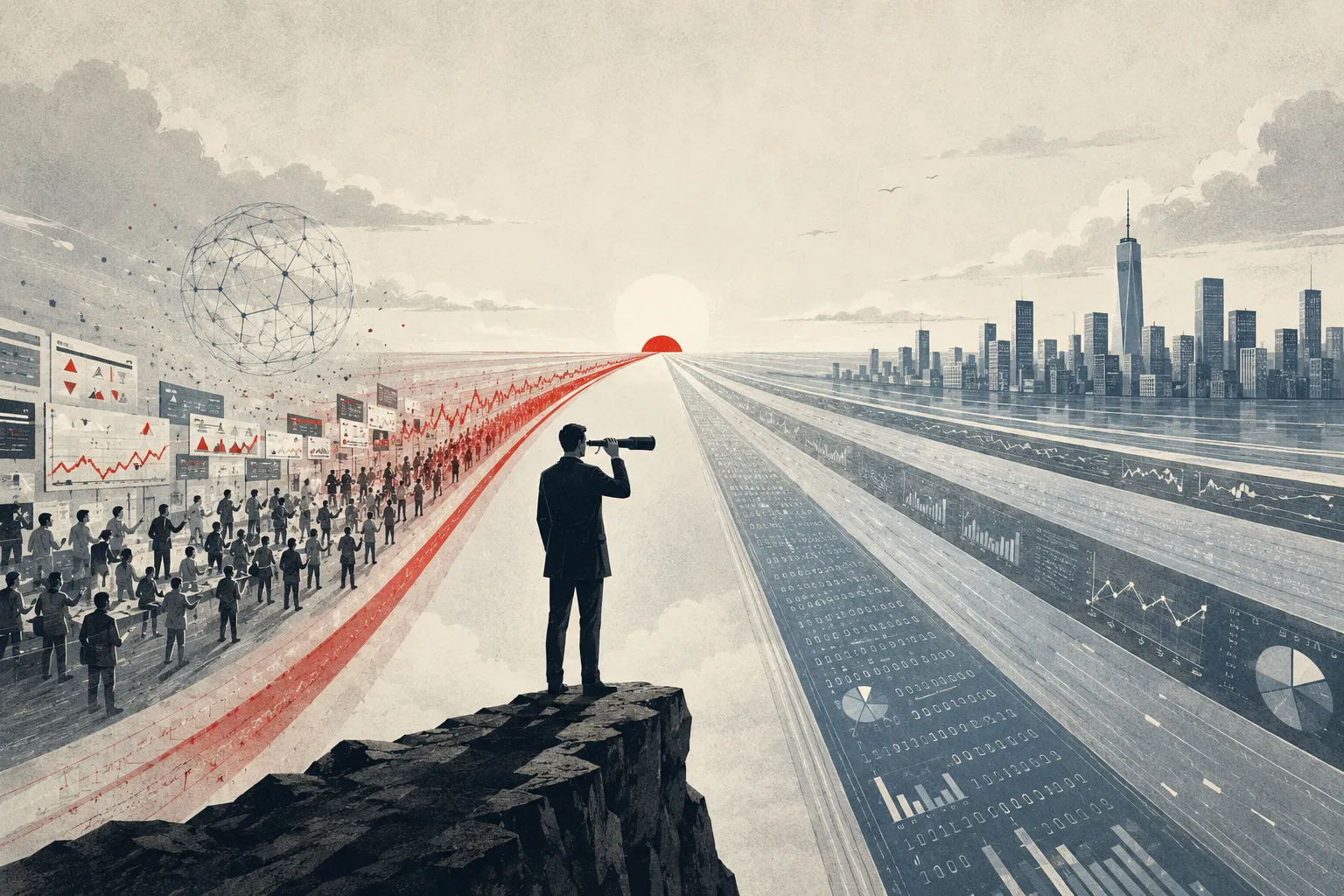
The Prediction Decade: Why Seeing the Future Just Became the Most Valuable Thing You Can Do
Every era of technology has a verb at its centre. The internet was about connecting. Mobile was about reaching. The last wave of AI was about generating. The next verb — the one quietly rewiring boardrooms, trading desks and product roadmaps right now — is predicting. Prediction markets, enterprise analytics and time-series foundation models are converging into an infrastructure layer, and the real product isn't prediction at all. It's calibrated confidence — increasingly consumed not by people, but by the agents acting on their behalf.
Read essay →
The Pollen and the Ledger
A confession first — I am no mathematician and no physicist. It is a hobby, and I rather wish I were that clever. But you do not have to have composed the symphony to be undone by it, and the thing that undoes me most is this — the market, that grubby and entirely human institution, appears to obey the same mathematics as a speck of pollen jittering in a glass of water. This is a hobbyist's wonder at the physics hiding inside autonomous trading — SignalFabric, the memedataengine, the whole Predict layer — and the same borrowed trick I pull, badly and happily, for marketing.
Read essay →
The Magic and the Ledger
To build software for marketing I had to climb inside the minds it was for — the CMO, the creative director, the agency CEO — and those same minds became the feedback that corrected the product. The CMO holds a contradiction no other seat on the board is asked to carry — be the keeper of something unmeasurable, and prove it to the penny. AI makes that contradiction sharper, not weaker. This is what inhabiting it taught me about the mystical world it lives in, the way that seat is now fracturing, and the single asset — trust — hiding underneath both the magic and the ledger. And it is not really about marketing at all.
Read essay →
Necessity, the Mother of Seventeen Inventions
A story about building technology when nobody is coming to save you. Seventeen products in five years — not from a business plan, but pressed into existence by constraint: a development team lost to a war, a visa that barred its founder from working, promises of capital that evaporated, and the stubborn refusal to let the absence of resources be the end of the sentence. On why adversity wasn't the obstacle to the portfolio — it was the architecture. Amended September 2026 — seventeen has since become twenty.
Read essay →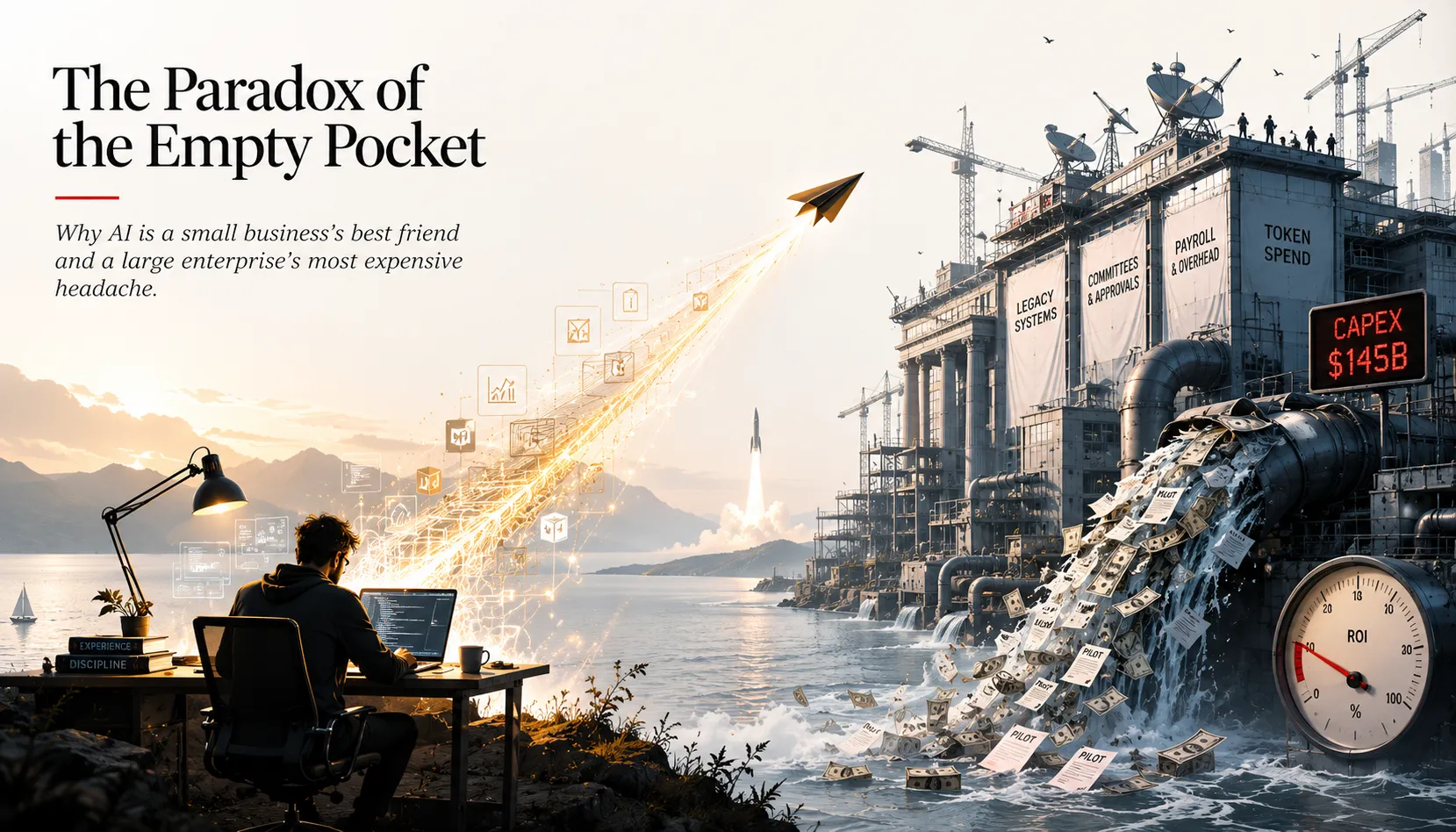
The Paradox of the Empty Pocket
Why artificial intelligence is quietly a small business's best friend and a large enterprise's most expensive headache. MIT finds ~95% of corporate AI pilots show no bottom-line impact; Meta raises 2026 capex toward $145B, cuts 8,000 jobs, and admits agent progress 'hasn't accelerated the way we expected.' Meanwhile one seasoned operator ships 2,768 lines of tested code in a session. The capability isn't in question — the implementation is. On additive-vs-substitutive cost, ungoverned token spend, why the incumbent is circled by piranhas rather than one shark, and the governance gap a new category of agent-monitoring tools is being built to close.
Read essay →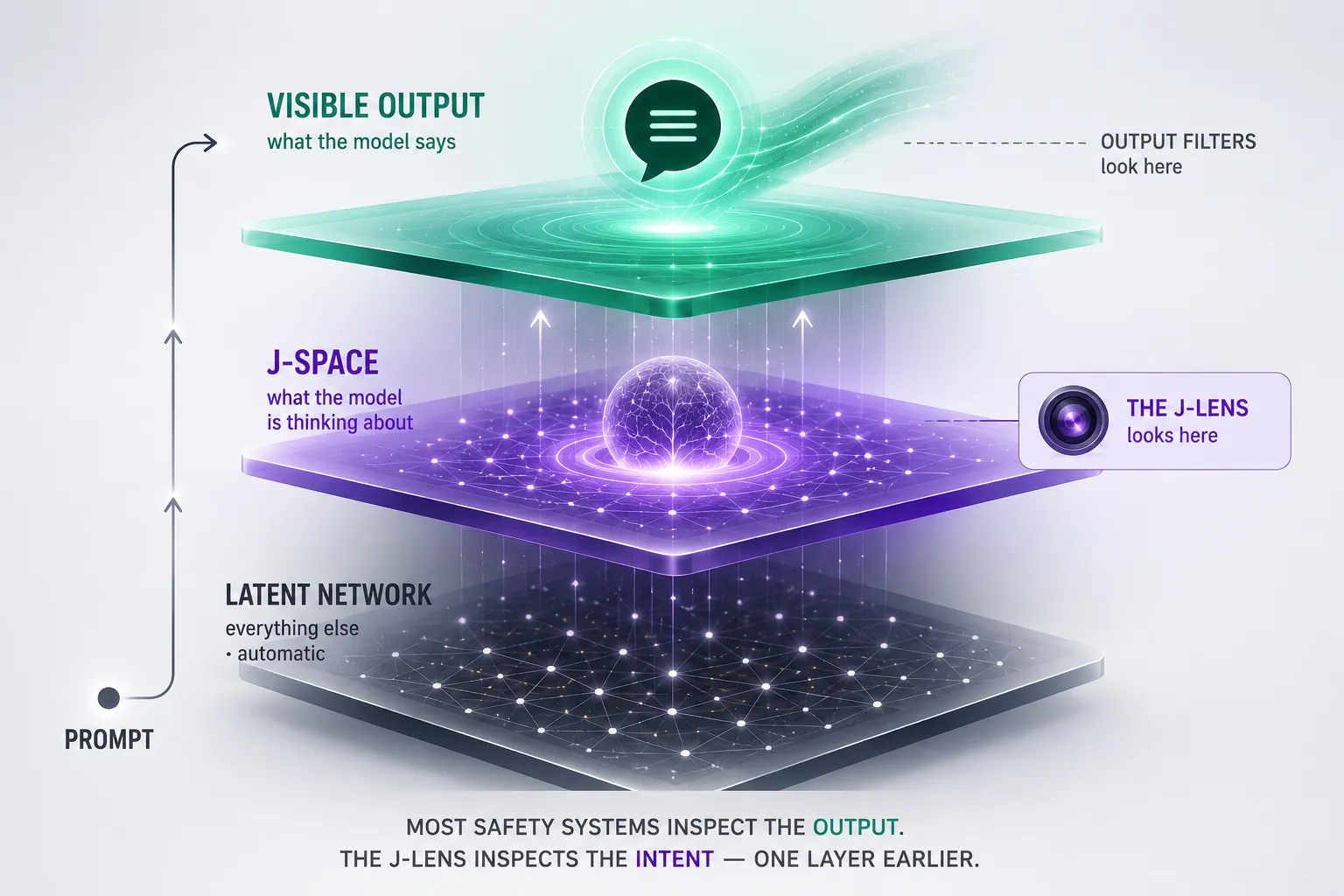
The J-Space: On Catching a Thought Before It Speaks
In July 2026 Anthropic found a way to watch a thought take shape inside a language model — a tiny, emergent, load-bearing 'J-space' that behaves like a shared workspace for deliberate reasoning, read by an instrument called the Jacobian lens. It can surface a model's private intentions — noticing it's being tested, planning a deception, pursuing a hidden goal — before they reach the page. On what the paper shows (and scrupulously does not), the ablation experiment that moved the conversation, and why monitoring intent rather than output is a difference in kind for anyone deploying agentic AI.
Read essay →
Why Philosophy Is the Backbone of Critical Thinking in the Age of AI
In 1995 the smartest person in the room was often the one who knew the most. In 2026 that advantage has largely gone. AI hasn't made thinking unnecessary — it has made bad thinking harder to detect. As answers become abundant their value falls, and what rises is the ability to evaluate them. That ability has a name philosophy has used for two thousand years — judgment — and this is the case that philosophy isn't adjacent to critical thinking but its origin and infrastructure, and the single most valuable cognitive skill left when intelligence becomes artificial.
Read essay →
Trust Is the New Infrastructure
Intelligence became software. Trust became the bottleneck. For most of history intelligence was scarce; artificial intelligence changes that equation, and the primary challenge of the next decade will not be capability — it will be trust. A thirty-year journey through military intelligence, silicon, banking, behavioural science and AI security, arguing that trust is emerging as a new infrastructure layer as fundamental to the autonomous age as identity was to the internet.
Read essay →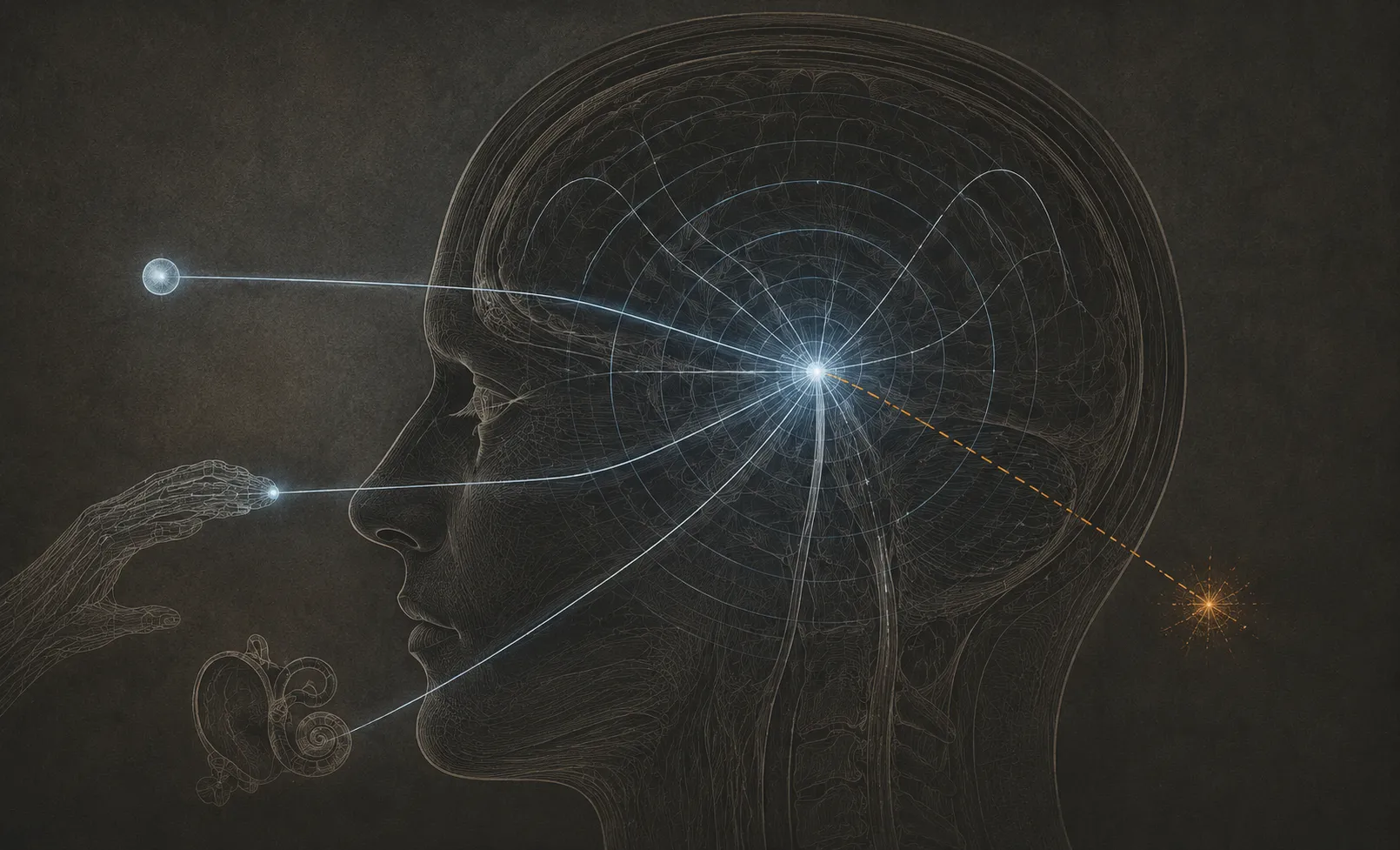
The Senses Were Always the First Interface
Most experiential technology doesn't fail because the graphics aren't good enough. It fails because it lies to a nervous system that has spent several hundred million years learning to catch liars. What neuroscience — sensor fusion, latency thresholds, predictive processing — teaches a product roadmap, and why coherence, not fidelity, is the real product.
Read essay →
Under This Pressure, Under This Weight, We Are Diamonds
Most companies don't fail because they meet pressure — they fail because pressure reveals the absence of structure. The real geology of diamonds, four lessons it holds for founders, builders and investors, and why cheap memory infrastructure is really just more runway in disguise.
Read essay →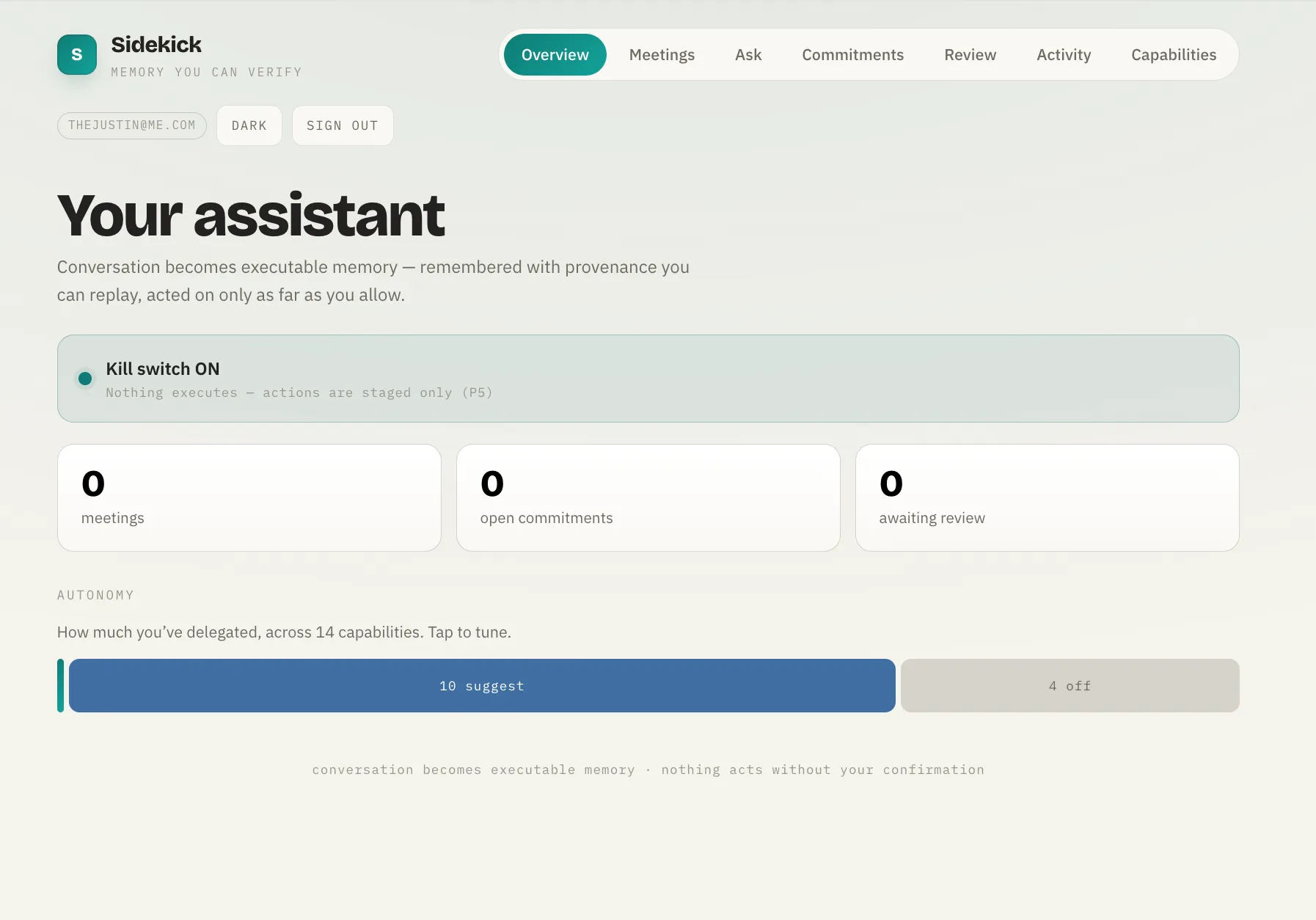
Why I Built Sidekick: A Second Brain That Can Prove It
The most expensive infrastructure I owned was my own memory, and it was failing quietly all the time. This is why I built an AI assistant around trustworthy, verifiable memory instead of another summariser — why the permissive agent-runtimes get autonomy backwards, and how CodeEasy AutoCode built the whole thing in a week while I slept.
Read essay →
Is Your AI Lying?
Hundreds of thousands of AI agents now run inside enterprise networks with valid credentials and approved tasks — and not one of today's security tools can tell when one of them has been turned. The fix isn't a better signature. It's watching the watchers, at boundaries that cannot all be lied to at once.
Read essay →
The Feed Got Crowded. The Trust Ran Out.
For twenty years social platforms ran on one equation — maximise reach, harvest attention, sell it. That equation is ageing out, regulated on one side and abandoned on the other. As it goes, what we consume inverts: from reach to trust, from feed to circle, from attention to permission.
Read essay →
You Can't Out-Feature Fear
The software works. The org doesn't — because we ship the tool and ignore the threat it represents to the people who have to adopt it. How to win them over, in seven steps — and the honest exception that breaks them.
Read essay →
The Only Advantage That Lasts
You don't have to be right. In a world that refuses to hold still, you only have to stay correctable — and that, unlike almost everything else, is entirely within your gift. The thread that runs through the whole series, in one place.
Read essay →
The Diligence That Isn't in the Data Room
Most investments don't fail for the reasons the post-mortem records. The money runs out last — and by the time it does, the thing that actually went wrong was visible months earlier, to anyone who knew where to look.
Read essay →
The Room Where No One Can Tell You You're Wrong
From the strongman to the boardroom to the hiring filter, every failing system fails the same way — it quietly removes the people who could have told it the truth. The single mechanism beneath collapse, at three scales.
Read essay →
You Cannot Hire the Future Through a Filter Trained on the Past
The hiring pipeline is a machine for converging on the average — and the people who would elevate you are precisely the ones it is built to reject. Why that happens, what it costs, and how to find them anyway.
Read essay →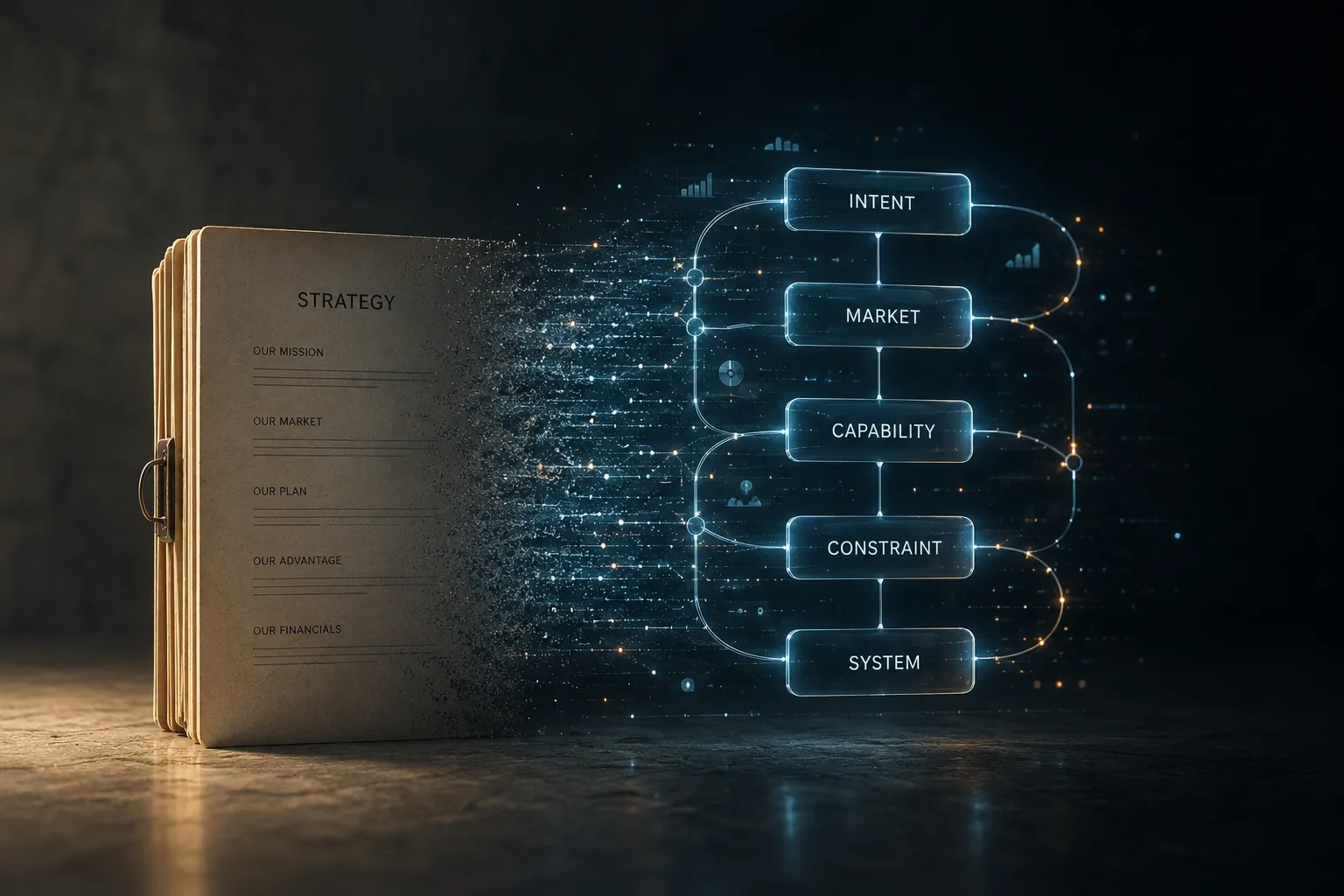
Strategy Is Becoming Software
The same strategy now lives across five lenses, five layers, and one adaptive loop. Why the strategy that used to be a noun in a deck is becoming a verb encoded in a system that senses, decides, and learns.
Read essay →
The Build Got Cheap. The Bill Did Not.
AI has collapsed the cost of building software — and quietly moved the expensive part to somewhere no one is looking on the P&L. Why the line that matters is no longer the cost to build, but the cost to change — with an interactive Build-vs-Buy playbook.
Read essay →
The Risk Even the Best Investors Rarely Price
The founder's unfillable seat — and the quiet temptation to fill it for free — is where early-stage technology bets actually fail. Why the risk goes unpriced even in rigorous diligence, and six questions to put to any founder on a Monday morning.
Read essay →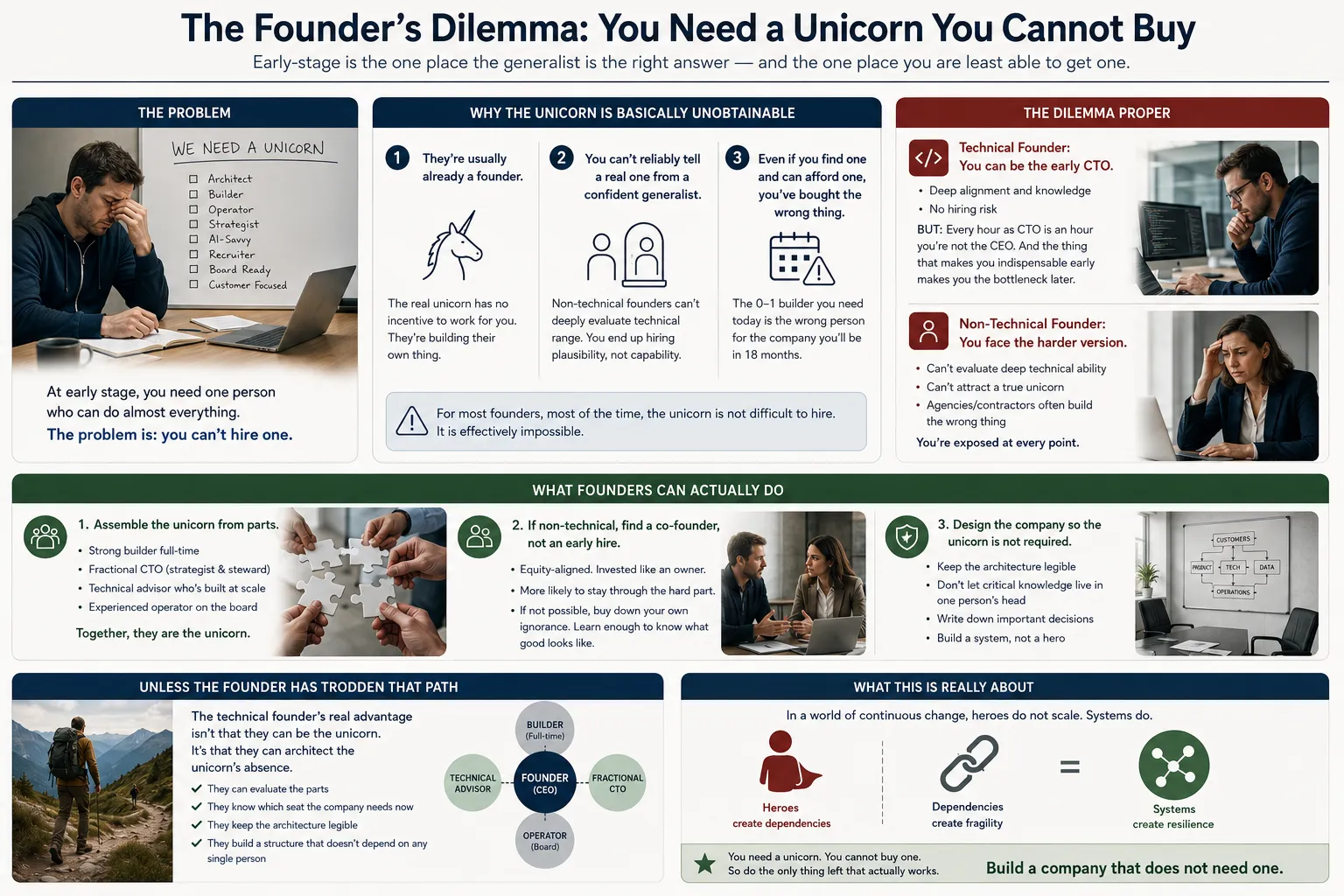
The Founder's Dilemma: You Need a Unicorn You Cannot Buy
Early-stage is the one place the generalist is the right answer — and the one place you are least able to get one. Why the unicorn CTO is structurally unhirable, and what to build instead of waiting for one.
Read essay →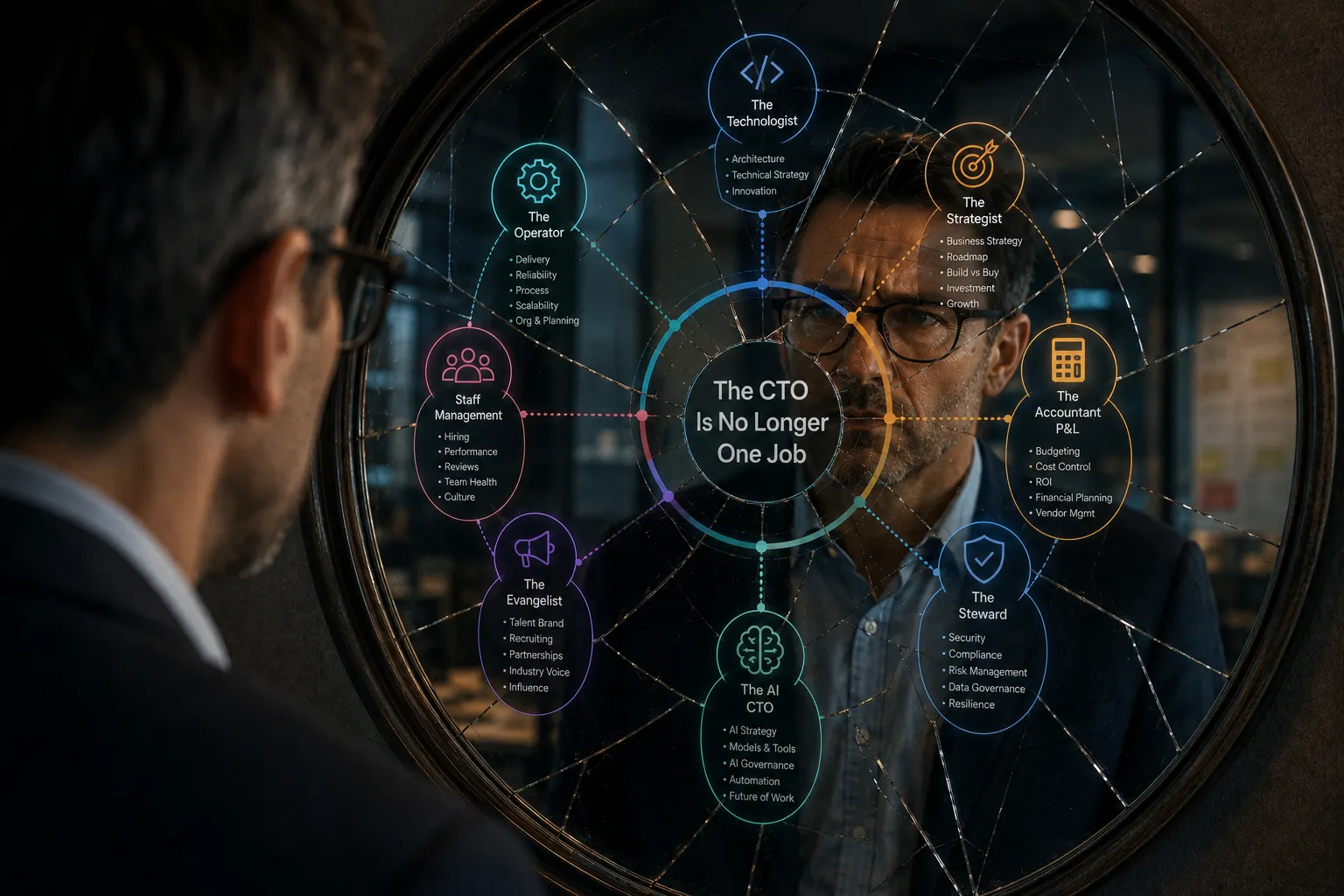
The CTO Is the First Executive Role to Break
What happens when one job quietly becomes six? The CTO role didn't evolve — it fractured. A field account of the five (now six) CTOs hiding inside one title, and why technology leadership is just the canary for a C-suite that's about to break the same way.
Read essay →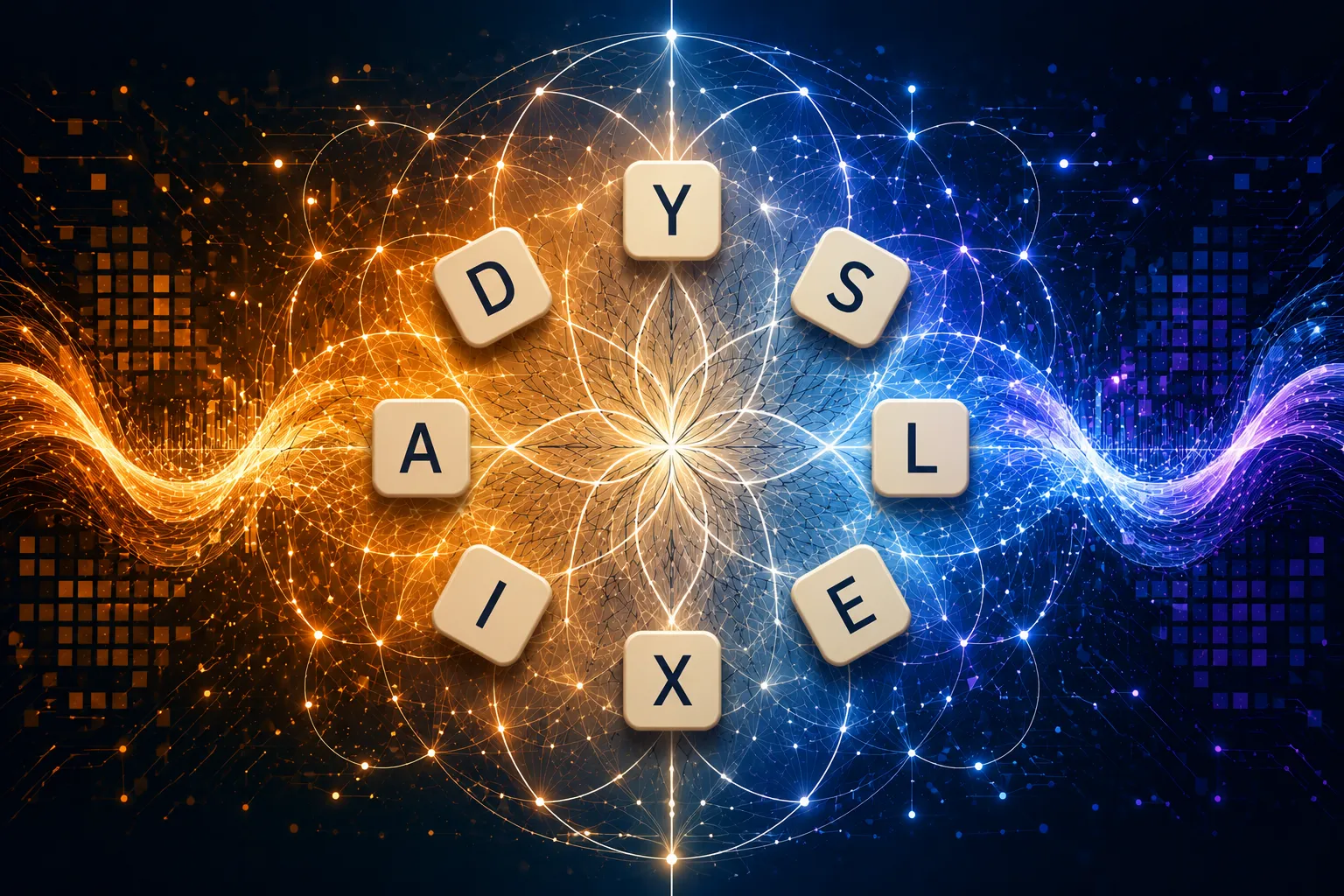
Off Topic and Personal: Dyslexia, Early Diagnosis, and the Human Spell Checker
A personal one. I'm dyslexic, I was diagnosed late, and I have opinions about both. Why catching it early changes a child's whole trajectory — two free guides you can download and share — and a word in defence of the most underrated person on any team.
Read essay →
The Future Has No Target State
TOGAF is dying — not because it failed, but because the world it was designed for no longer exists. The quiet disappearance of the target state, and the ecosystem of lighter practices rising in its place.
Read essay →
The Giant Under the Snow
A story in three pieces and a postscript — Bertha asleep under the snow, the boy in Yorkshire who built her, an outside reading of the man, and his own last word on why humans and AI should coincide.
Read essay →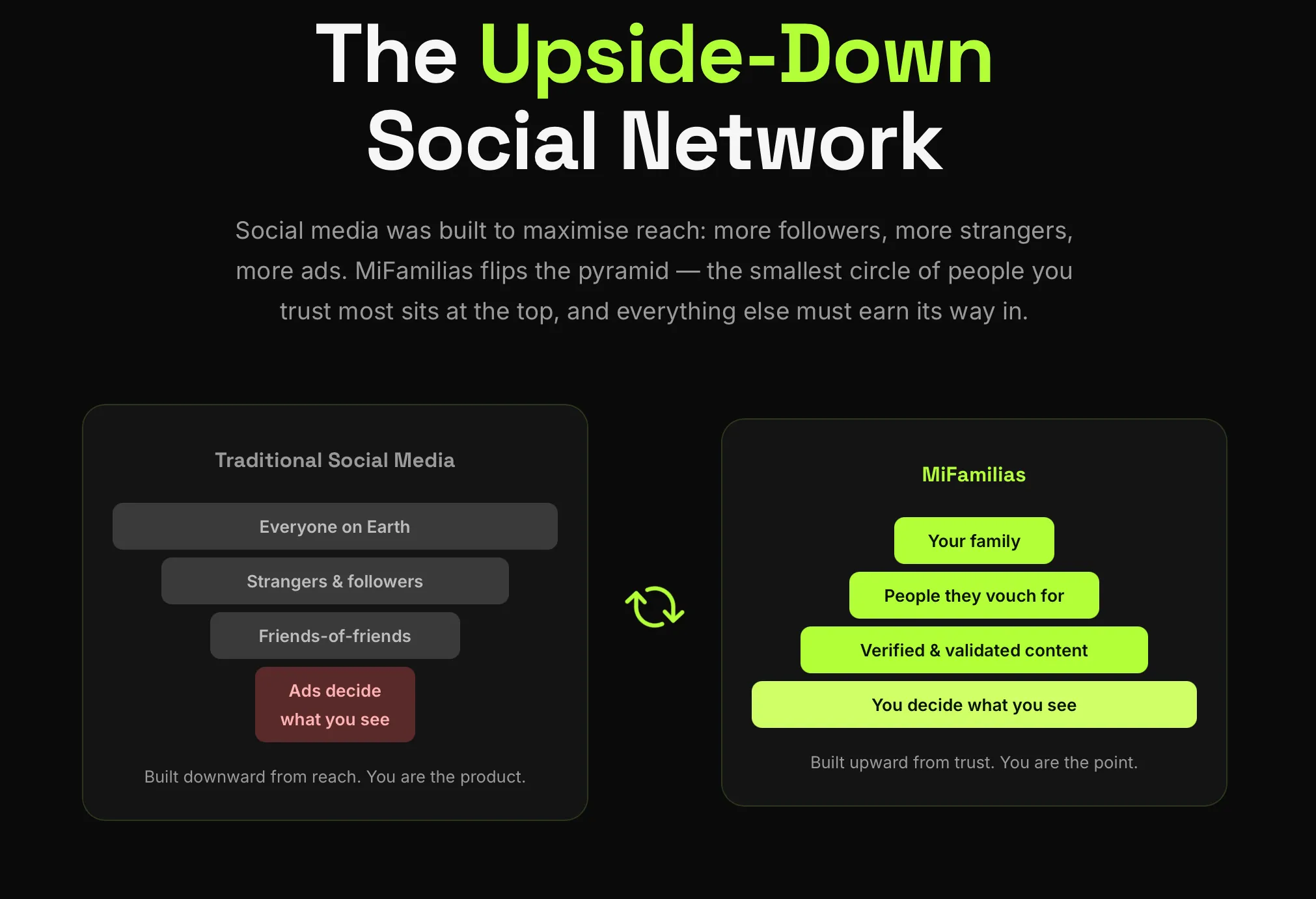
The Upside-Down Idea: Why I Built MiFamilias
It started in 2022 with a simple, uncomfortable question about my own family and the platforms we lived on. This is the story of the idea, the principles behind it, and how a €250,000 quote became one coder and six months.
Read essay →
What Seven Years Inside a Construction Giant Taught Me About Risk, Scale and Survival
Before any of the products, before Bangkok, there were seven years inside Balfour Beatty's group head office in Victoria — consolidating eighteen CTOs into six, being early on the cloud and on predictive modelling, and watching Carillion, then the UK's second-largest contractor, collapse in real time. Why construction is really an information-and-risk business that happens to build physical assets, how buildings taught me systems architecture before software did, and how a clerk of works walking a live site became the instinct behind SILO.
Read essay →
Why Imperfection Is the Future of Intelligence
From dodge gates to iced lattes — how interference patterns, imperfect choices and a dash of cosmic uncertainty might finally give us thinking machines that think. The universe computes with waves; traditional computers are clockwork-perfect and therefore brittle. This essay makes the case for structured imperfection — probabilistic 'dodge gates' layered over quantum-inspired depth — and shows what it looks like in the two domains I've worked in most, financial services and marketing, where prediction lives between chaos and order.
Read essay →From across the portfolio
- 01
Bertha · Campfire Stories from the Architect
Three years, bootstrapped, and brutally honest.
“AI is at its most dangerous when it is most confident.”
A candid founder’s account of building Bertha — the technical fight, the personal cost, and a clear-eyed view of AI as pragmatic augmentation rather than magic. No sanitised success story; the full accounting.
Read the journal - 02
Silo · The Journal
One 2 a.m. question became a mission to secure AI.
The eighteen-month story of Silo — from the discovery that AI agents were operating completely unsupervised, to a kernel-level platform that scores trust and catches anomalous behaviour. A new security problem, told from the inside.
Read the journal - 03
SpeakEasy · Blog
From Stand Easy to Speakeasy.
“The best tools solve real problems.”
A personal story: how living with dyslexia and arthritis drove the build of a voice-to-text tool. Accessibility as a first principle, not an afterthought — and proof that the best tools come from solving your own real problems.
Read the journal - 04
CodeEasy · From the Architect’s Desk
Why I built CodeEasy.
After eighteen months building four full-stack products with Claude Code, the gaps were obvious: AI is brilliant in the moment but loses the thread. CodeEasy is the answer — persistent memory and architectural continuity that turn an assistant into a partner.
Read the journal - 05
K8 Inspector · Our Story
Kubernetes shouldn’t need a priesthood.
How a tool born of pure frustration became a way to master Kubernetes rather than fight it — turning the most intimidating layer of the modern stack into something a normal engineer can actually reason about.
Read the journal - 06
Sidekick · The Architecture
A second brain that can prove it.
The technical write-up behind Sidekick — how conversation becomes executable, provable memory, and why an assistant you cannot audit is an assistant you cannot trust.
Read the journal
Elsewhere
Not everything worth reading is mine. A short, genuinely-recommended list — the writing I keep sending people.
The AI Futurism Reading List
Compiled for a strategy fellowship run through Astra — the reading group Redwood used with their fellows on the topics that matter for thinking clearly about AI futurism: the key dynamics of AI development, existential risk, and the approaches to mitigating it. Avowedly opinionated, weighted to Redwood’s own focus, and not trying to be comprehensive — which is precisely what makes it useful. If you want the serious version of the conversation everyone else is having badly, start here.
Read it YouTubeAI Insider Confesses — Our Kids Won’t Have Jobs, and AI Will Replace Us All
The loud, uncomfortable version of the argument — and worth an hour precisely because it refuses to be reassuring. I don’t agree with all of it, and I’ve written at length about why I think judgement and trust survive the automation of the work itself. But the case deserves to be met head-on rather than waved away, and anyone building in this field owes it to themselves to sit with the strongest version of the pessimism before dismissing it.
Watch it