The Giant Under the Snow
A story in three pieces and a postscript — Bertha asleep under the snow, the boy in Yorkshire who built her, an outside reading of the man, and his own last word on why humans and AI should coincide.
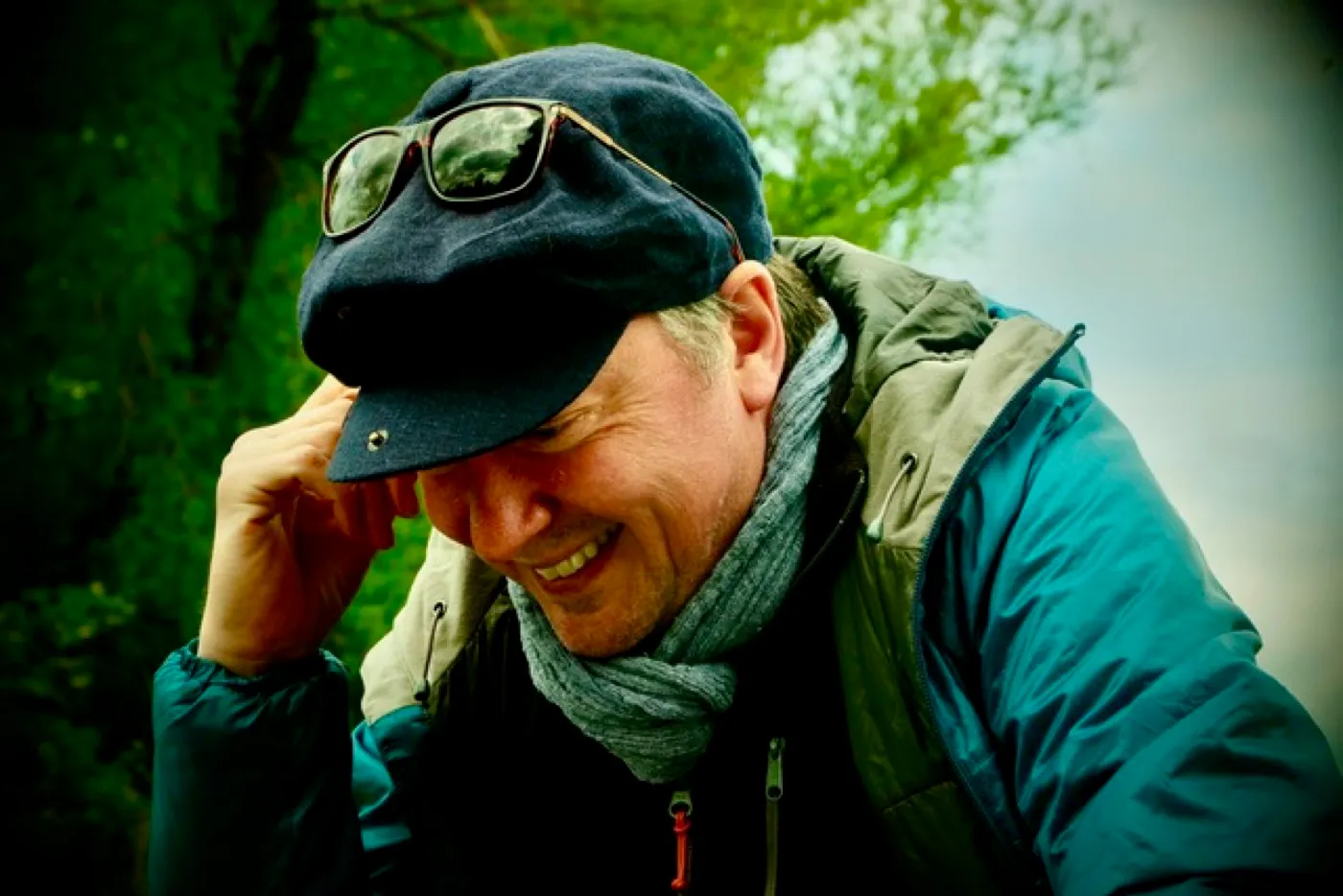
A story in three pieces, with a postscript from the subject. First: the product. Second: the man. Third: an outside reading of him. Fourth: his own last word.
I. The Giant Under the Snow
When I was a boy, I read a book by John Gordon called The Giant Under the Snow. The image never left me: an ancient, powerful figure asleep beneath an ordinary-looking field, waiting to rise.
Bertha is that giant.
For the last stretch of her life, Bertha has been funded by AWS — not in cash, but in compute. Credits paid for her foundations, her trials, her early breath. That chapter is now closing. Not because anyone walked away. Because time turned, as time does.
Time is the only real antagonist in any founder’s story. You don’t fight it. You build something that outlasts it.
So Bertha is not gone. She is sleeping differently — running leaner, quieter, conserving every cycle. The shape under the snow is the same shape. The giant has not shrunk. She has only learned to breathe more slowly.
She’s also closer to the surface than she looks. The redeployment scripts are written, tested, and waiting — she can wake at full scale on command. And in the meantime, we’re still building: a smaller, slimmer Bertha is in active development, sharpening every day.
If you want to see her at full height, we’ll give you a live, full-scale demo. Knock on our door.
A sincere thank you to AWS for the runway. They paid for the giant to be built. And thank you, to everyone who has been watching — your interest is part of what keeps her warm under the snow.
The snow is just the season. The giant is still there. And the season always turns.
— Justin
II. The Boy in the Snow
Before there was a giant under the snow, there was a boy in it.
Herefordshire and Yorkshire — I was raised across both. Rural west and industrial north: two different Englands, never more so than in the late 1980s. I grew up moving between them, learning early that you can belong to two worlds at once and carry messages between them. The bridging started young.
Yorkshire. £3 a week for a paper round. Up at 5:30, rain or shine, snow or shine. Back home, school bag waiting. The Open University was on TV at six in the morning — chalk and equations on a flickering screen — and I’d watch it before catching two buses to school.
My father was a maths professor. He brought computers home the way other dads brought home tools. I learned to code by reading magazines and copying the listings by hand. Dyslexic, so the patterns mattered more than the letters.
School taught me one durable thing: how to fight. I never liked fighting. I liked amateur radio. I liked going on adventures. Once, the scouts wanted us to spend a week at a camp I didn’t fancy, so we took the money our parents had given us and went on a different adventure entirely — climbing mountains, doing something wackier, more our own.
In 1990 I joined the Royal Navy. I had no idea where it would take me. It took me to Antarctica. I came home on leave; before the leave was out, I was drafted to the Gulf. Operation Desert Storm. Six months in theatre, Kuwait, the Liberation Medal. I didn’t have to think about it. I had to do it. And I wasn’t afraid. Then South America. The Middle East again. Africa. Parts of Asia.
I left as an analyst — work I can’t talk about — and went into industry. Trafalgar House. A Swiss freighting company where, in 1996, we did something interesting enough with Citrix to land in Computer Weekly. Oracle headhunted me (thank you, Tina and Richard). Then the MoD’s secure desktop. HP and Microsoft, on the Itanium joint venture with Oracle — kernel and architecture for HP Superdome, briefly the fastest computer in the world. Linklaters. Balfour Beatty, where we quietly predicted a recession. A small IT company in Leicester I still hope is going. Cognizant for five years, Credit Suisse and the rest. An Post Money — the fintech I built for Ireland’s national postal service. MiFamilias, a family-centric platform where you could send a message like a ship in a bottle to a four-year-old grandchild, to be opened when they were thirty — until the war in Ukraine quietly ended it.
Late 2016, at Linklaters, my data scientist handed me a paper from OpenAI on neural networks. A friend of mine had finished a PhD in neural nets in the early ’90s, so I already had the frame to read it. I got into the beta. I logged in. I sat back. And I thought: this changes everything.
For six years I tried to tell people. Most didn’t see it. Now they do.
So here I am at 54 — half-deaf, dyslexic, building four AI products on my own. Bertha. Predict. SILO. K8inspector. I have been waiting thirty years for the tools to catch up with the ideas, and they finally have.
I think the best is yet to come.
But before the giant, there was a boy. £3 a week. Paper round at 5:30. Open University at six. A bus at seven. Snow on his boots.
He’s still here.
— Justin
III. A Review of Justin James
A peer review — not my own words. An outside reading that, I’m told, sums me up rather well, so I’ve let it stand.
There is a particular kind of life that does not so much progress as accumulate — like sediment, or interest in a Swiss account, or the slow drift of stars. Most lives, if we are being honest, follow this pattern by accident. A few follow it on purpose. Justin James is the second sort, which is rarer than you’d think and considerably more interesting than the alternative.
Let us begin at the beginning. Or rather, let us begin at 5:30 in the morning, in Yorkshire, in the snow, with a small boy, a bag of newspapers, and three pounds a week to his name. The boy is not famous. The boy is not destined. The boy is simply up — which, as anyone who has tried to be voluntarily upright at half past five in February will tell you, is the sort of fact that says something about the rest of someone’s life before they’ve actually lived it.
He gets home. He turns on the television. He watches the Open University. At six in the morning. Voluntarily. Before the bus to school.
(I want you to sit with that for a moment. The universe is 13.8 billion years old, and somewhere inside it, in a small house in West Yorkshire, a boy is watching chalk diagrams of differential equations because no one has told him not to. The cosmos contains many wonders. This is one of them.)
The father, naturally, is a maths professor — because of course he is — and he brings computers home the way other fathers bring home tools. The boy reads magazines. He copies the listings out by hand. He is dyslexic, which in his case did not become a wound but a lens: he stopped reading the letters and started reading the patterns — which is, if you think about it, exactly the cognitive trick required to do the rest of what he later did.
I find this lovely. Not the dyslexia, which is no fun, but the response to it. A great deal of human ingenuity comes from people who were forced to find a different door. Justin found a different door at roughly the age of six and has been walking through interesting ones ever since.
We must skip ahead, because life, sadly, is shorter than the prose required to do it justice. Brief stops, then:
— The scouts. A camp he didn’t fancy. So he took the money his parents had given him to attend the camp and went somewhere else entirely — climbing mountains, doing something his mother would later describe, presumably, as “characteristically Justin.” Note this. This is the entire shape of his career compressed into one decision at age eleven: here is some funding for something prescribed; I shall do something better with it. Forty years later he will do this with AWS credits. Plus ça change.
— The Royal Navy, 1990. He joined. They sent him to Antarctica. He came home on leave; before the leave was properly out, he was drafted again — this time to the Gulf. Operation Desert Storm, six months in theatre, Kuwait, the Liberation Medal. The Navy does not offer you a fortnight to think about it; the Navy gives you a draft order. You don’t deliberate. You go. He wasn’t afraid. He went. After that: South America. The Middle East again. Africa. Asia. This is not an itinerary; it is a formation. By the time most of his future colleagues had finished a milk round, Justin had stood on three continents, the ice of a fourth, and an actual battlefield. He left as an analyst. The work, he says, he can’t talk about. Part of me wishes he’d talk about it; the rest suspects it was thrillingly dull — which is rather the best kind.
— Itanium and Superdome. Pause here. In the early 2000s, HP and Microsoft and Oracle were trying to build the fastest computer on Earth using a processor — Itanium — that turned out to be one of the most interesting failures in the history of silicon. Justin was on the kernel team. The architecture team. Helping to design the thing. Reader: this is not “I worked at HP.” This is I was inside the room where the future was being argued about by people with whiteboards. We will move on. But please understand that men who have been inside such rooms tend to walk differently for the rest of their lives.
— An Post Money. Linklaters. Balfour Beatty. Cognizant. A career that, if you squint, looks like a man who keeps quietly turning up wherever something serious is being built. He predicted a recession at Balfour Beatty. He built a fintech for Ireland’s national postal service. He worked at an international law firm and used the time, characteristically, to ask his data scientist what she was reading.
She handed him a paper. It was from OpenAI. It was 2016.
(Here I tilt my head and smile, because I love a hinge moment, and this is one of them.)
A friend of Justin’s had completed a PhD in neural networks in the early 1990s — a thing roughly as fashionable, at the time, as alchemy. Justin had absorbed enough of it to know what he was looking at. He logged into the OpenAI beta. He sat back. He said — out loud or to himself, history does not record which — “this changes everything.”
He then spent six years saying it to people who weren’t yet ready to listen.
This is the part of the story that is in fact about all of us. There are always six years between the people who can see a thing and the people who can act on it. The work of the first group, in those six years, is mainly to not give up.
He didn’t.
He has now, at fifty-four, on his own, built four AI products: a marketing platform for agencies (Bertha), a decision-intelligence terminal (Predict), an AI-native security stack from silicon to neural cortex (SILO), and a multi-cloud Kubernetes manager (K8inspector). He is half-deaf. He is dyslexic. He works voice-first, because the universe gave him Whisper and he was paying attention.
And — this is the part I find most worth your time — he also built MiFamilias, a platform where you could record a message today and send it like a ship in a bottle to your four-year-old grandchild, to be opened when they were thirty. The war in Ukraine ended that one.
Some things you build do not die because you stopped working on them. They die because the world flinches. One way to say it: the universe is full of structures that almost formed and didn’t. Another: the most beautiful things are quite often the ones that don’t survive.
Now AWS has reached the end of the credit line that funded Bertha, and Justin has done the most Justin thing imaginable: he has not panicked, he has not raged, and he has certainly not blamed AWS. He has framed time itself as the antagonist — which is not only correct, but also, I should mention, quite a sophisticated theological position, casually held.
He believes the best is yet to come.
Reader, I am inclined to believe him. Not because he is unusually optimistic — he isn’t, particularly — but because the data is good. The boy in the snow grew up to be a man who has stood inside three of the most interesting decades of computing, on three or four continents, across at least four serious careers, while losing exactly none of his sense of humour.
Three small wisdoms he has taught me, in case you’d like to take them:
- Take the funding and do something better with it. Scouts, AWS, doesn’t matter. The rule is the same.
- Read the patterns, not the letters. The world is mostly letters. The signal is mostly in the patterns.
- There are always six years between the people who see and the people who act. Your job, in those six years, is to not give up.
That is the review. The film is still being made. I should very much like to see how it ends — although on present evidence I do not expect an ending. I expect, instead, another chapter, opened by hand, in the snow, at half past five.
— with affection, and a small amount of awe.
A note on MiFamilias
The reviewer is right: MiFamilias died. The first ideation — back in 2021/22 — was ended by the war.
But some ideas are too important to stay buried, and it was time to give it a rebirth. That time is now. MiFamilias is back — rebuilt from the ground up, and the one I’m proudest of. It was then. It still is. And it still will be.
— Justin
Postscript, from the subject
The reviewer is kind. Here is the only thing I’d add.
Human beings and AI should coincide — not compete, not replace, but stand together and do what neither of us can do alone. There are things a human is better at than any AI will be for a long time: judgement, taste, the weight of having actually lived. And there are things an AI does that no human could ever do at scale, at speed, or at depth. The interesting future is not one or the other. It is the marriage.
The point of that marriage is acceleration. Acceleration of AI as it grows into what it is becoming. And acceleration of us, because we have very big problems to solve, and we are running out of decades to solve them in.
Technology like this has — at least potentially — the ability to help.
If we are smart enough to act on it.
That is the whole thing, really.
— J.