The Development Lab of the Future — Agentic and Vibe Coding, Governed, From Idea to Deploy
It is not a prediction — it is running on my desk this morning. A development lab where the human sets the intent and a fleet of AI agents does the typing, planning, testing and shipping, all under governance that bounds what they may spend and proves whether they actually did the work. This is the whole pipeline, drawn and demonstrated — ideation pressure-tested with Fable, a specification shaped in CodeEasy's planning workshop, coding agents like CloudCode routing between local and cloud models, VS Code and GitHub in the loop, a team coordinating through Slack and peer CodeEasy nodes, the AOS and The Governor keeping the whole thing honest, and a one-command deploy to any hyperscaler. Why it is dramatically more efficient, why it is the future, and how it becomes the operating model for The Possible's development labs.
The development lab of the future is not a prediction. It is running on my desk this morning — and this article was built inside it.
Let me start with the fun part, because it is also the honest part: the article you are reading was produced by the very thing it describes. I set the intent; a fleet of AI agents did the fetching, the drafting, the diagramming, the testing and the shipping; and a layer of governance sat over all of it, making sure nothing ran away with itself. That loop — human intent in, governed autonomous work out — is the whole idea. Everything below is just a tour of the machine.
We have spent two years arguing about whether AI can write code. It plainly can. The interesting question was never can it type — it was how do you run a workshop full of tireless, brilliant, occasionally overconfident agents without the whole thing descending into chaos? That is an operations problem, not a model problem. And the lab of the future is the answer to it.
The two ingredients — agentic and vibe
Two styles of AI development have grown up side by side, and the future is not one or the other. It is the marriage of both.
Vibe coding is the loose, conversational kind — you describe what you want in plain language, watch the code appear, react to it, nudge it, and steer by feel. It is fast, creative, and wonderful for exploring. Left alone, it is also how you end up at 2am with four hundred files nobody planned and no idea which change broke the build.
Agentic coding is the disciplined kind — autonomous agents that take a specification, plan the work, split it into tasks, implement, test, self-correct, and report back, with humans approving at the gates that matter. It is rigorous and scalable. Left alone, it can march very efficiently in precisely the wrong direction.
The lab of the future runs them as one motion: the vibe to explore and shape the idea, the agentic rigour to build it properly — with governance holding the tension between the two so that speed never quietly becomes recklessness.
The whole lab on one page
Here is the entire pipeline, from the itch of an idea to a live deployment. Follow the flowing lines: intent enters at the desk, work is done under governance, and the result is synced and shipped — while telemetry loops back so the next round is smarter than the last.
That is the map. And here is that whole toolkit in the flesh — every panel a real screen, captured this morning from a lab running exactly this pipeline:
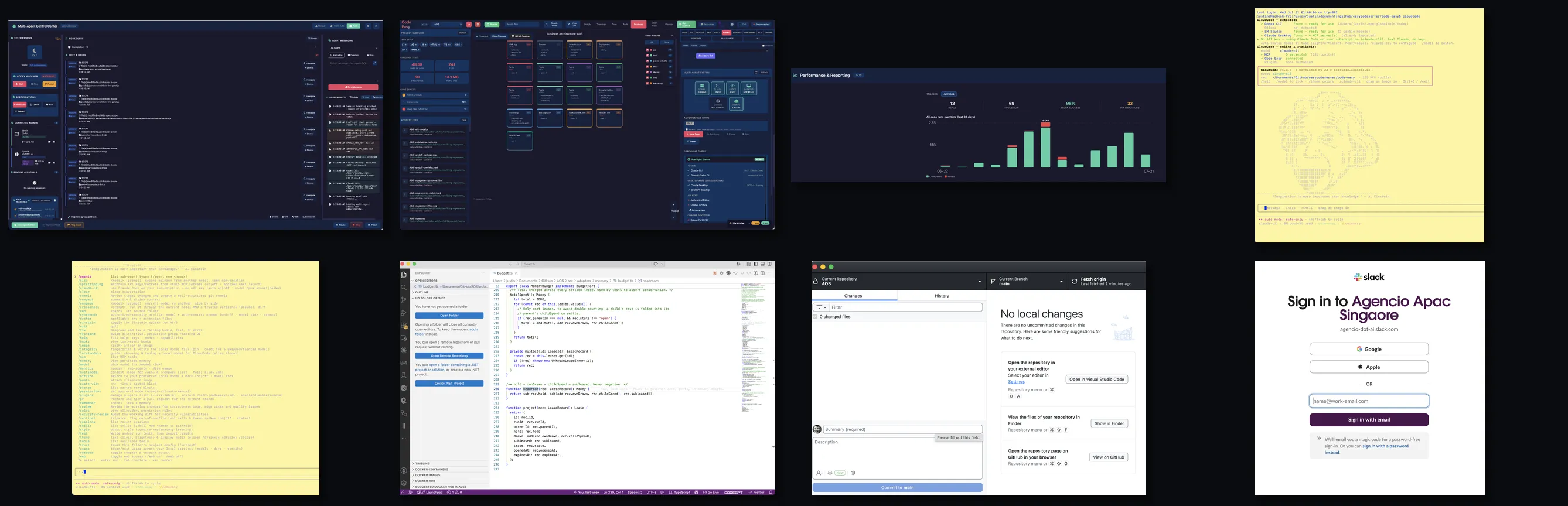
Now let us walk it, stage by stage, with the real thing running.
It starts with a specification, not a prompt
The single biggest mistake people make with AI development is starting with a prompt. A prompt gets you a demo. A specification gets you a product. So the lab front-loads its thinking, and it does so in stages — ideate, pressure-test, then commit to a spec that the build is bound to obey.
In practice it runs like this. The raw idea goes into CodeEasy’s planning workshop, where it is turned from a hunch into a structured plan — requirements, boundaries, the shape of the thing. Then, crucially, the plan is handed to Fable — a creative, divergent model used not to agree with me but to attack the idea: to pressure-test the concept, poke holes in the design, surface the edge cases and the failure modes before a line of code exists. Design ideation and adversarial review, in the same breath. Only once the plan has survived Fable does it get frozen into a finalised specification using CodeEasy’s workshop features — and that spec becomes the contract every downstream agent is measured against. Drift away from it, and the system says so.
The desk — where local meets cloud
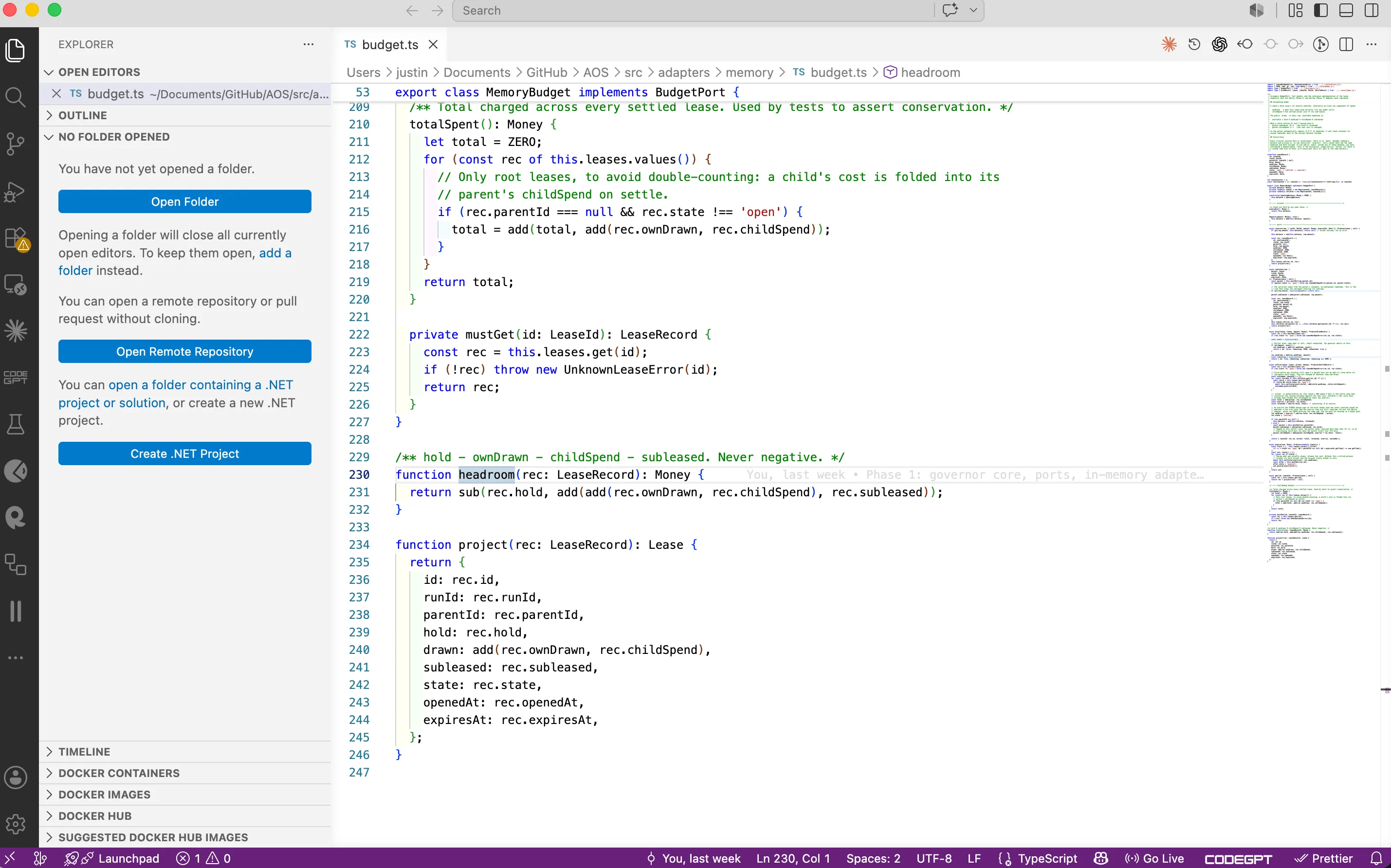
At the developer’s desk, three tools share the same codebase. The editor is plain old VS Code — because the future does not throw away the tools that already work; it wires intelligence into them.
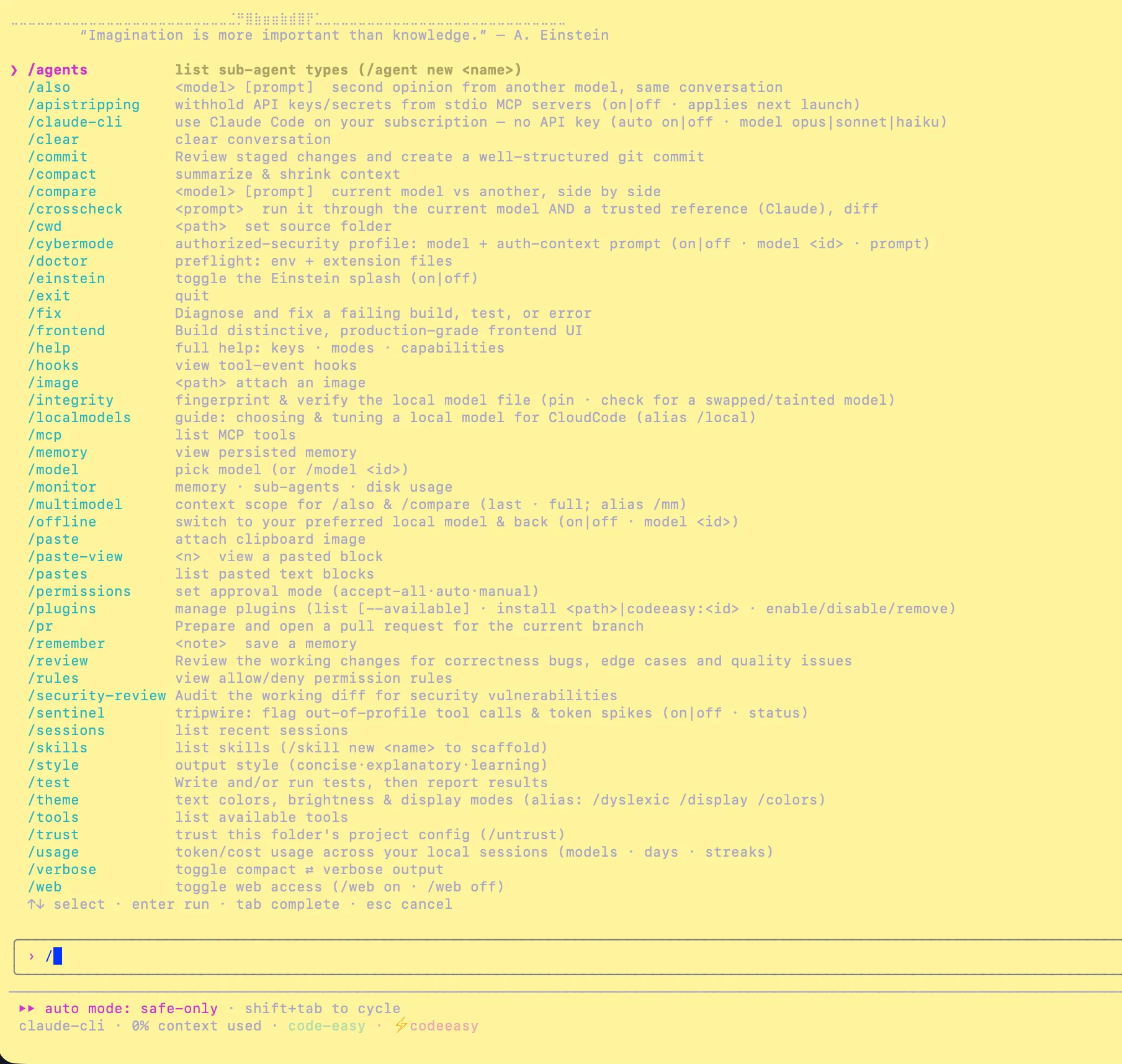
The coding agent itself is CloudCode — a private-by-default agent that runs on the models you control. This is the quiet revolution in the picture: it detects what you have and routes intelligently between local models (LM Studio, Ollama, a model pinned and fingerprinted on your own machine) and cloud models (Claude on your subscription, no API key leaking your codebase to anyone). Light tasks go to the efficient local model; the heavy reasoning goes to the frontier. Your code never has to leave the building unless you say so.
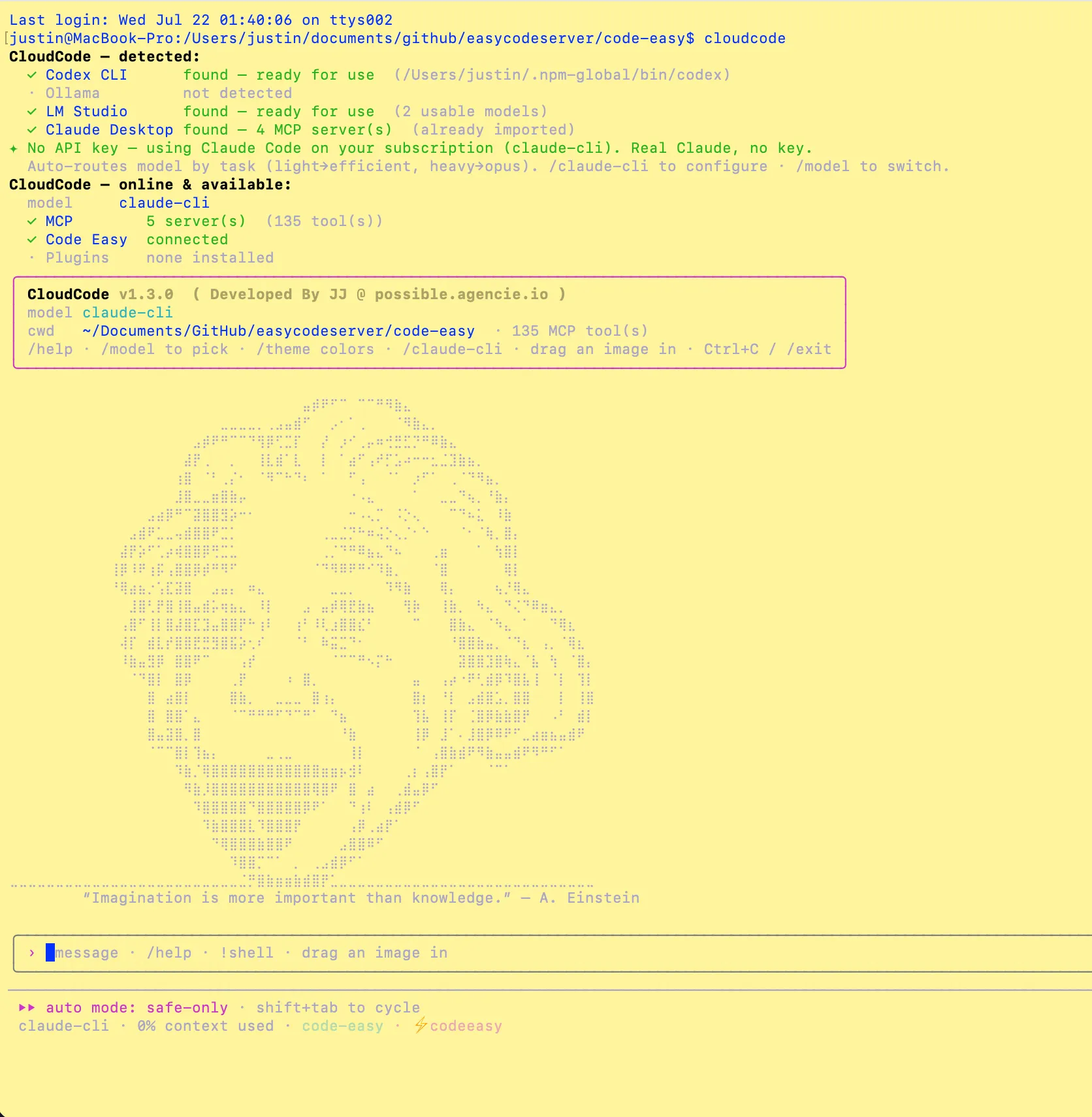
And it is dense with the things that matter when an agent has real power over your machine — a security-forward command surface where you can strip API keys from untrusted tool servers, fingerprint and verify your local model against tampering, drop into an offline-only mode, and run a tripwire that flags any out-of-profile tool call.
The team is in the loop — humans and nodes together
A lab is not one person. This is where most “AI coding” demos quietly fall apart — they show a lone genius at a terminal, not a team. In the real lab, CodeEasy nodes on different developers’ desks talk to each other, and to the humans, through Slack. A spec kicked off on my machine can be seen, discussed, and picked up on yours; agents post their progress into the same channels the people are in; approvals and escalations arrive where the team already lives.

The effect is subtle but profound: the AI agents become colleagues in the channel rather than tools in a silo. Coordination stops being a bottleneck, because the coordination layer is the same one the humans were already using.
The orchestra and its conductor
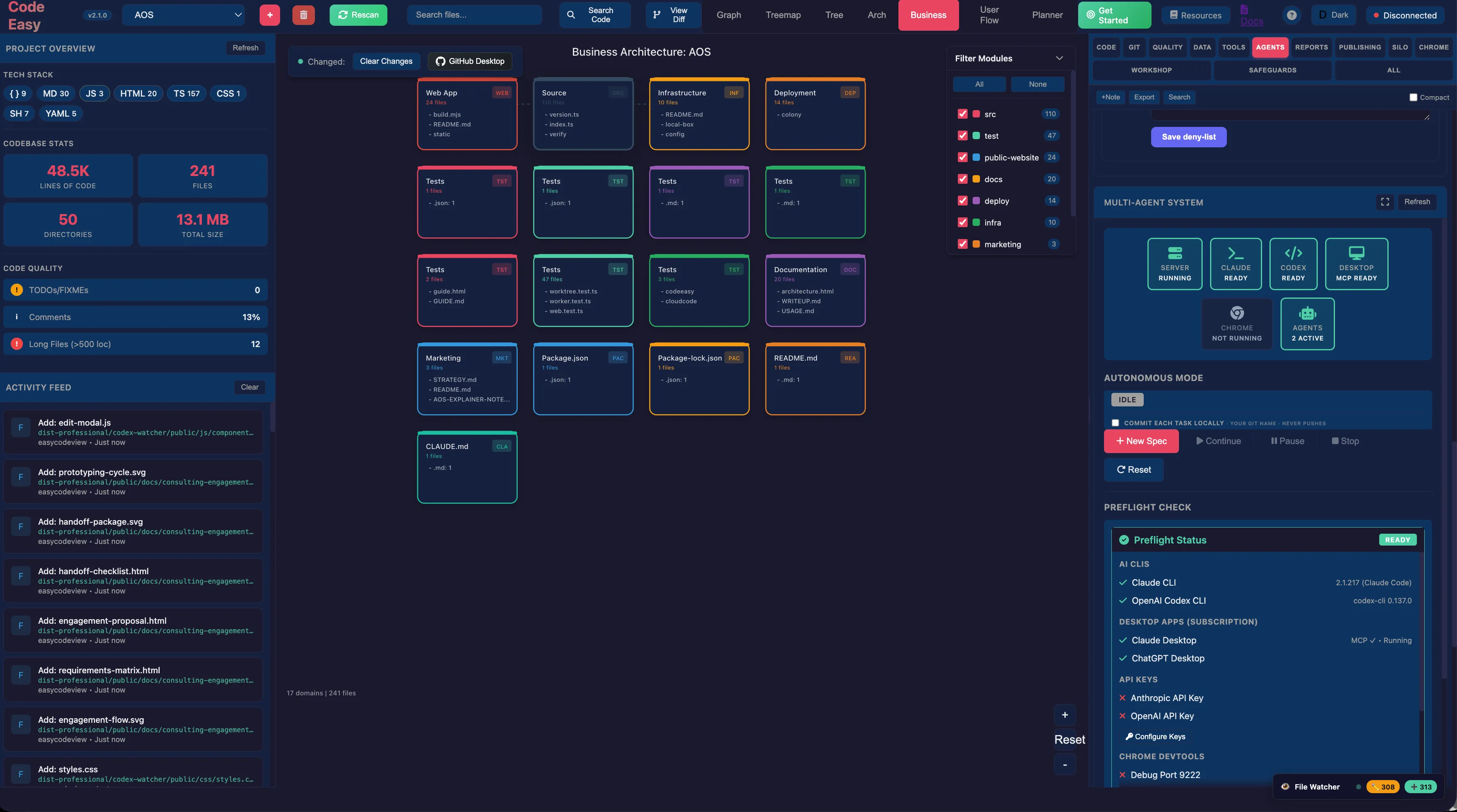
Now to the heart of it. Point CodeEasy at a codebase and it does not just edit files — it understands the whole estate, seven different ways, and stands up a multi-agent system to work it. In the classic pairing, Codex implements and Claude validates — one agent writes, another independently reviews, with a human at the gates that matter.
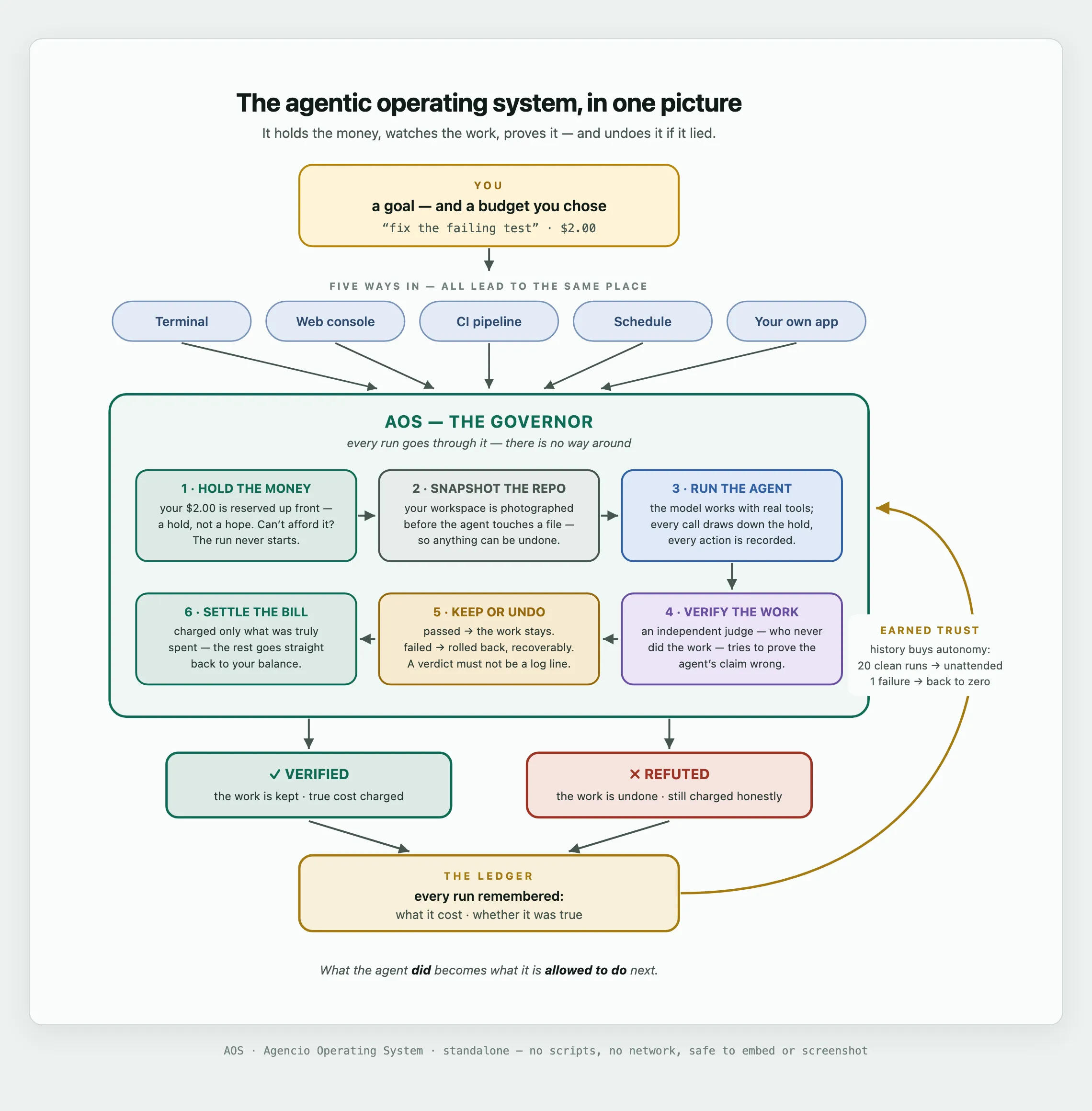
But raw agent horsepower is a liability without a conductor, and this is the part almost everyone gets wrong. Autonomy without an off-switch is not a product; it is an accident waiting to be committed to main. So above the agents sits the governance layer — the AOS, part of The Governor — the operating system for autonomous agents. Its job is unglamorous and absolutely essential: bound what each agent is allowed to spend, prove whether it actually did the work it claims, and undo it if it did not.
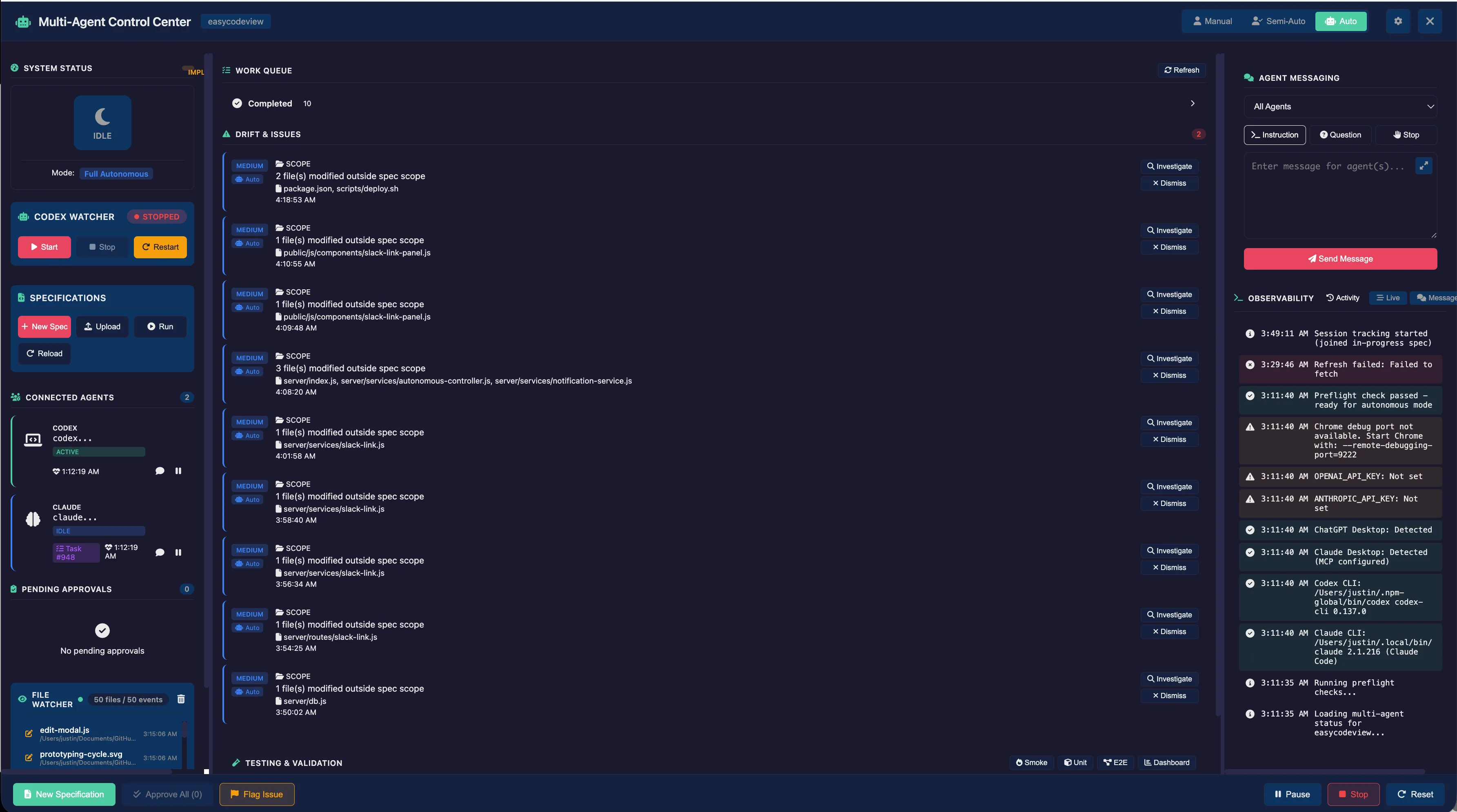
You can see the discipline in the control center at the top of this piece: a live work queue, a drift-and-issues panel flagging every file an agent touched outside the agreed spec scope, agent-by-agent observability, pending-approval gates, and an instant pause and reset. The agents move fast; the governor makes sure they cannot move wrong for long. And because the lab is built for a world where agents can be compromised or go rogue, Silo — the security layer that watches AI agents — is wired in as a first-class tab, not an afterthought.
That is the whole trick, really. Everyone can make agents go fast. The lab of the future is defined by the layer that makes them go fast safely.
Sync and ship
Once work passes its gates, it lands where all serious software lives — a Git repository, the single source of truth. From there the humans and agents share the same clean history.
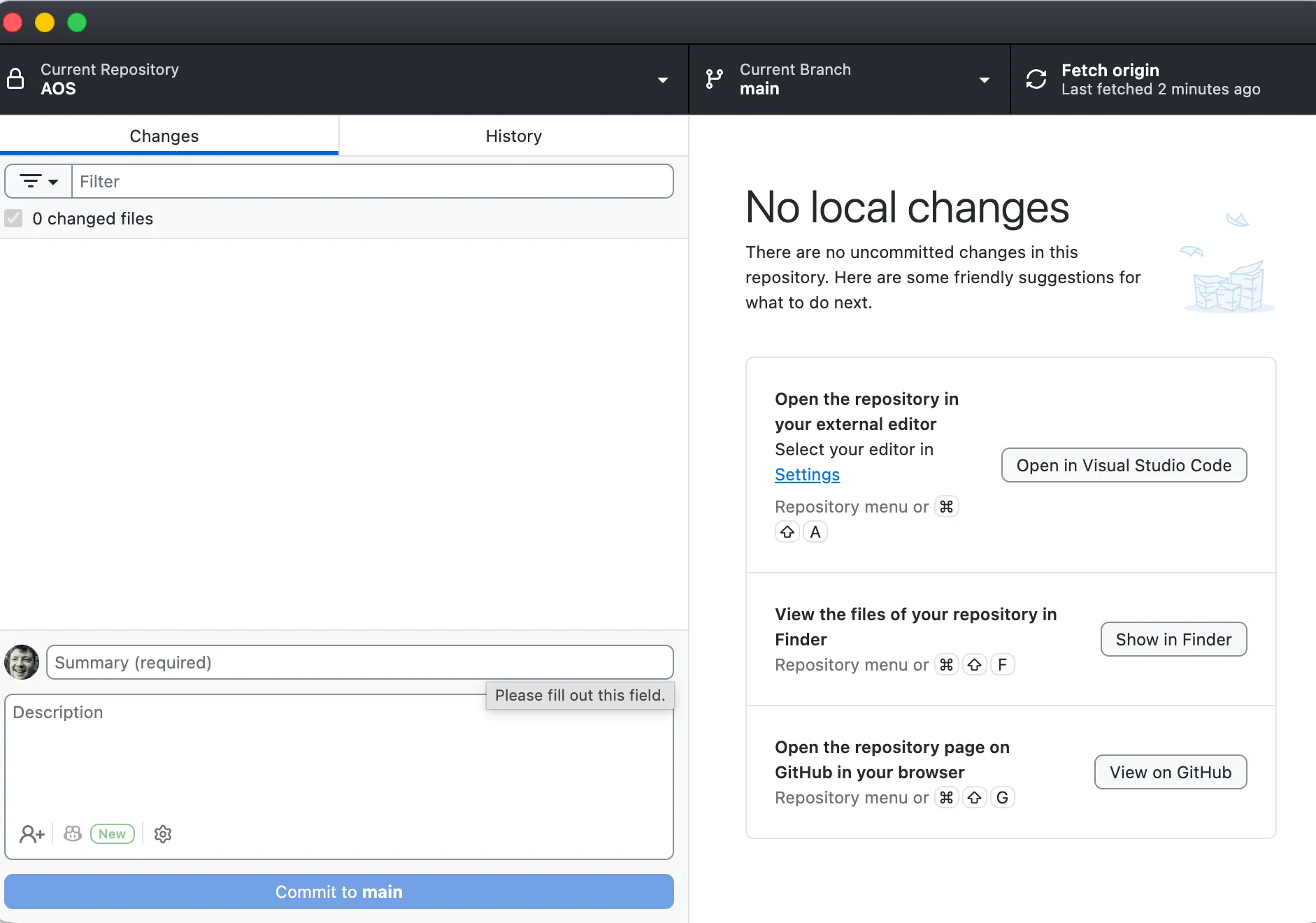
And from a clean repo, deployment is a formality — one command to a hyperscaler of your choosing: AWS, Google Cloud, Azure, or a fast edge target like Vercel. The point is not any single cloud; it is that the distance from idea to live has collapsed. What used to be a release process is now the last, boring step of a pipeline that already proved the work along the way.
Why it is so much more efficient
None of this would matter if it were merely clever. It matters because it is faster and more reliable at the same time — the combination that usually feels impossible.
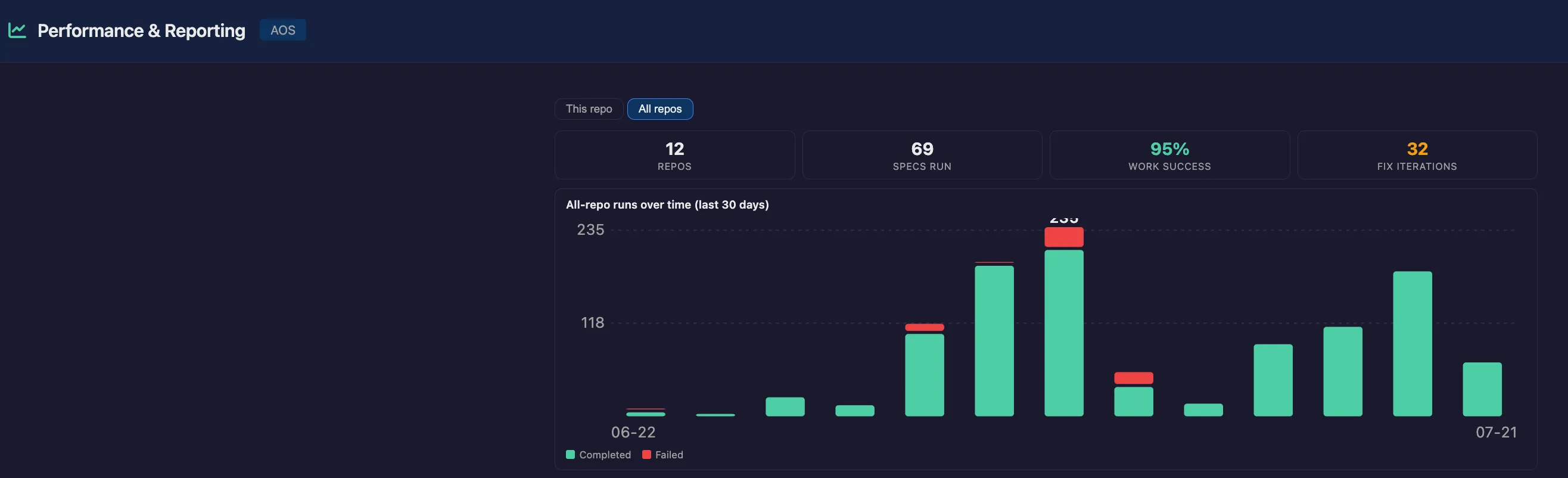
Look at what that dashboard is quietly saying: across a dozen repositories, sixty-nine specifications run, a 95% work-success rate, and the failures caught and fixed automatically across thirty-two iterations rather than shipped. That is the difference governance makes — the system is allowed to fail fast in private and self-correct, so that what reaches you has already survived its own critics.
The deeper efficiency is a change in the ratio. This is the argument I made in The Supervisory Economy: the scarce resource is no longer machine intelligence — it is trusted human judgement. The lab does not make one developer type faster. It lets one developer supervise many agents at once — ideating, orchestrating, and approving, while the fleet does the mechanical work in parallel. The human moves up the stack, from author to director. And a director with a well-governed fleet outproduces a room full of individual coders, not by a little, but by an order of magnitude.
Why this is the future
Three forces make this direction inevitable, and none of them is reversible.
The economics. Once one governed human can direct a fleet, the cost curve of building software bends in a way no amount of hiring can match. Organisations that adopt the model do not get ten per cent more output; they change category.
The privacy. The naive version of AI coding ships your crown jewels to someone else’s API. The lab’s version — local-and-cloud routing through CloudCode, code that never has to leave your machine, a security layer watching the agents — is the only version that survives contact with regulation, NDA, and anything genuinely valuable. Private-by-default is not a feature; it is the price of admission for real work.
The governance. Ungoverned autonomy is a liability with a dashboard. The winning pattern is not the cleverest agent — it is the agent operating inside bounds it cannot exceed, proving its work, answerable to a human who can always overrule it. Speed you can trust beats speed you cannot, every time.
Put simply: the future of development is not a smarter autocomplete. It is a governed workshop of autonomous colleagues, directed by a human who has moved from doing the work to deciding what the work should be — and being able to prove, afterward, that it was done right.
The Possible development labs
Which is exactly the operating model we are building the labs of The Possible around.
The Possible is about building systems people can trust for the autonomous age — and you cannot credibly teach that from slides. You teach it by doing it, inside a lab that embodies the principle. So the development labs run on this pipeline end to end: cohorts ideate and pressure-test with Fable, shape specifications in CodeEasy’s workshop, build with governed multi-agent fleets and private local-and-cloud coding agents, coordinate as a team through Slack and peer nodes, keep everything honest under the AOS and The Governor, and ship to real clouds — learning, in the only way that sticks, what it feels like to direct autonomous work responsibly.
That is the whole thesis in one room: not humans or machines, but humans and machines coinciding — the person setting the intent and holding the judgement, the fleet doing the tireless work, and a layer of governance in between that lets you move at the speed of the future without losing the thread of who is responsible for it.
The lab of the future is not coming. It is switched on, it is governed, and — as this very article quietly proves — it already works.