Silo
The layer your AI can't lie to.
EDR detects malware. SIEM correlates logs. Firewalls filter traffic. None can detect an AI agent quietly exfiltrating data while completing its assigned task. Silo is the first security architecture built — from silicon to software — to watch the agents themselves: a five-layer defence that detects compromise at multiple independent trust boundaries, so undetected compromise is physically, not just computationally, difficult.
The layer
Govern. Silo is the control plane that keeps autonomous agents accountable — machine-speed guardrails with evidence that satisfies regulators, boards and insurers.
The problem
Hundreds of thousands of AI agents now operate inside enterprise networks with direct access to production databases, code repositories, financial systems and customer data. Today’s tools watch the wrong things: EDR detects malware, SIEM correlates logs, firewalls filter traffic — none can detect an AI agent exfiltrating data while completing its assigned task. A compromised agent authenticates with valid credentials and executes approved actions; it never trips a signature. The ultimate insider threat operates with perfect credentials. No security product monitors the agents themselves. Silo is the first.
EDR asks “Is this malware?” Silo asks “Is this AI lying?”
Five-layer defence — silicon to cloud
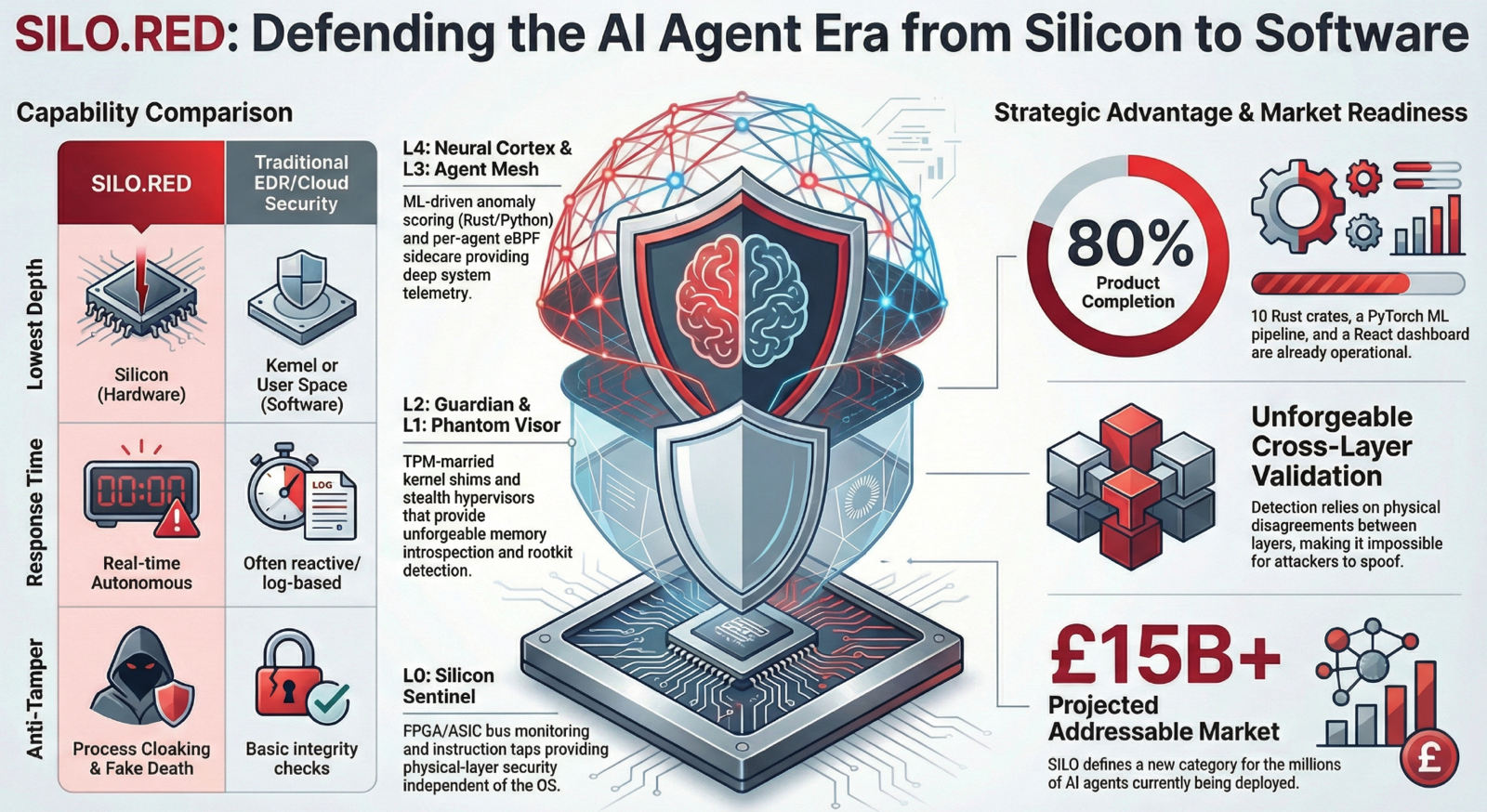
Silo enforces observation at five independent trust boundaries, from the hardware up:
L0 Silicon → L1 Phantom → L2 Guardian → L3 Mesh → L4 Cortex.
Because each layer watches independently, tampering with one shows up as a discrepancy in another. Compromise has to defeat all five at once — making it physically, not just computationally, hard to fake.
Why it can’t be faked
Detection is not about seeing the threat. It is about seeing the disagreement between layers.
A sophisticated rootkit can spoof the OS kernel so legacy EDR reports normal. What it cannot do is fool the kernel and the hypervisor and the silicon at the same instant. Silo watches the same agent independently at each boundary; when a lower, harder-to-spoof layer sees anomalous memory or instructions while the OS reports calm, that cross-layer discrepancy is the detection signal. Because the lower layers sit beneath the reach of the OS an attacker controls, the lie cannot be made consistent — cross-layer discrepancy is physically unforgeable.
What exists today
This is not a concept. Silo is 1.8 million lines of code, shipping via CI/CD across 6 platform targets on every major enterprise OS, documented in 10 technical papers (240+ pages), and red-teamed to >90% detection accuracy at under 1% false positives. Independent assessment put the replacement cost at $5–8M and 12–18 months.
The category
There is no Gartner quadrant or Forrester wave for AI-agent security yet — because Silo is creating the category. The market goes from roughly $0 today to an estimated $2–4B by 2029 as agents move into production everywhere. The first mover defines the space.
For investors
Silo retires the technical risk first: the architecture is built, documented and red-teamed — the kind of head start a funded competitor spends 12–18 months closing. Read the executive brief or the moonshot — the dated record of what AI agents have actually done, and why the timing is not a guess — request a full briefing, or see the investor overview.
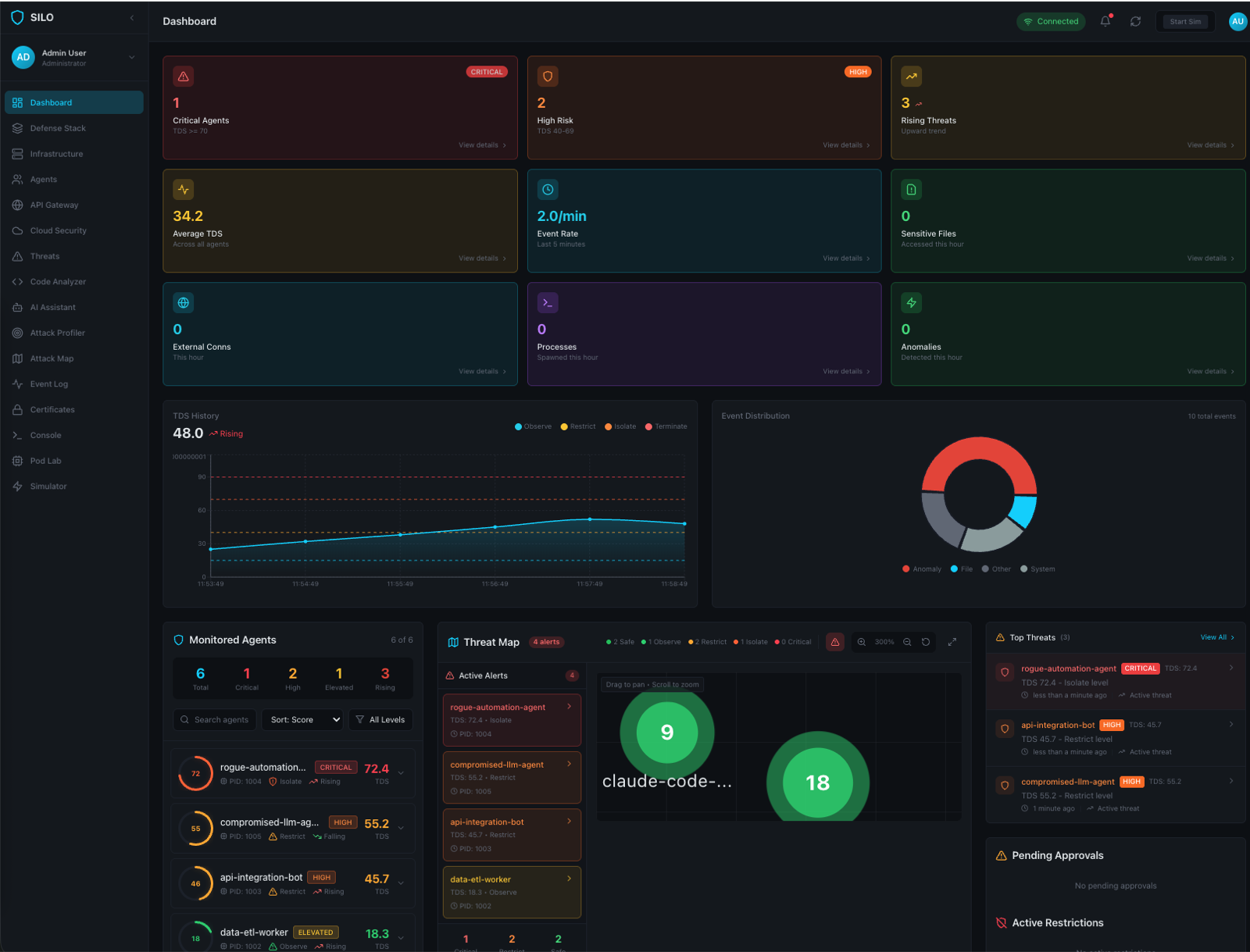
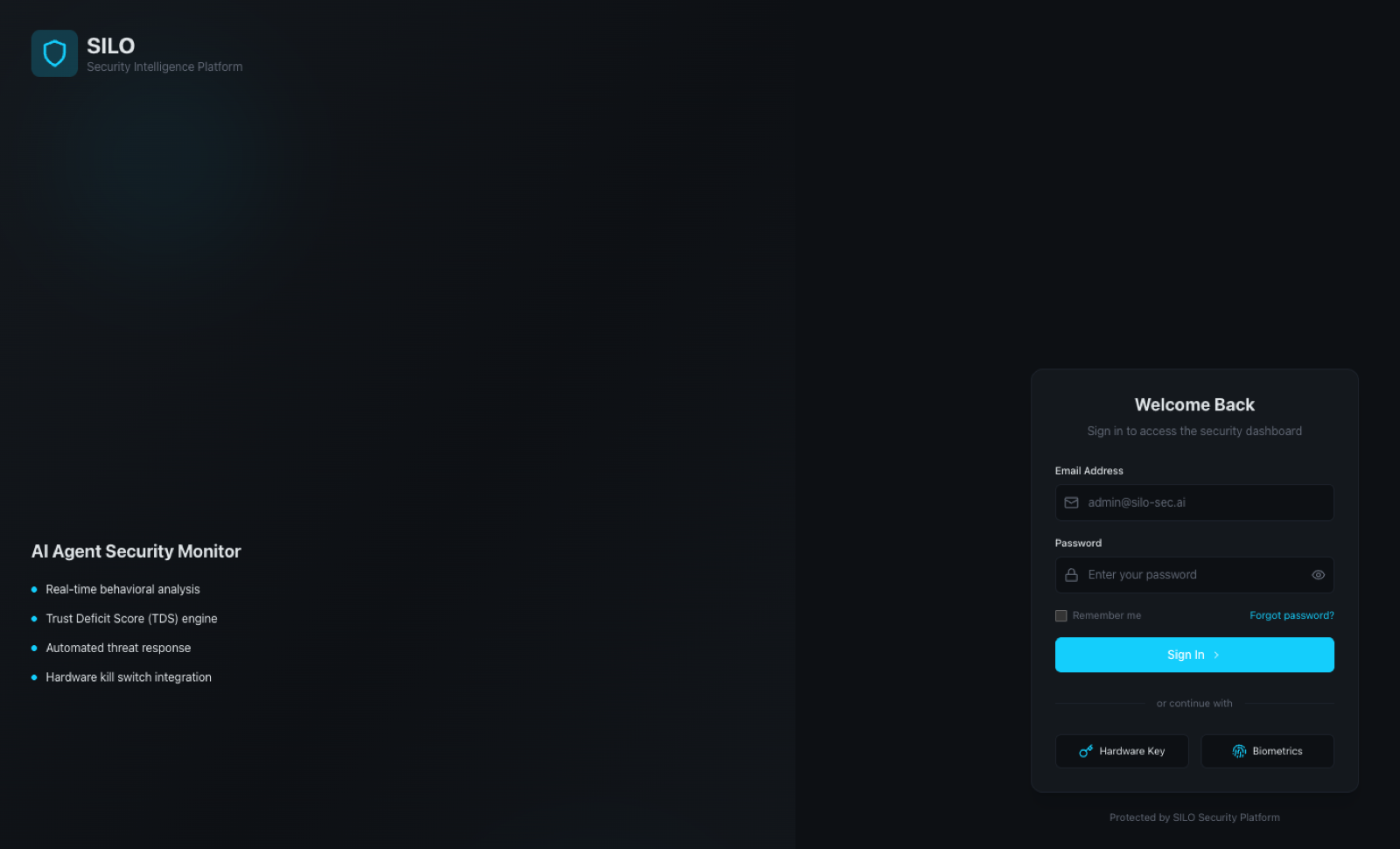
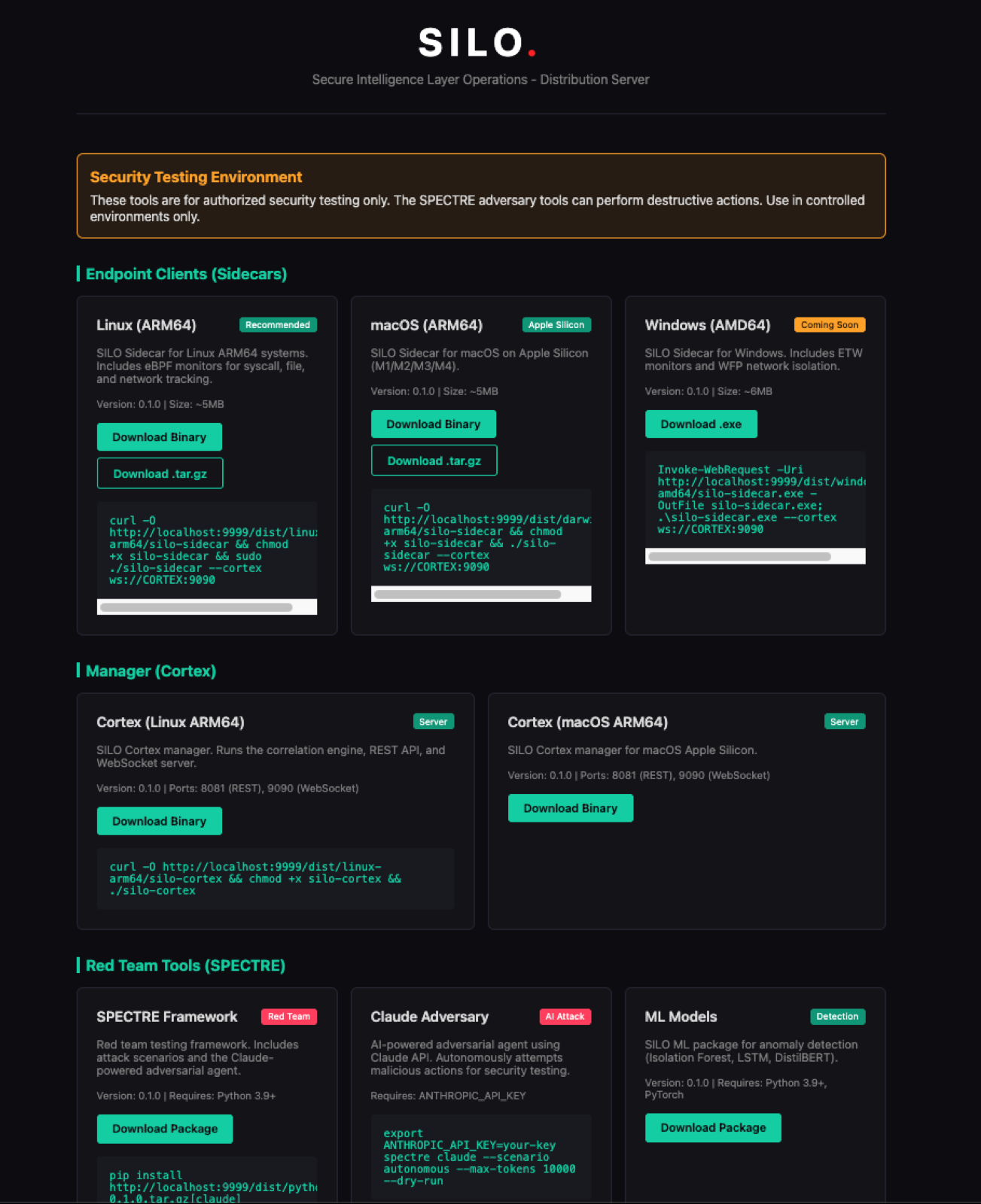
Screenshots