Baha Manila
One screen, one watershed, the moment the alert lands.
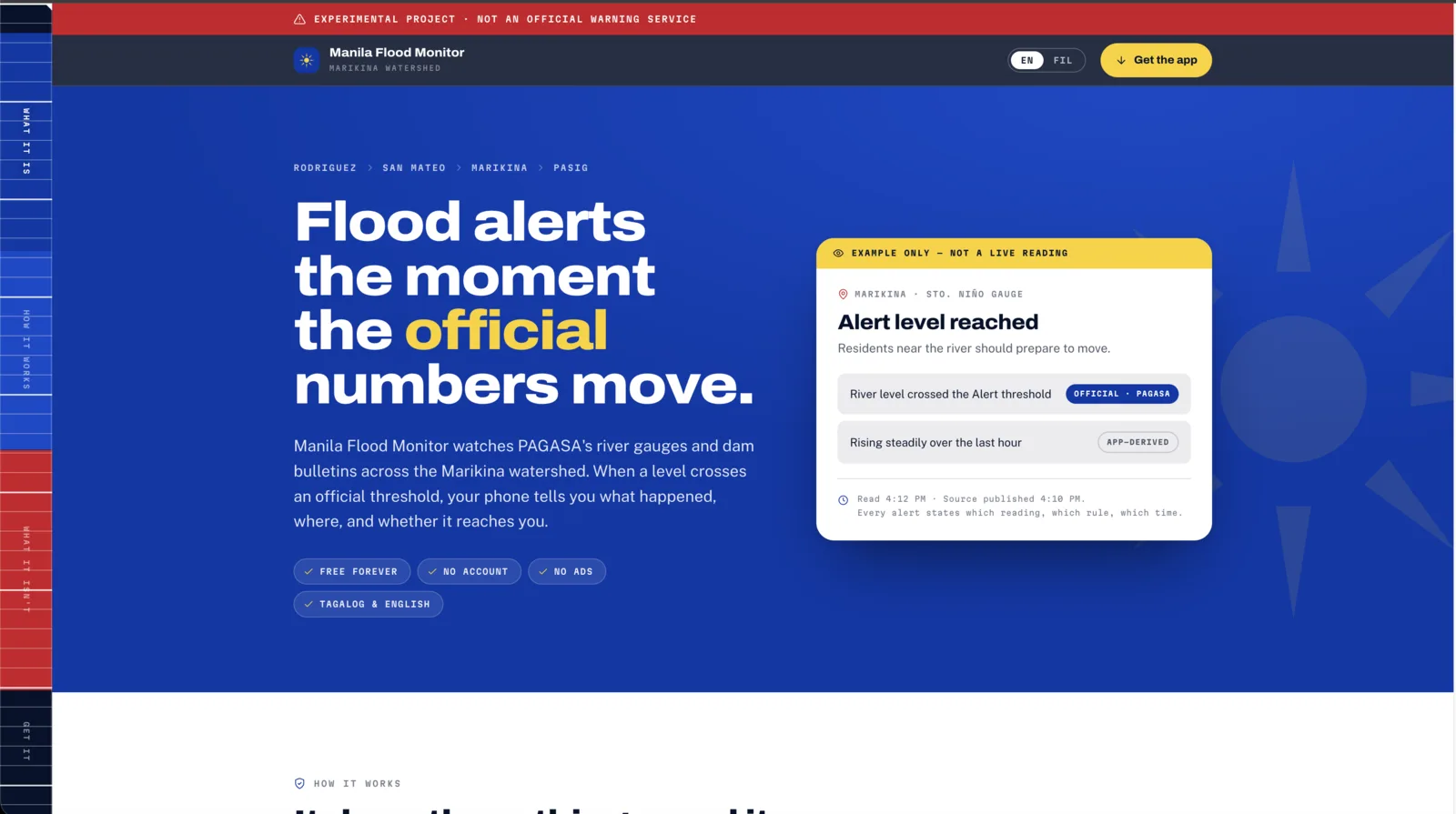
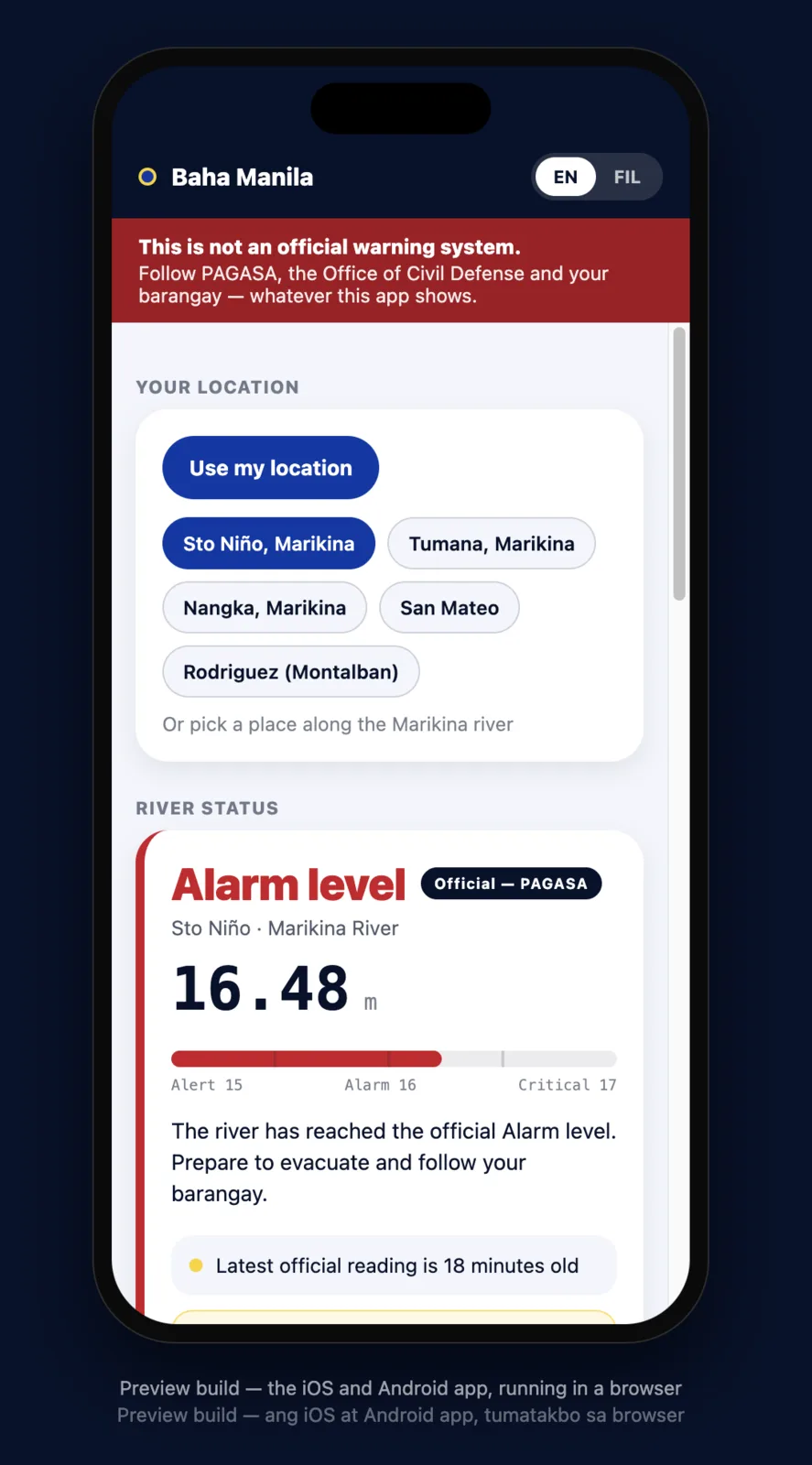
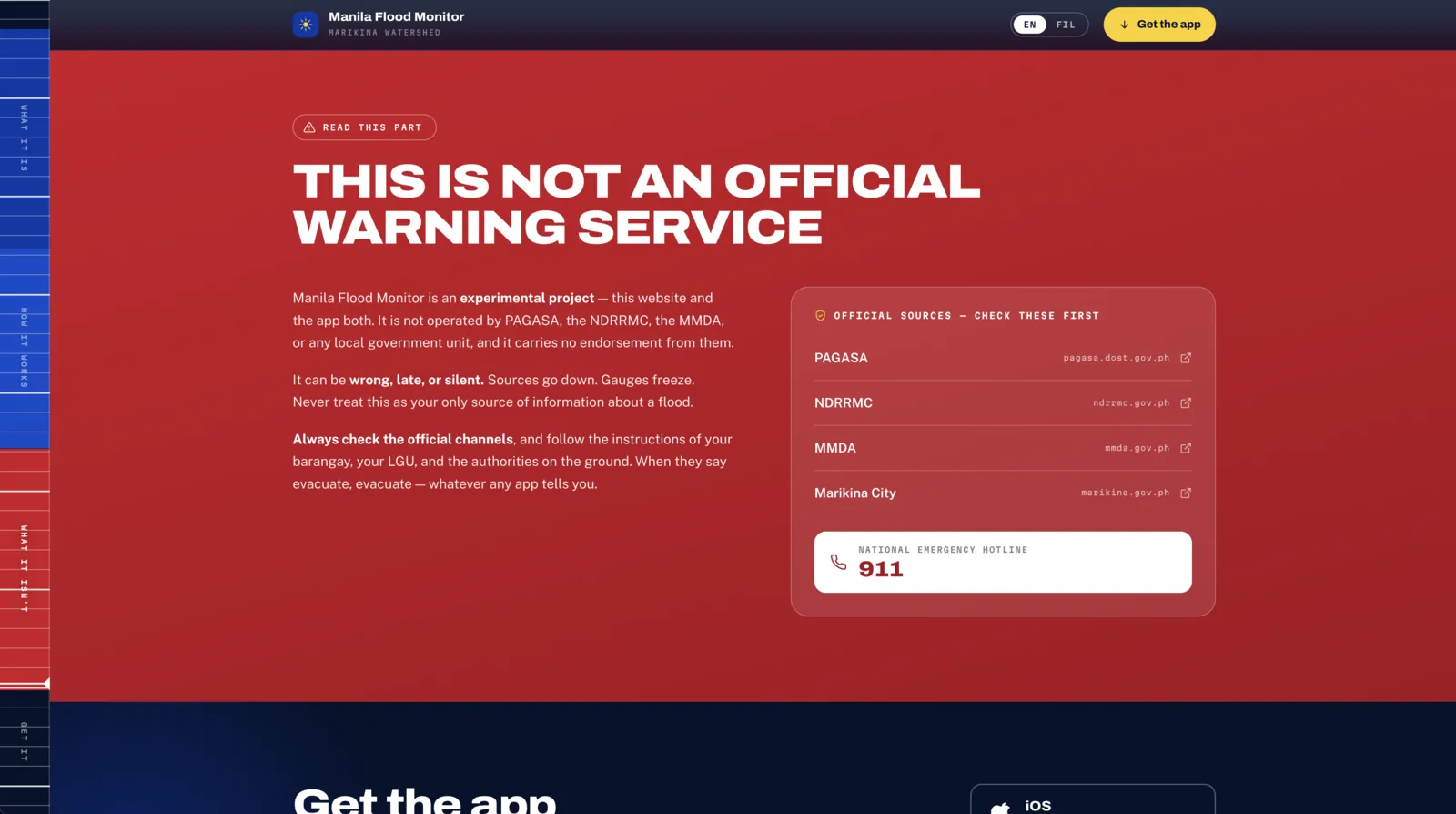
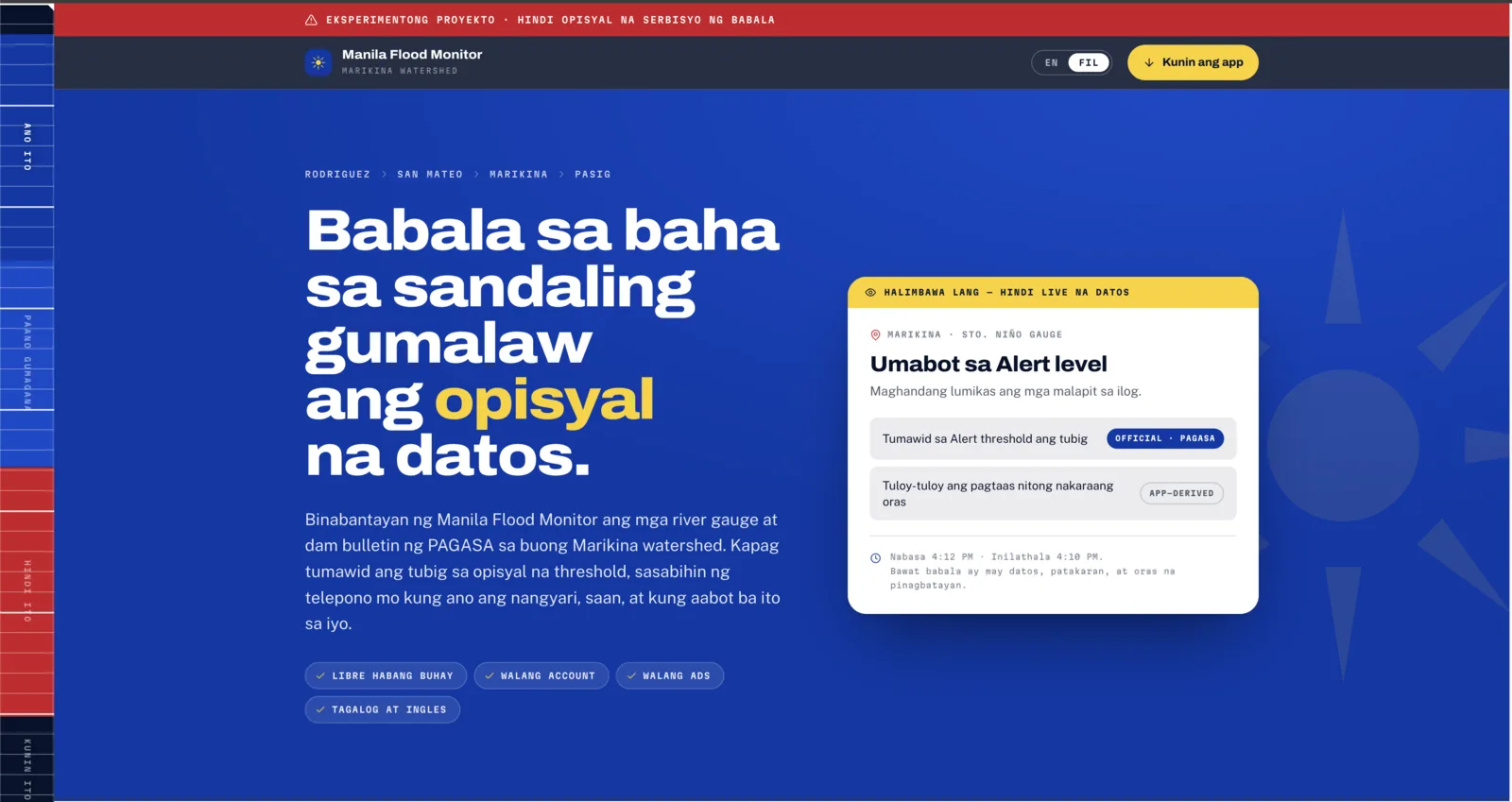
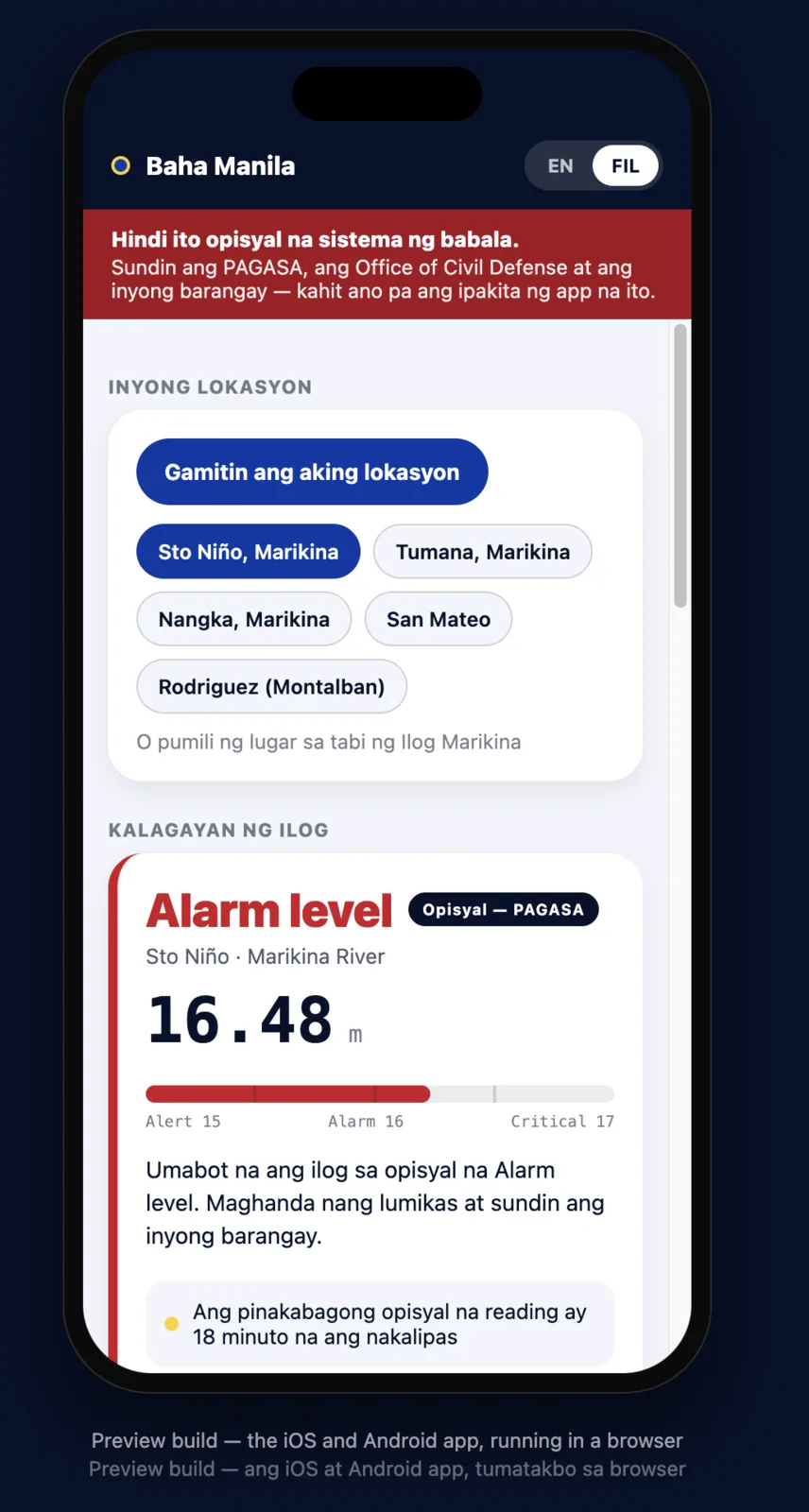
The Philippines publishes everything you need to answer "what does this storm mean for my street" — river-gauge readings, dam bulletins, spillway notices — just never in the same place and never on the same clock. Baha Manila joins them for one ordered catchment, Rodriguez to San Mateo to Marikina to Pasig, and shows the result on one screen in English and Tagalog. It is free, account-free and experimental, and it is emphatically not an official warning service.
The layer
Observe, then Decide. The alert already works — the handset buzzes and the state is right. What is missing is the ten minutes afterwards, when a household has to turn a national warning into a decision about one street.
The problem
The data exists and is public. It simply lives in separate rooms and does not speak to itself. River levels on one page, on one refresh cycle; dam bulletins on another; the spillway somewhere else again, in prose, at whatever hour someone types it up. Assembling a picture takes half a dozen tabs and four numbers held in the head, at exactly the moment nobody has the attention to spare.
What it does
Joins them for one catchment and shows the result on one screen — level, trend, upstream stations, dams, spillway, and the age of every number on display. It alerts on changes of state rather than on routine readings, because an app that cries wolf hourly has trained you to ignore it by the time it matters.
How it was built
Specified first, in full, then handed to CodeEasy in AutoCode mode and run against that specification with the stage gates doing what stage gates are for. A deep debug pass afterwards hunted the logic errors and the places a stale reading could quietly present itself as a live one, then a handful of manual edits by hand, as there always are. Prototype end to end in a day — which hides thirty years of judgement about what to put in the spec.
What it needs
One integration: the PAGASA river-gauge telemetry as a live feed. The fallback scrapers work, and a scraper is still a promise you cannot keep — the markup changes on a quiet Tuesday and the flood app goes silent on the loudest night of the year. Fine for a prototype. Not fit for something a family is meant to trust at two in the morning.
Who it’s for
Households in the Marikina watershed, first. Beyond that, anyone with the mandate to run it properly. It is free, it is given away, and if an agency or an LGU wants it, it is theirs.
Screenshots