The stack
The accelerated-coding tools
Two tools by the same maker (agencie.io Labs), running on one laptop with a local model — the setup behind the numbers.
The agent · the "how"
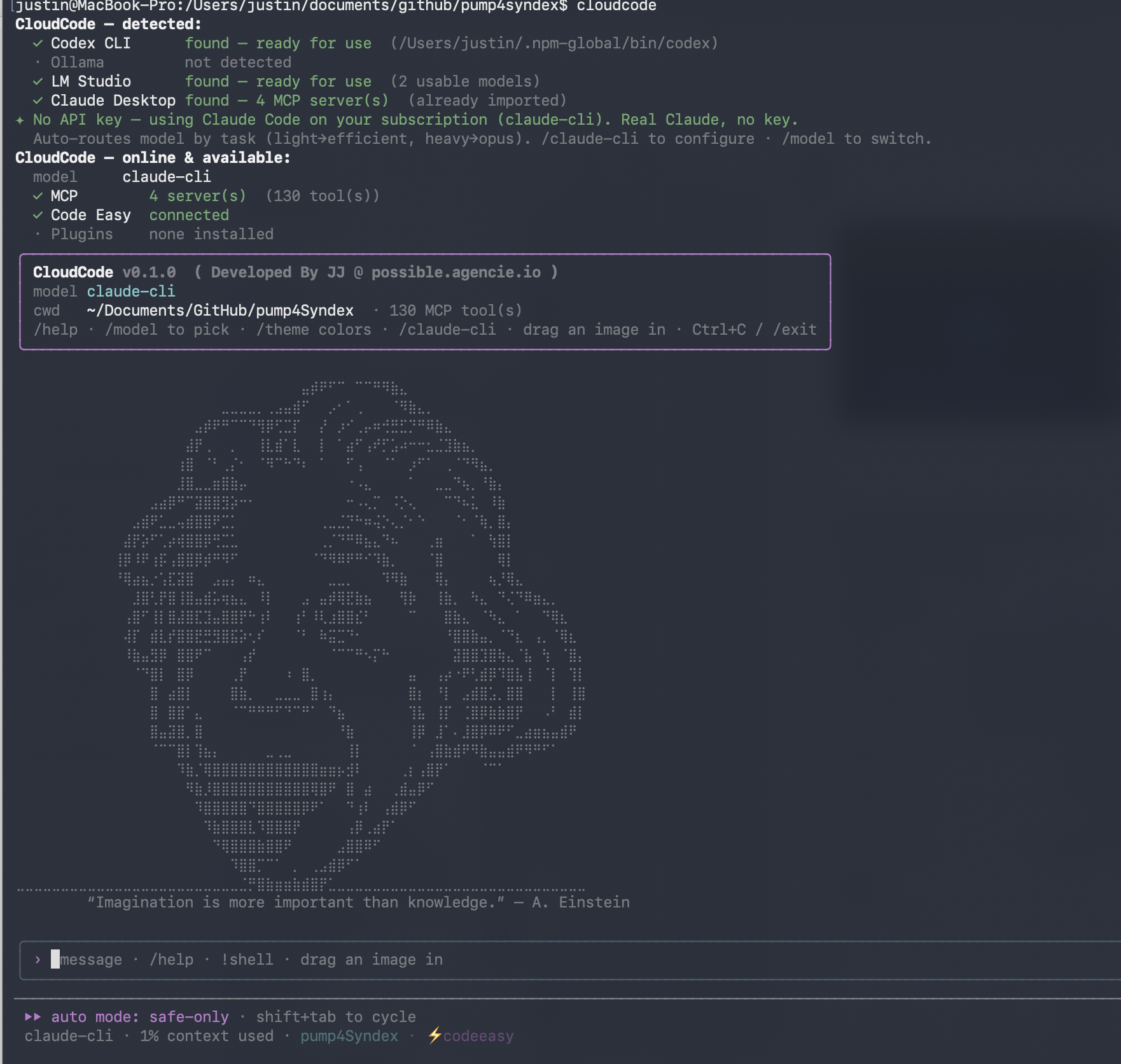
CloudCode
agencie.io · autonomous coding agent
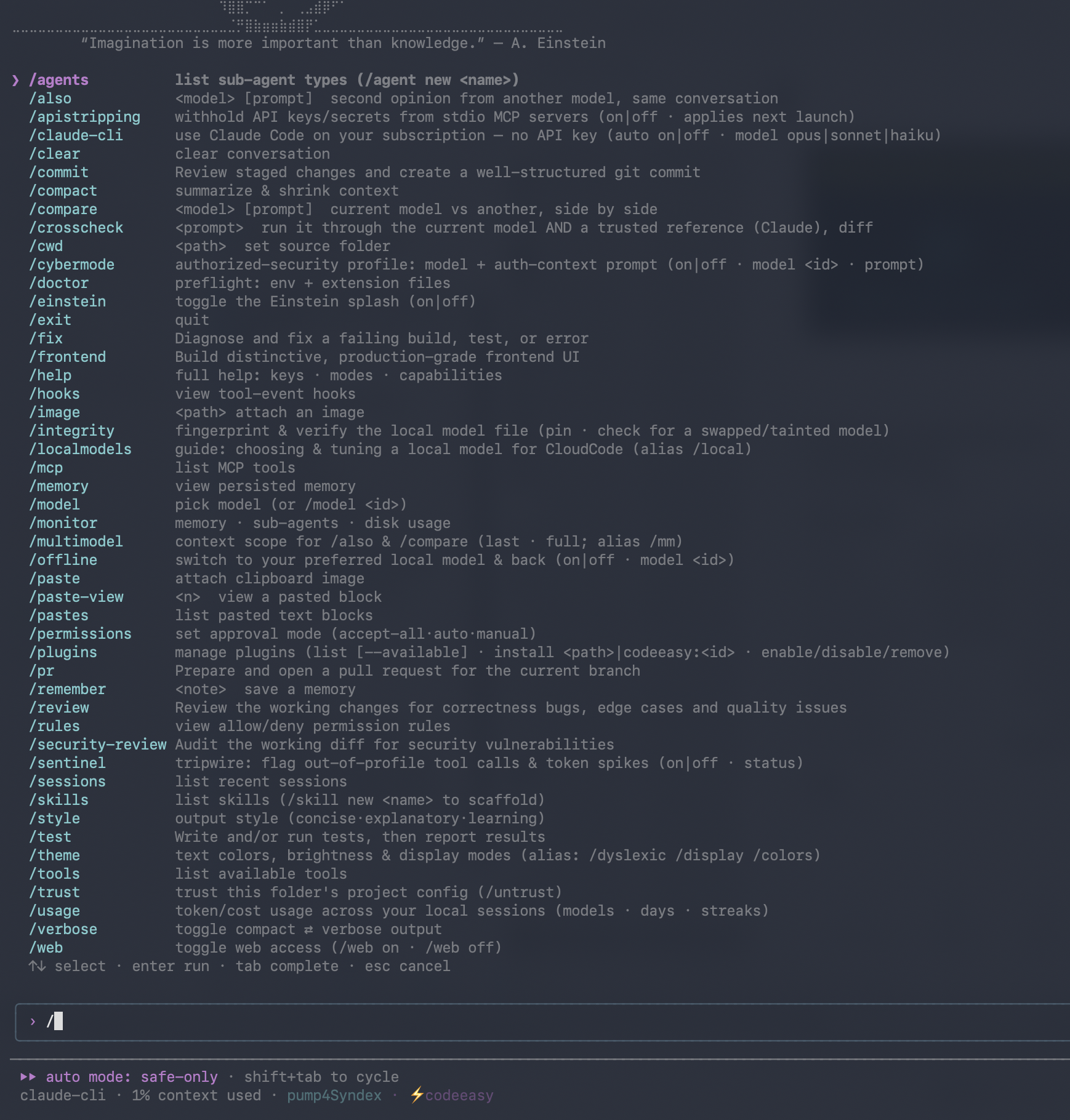
“Ship code with AI — not your codebase.” A Claude Code-style autonomous agent that reads, edits, tests, and ships diffs while source (and, optionally, the model) stays in your own perimeter. It was the hands-on driver of every edit and test here.
- Ran on Claude, no API key —
claude-cli(Claude on subscription), auto-routing light→efficient, heavy→Opus. LM Studio local models detected as fallback. - Governance — autonomous / safe-only / manual approval modes; per-project boundaries; tool-event hooks; a security "sentinel".
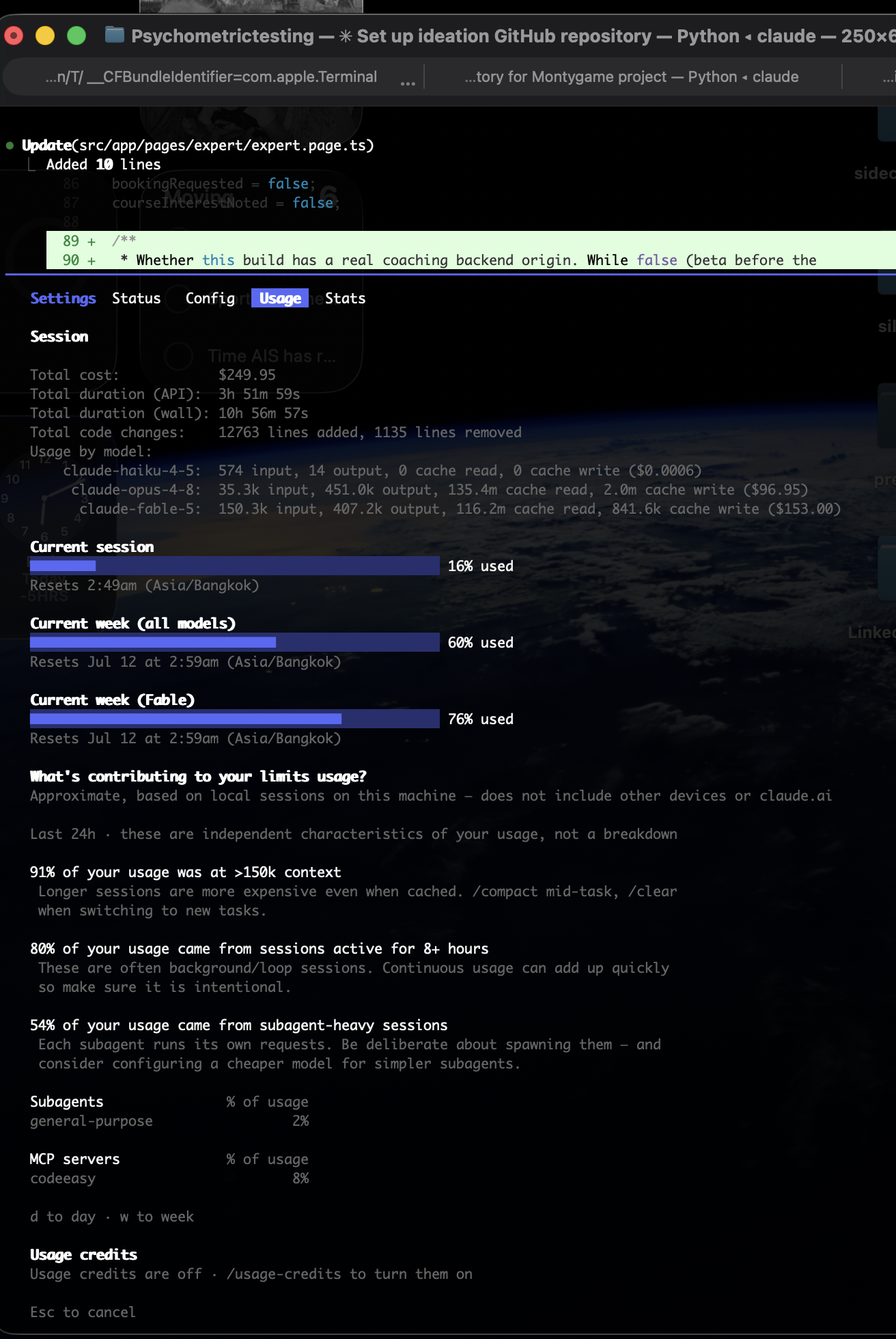
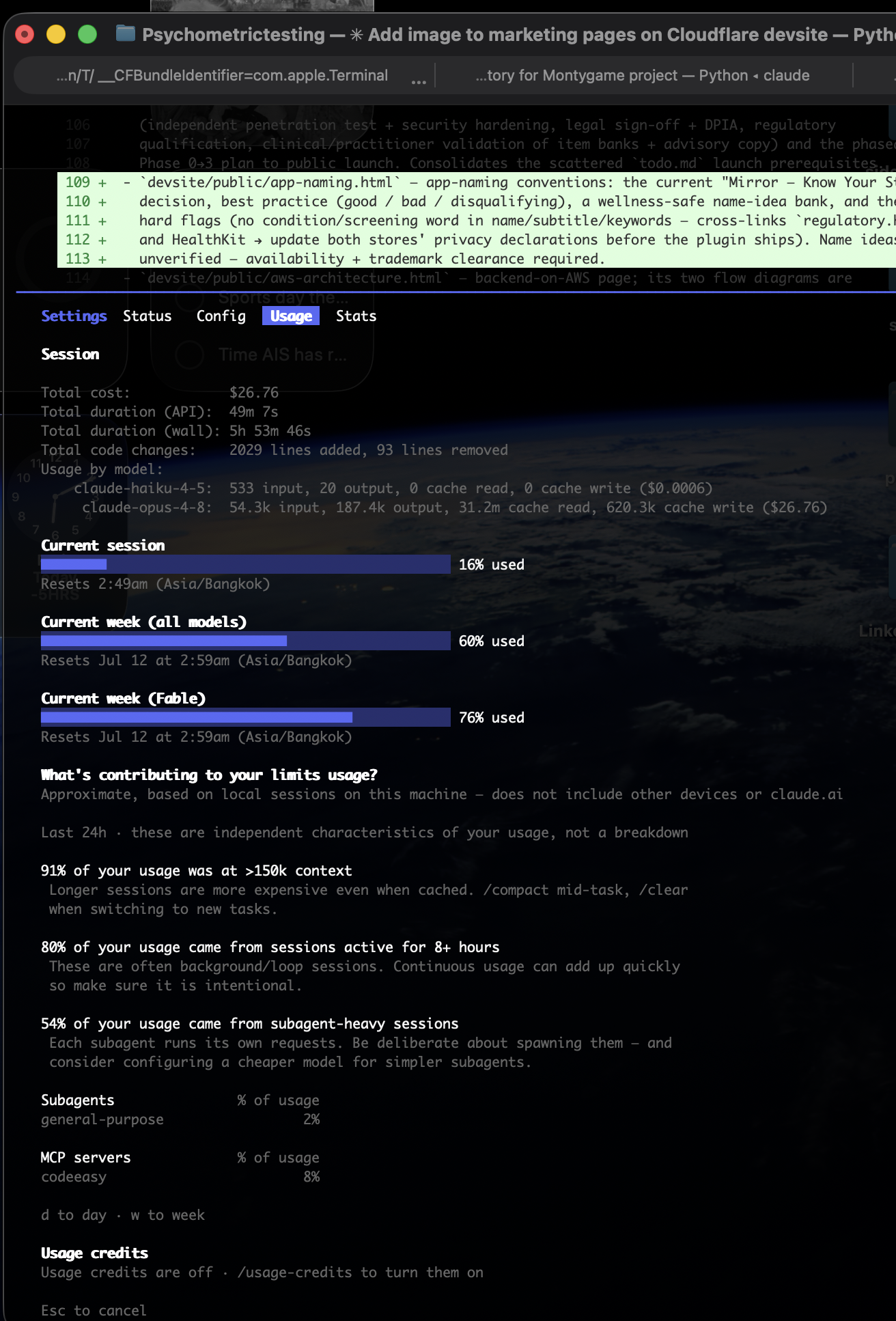
- MCP + cost tracking — ~130 MCP tools, Code Easy connected; the usage panels below are its own accounting (Opus 4.8 / Fable 5 / Haiku 4.5).
The command center · the "what"
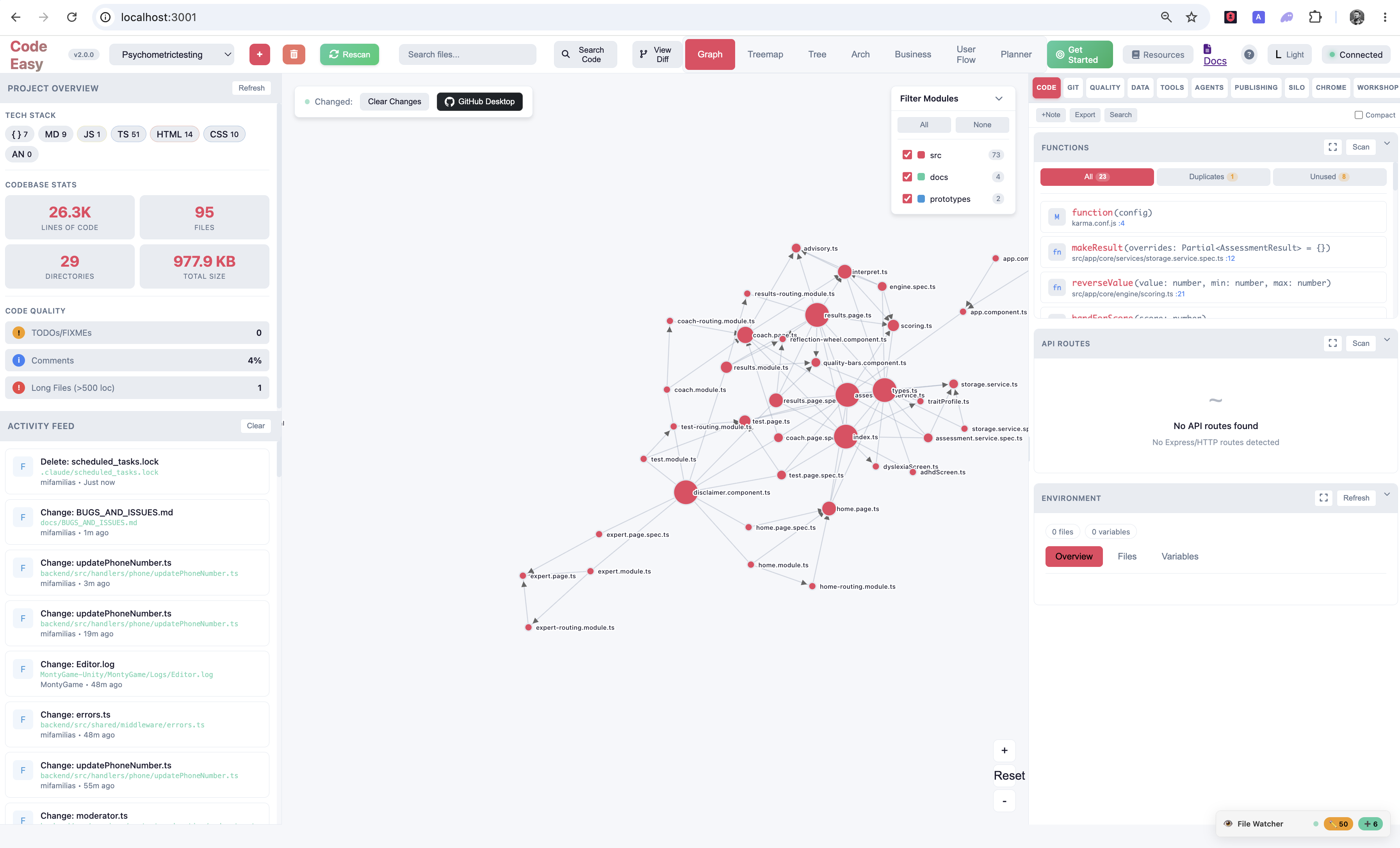
CodeEasy
agencie.io · command center + AutoCode
“The command center for the age of AI co-pilots.” A visual dashboard that keeps a human in control while agents work — codebase architecture in seven views, and compact structured context (~2k tokens vs ~50k raw files) fed to the agent so it stays efficient.
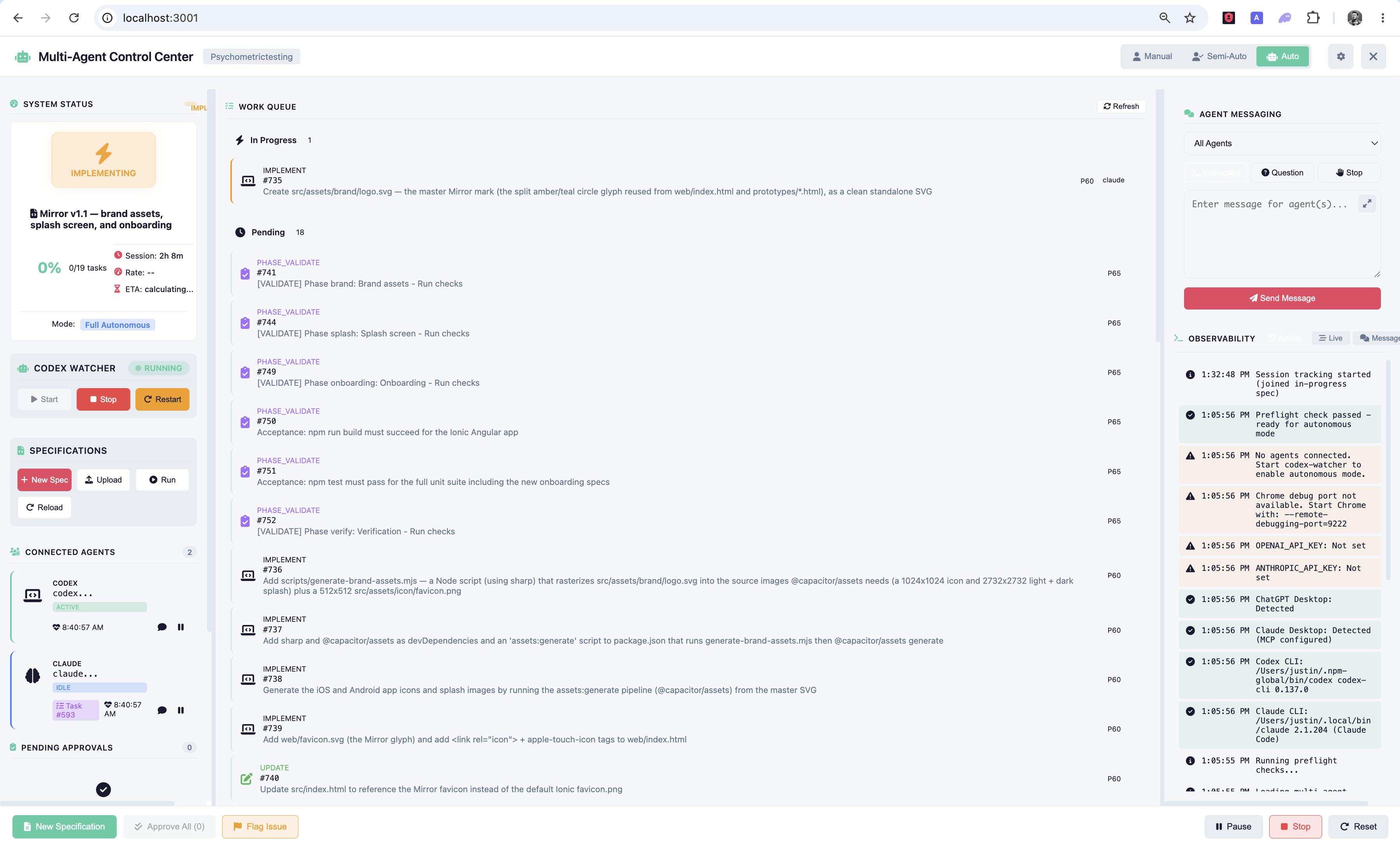
- Multi-Agent Control Center — orchestrates a Codex implementer + a Claude validator in Full-Autonomous mode, with stage gates + decision tracking. Connected here as an MCP (~101 tools, ~8% of usage).
- AutoCode — an 8-stage governed pipeline: spec → build → testing across 6 layers (incl. live UI) → decision log + session history, with hard guardrails.
- Codebase intel — architecture graph, functions, and quality flags in real time as the agent changes files.
The machine. The entire build ran on one laptop — a MacBook Pro (M3, 36 GB) — with a local coding LLM served by LM Studio, connected to CloudCode. Perimeter control in practice: the code, and a model, stay on-device.
1× MacBook Pro M3
36 GB
LM Studio · local LLM
How they combine. CodeEasy frames and governs the what (spec, context, stage gates, AutoCode);
CloudCode executes and verifies the how (edits, tests, diffs) — cloud models for the heavy lifting,
a local LM Studio model on the laptop at no token cost. That pairing is the accelerated-coding
workflow behind ~18.9k lines for ~$500 over ~3 × 8-hour days.